Learn the difference between real and personal property in 2026. Explore legal tests, valuation, taxation, and its impact on land-value reform & site-value
July 26, 2026
Difference Between Real and Personal Property: 2026 Guide
Learn the difference between real and personal property in 2026. Explore legal tests, valuation, taxation, and its impact on land-value reform & site-value

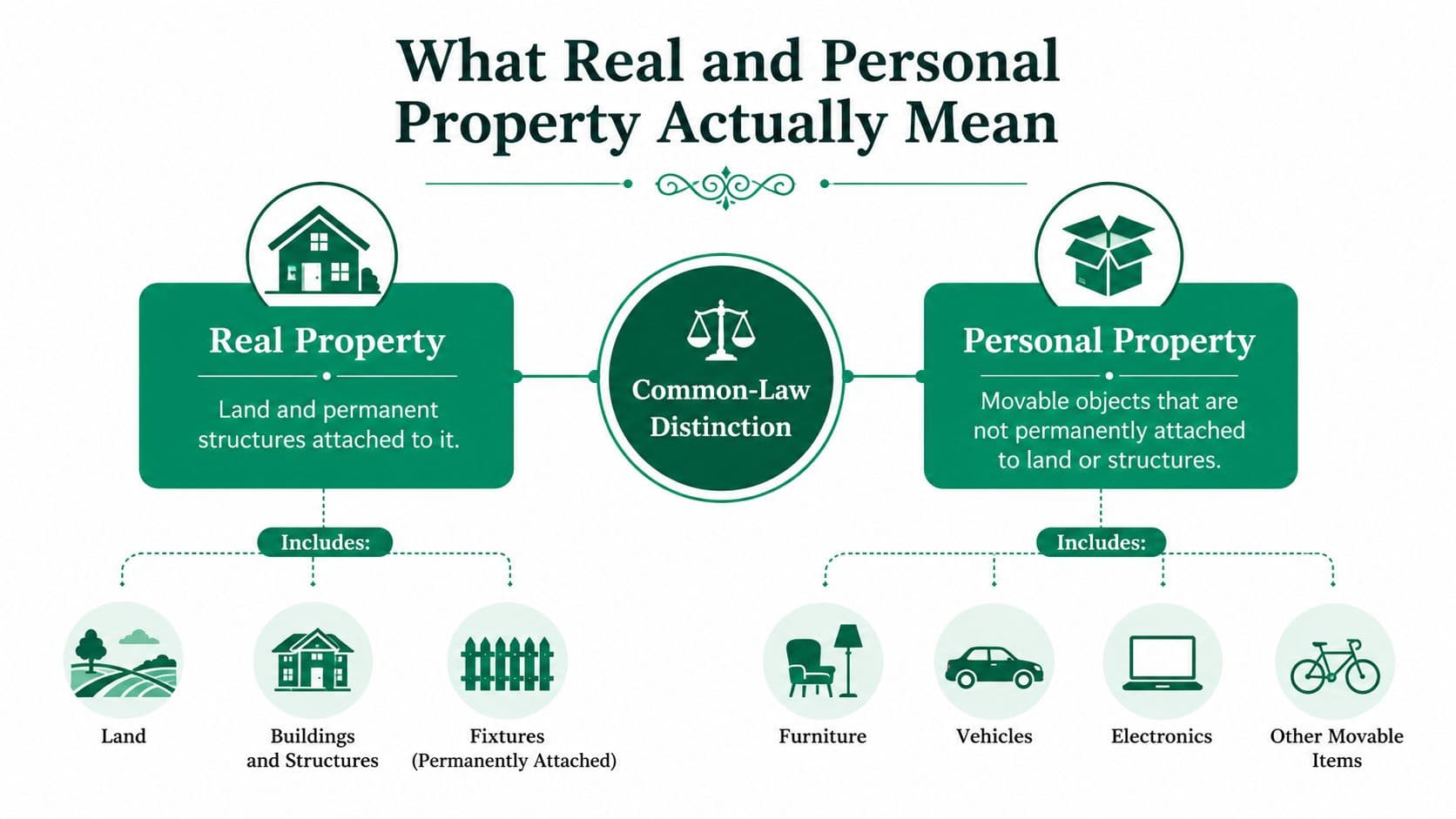
Real property is land plus permanent improvements attached to it, while personal property is everything movable, from furniture and vehicles to intangible financial rights. The practical legal test is whether an item can be removed without material injury.
If you're reviewing a tax roll, drafting a purchase agreement, or deciding whether a built-in asset belongs in the real estate file, that split is doing real work. It affects what gets taxed, what gets sold with the parcel, and what gets depreciated as business capital.
Table of Contents
- What Real and Personal Property Actually Mean
- How the Fixture Test Decides What Stays With the Land
- Side by Side What Changes When Land Is Treated as Real Property
- Valuation and Tax Practice Across U.S. Jurisdictions
- Land-Use Rights, Site-Value Taxation, and the Unitism Lens
- How Jurisdictions Handle the Real and Personal Split Differently
- A Working Checklist for Assessors, Lawyers, and Reform Teams
- Common Questions About Real and Personal Property
What Real and Personal Property Actually Mean
A warehouse sale is a good stress test for the line between real and personal property. The buyer may take the building, the land beneath it, and anything that has become part of the parcel, while movable assets may stay outside the real-estate transfer. At common law, real property covers interests in land and permanent fixtures, while personal property covers movable things such as goods, animals, and many financial claims. Britannica describes that split as a basic feature of property law and assessment practice in English-common-law systems. Britannica's overview of real property
A practical assessor-style example
A city assessor does not stop at what the owner purchased. The assessor asks what has become part of the parcel, because real property follows the land as a bundle of rights and is transferred, financed, and taxed on that basis. Illinois makes that operational by treating land plus permanent improvements such as buildings, fences, landscaping, driveways, sewers, and drains as real property, while automobiles, livestock, money, and furniture remain personal property. Illinois Department of Revenue guidance
The legal line is usually about permanence and removal. If an item would remain after a building is sold, or if taking it out would cause material injury, assessors and lawyers have a strong case for treating it as real property. That is why classification turns on how the asset is attached, how it functions, and what a buyer would receive at closing.
Practical rule: classify by the transfer and the physical change that removal would cause, not by office habit.
That distinction matters for tax base design as much as for billing. If a local government wants to capture site value and leave productive capital untouched, it has to separate land value from the improvements and equipment sitting on it. Unitism's approach to private property rights is useful here because it treats the legal boundary as a policy choice, not just a drafting exercise. Unitism's definition of private property rights
The policy consequence is straightforward. A jurisdiction that treats more items as real property broadens the tax base tied to the parcel, while a jurisdiction that keeps more assets in personal property shifts the burden away from land and toward movable capital. That trade-off is one reason assessors, planners, and finance teams need a clean classification rule before they set rates or draft exemptions. In practice, the same roof-mounted system can raise different questions depending on how local law defines attachment, ownership, and use, as shown in the G20 roof solar panel policy guide.
How the Fixture Test Decides What Stays With the Land
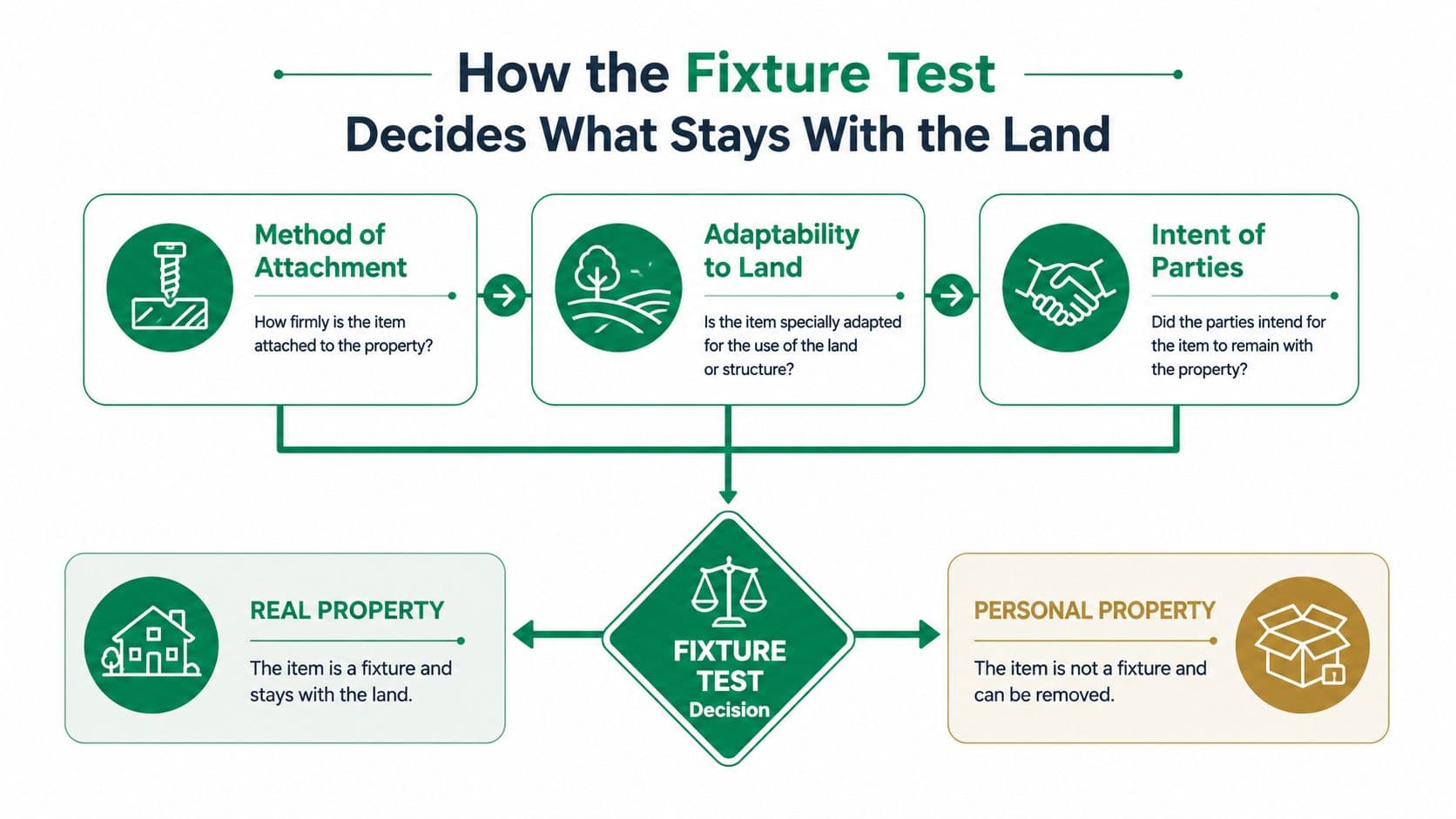
A rooftop solar array, a bolted production line, or a built-in HVAC unit can sit in the same building and still be treated differently for tax and ownership purposes. The fixture test sorts that out by asking whether an item has become part of the real estate or remains movable personal property. Under common-law practice, the usual indicators are physical attachment, adaptation to the property's use, and the intention that it stay with the premises. A practical administrative version asks a narrower question, whether the item can be removed without material injury to itself or to the building.
How the factors work together
The most useful commercial framework is the MARIA test, which looks at method of attachment, adaptability, relationship of the parties, intention, and agreement. In disputes over machinery, built-ins, and tenant improvements, a written agreement can outweigh the other factors, which is why procurement terms and lease drafting matter so much. MARIA test explanation reflects the way judges and assessors usually reason through contested assets.
Three common assets show the test in practice. A production line may arrive as personal property, but once it is anchored to the slab, wired into the building, and difficult to remove without damage, it can be treated as part of the real estate. A built-in HVAC system usually points even more clearly to real property because it serves the building itself. A permanently installed storage rack can cut either way, depending on how it was attached and what the contract says about removal.
Solar installations raise the same issue, and they do so in a policy setting that affects both rooftop deployment and property classification. The G20 roof solar panel policy guide gives a broader framing for ownership, roof access, and installation choices that sit behind fixture analysis.
If the install crew has to undo part of the building to remove the asset, you are probably not looking at ordinary personal property anymore.
For finance, legal, and facilities teams, the operational point is straightforward. Record the installation method, the contract language, and the intended permanence at procurement time. Those details often decide whether the asset is treated as realty or personalty, and they can prevent a later reclassification that shifts value onto the parcel or back off it.
Side by Side What Changes When Land Is Treated as Real Property
A city finance team that classifies land correctly is not making a paperwork choice. It is deciding what gets taxed as the parcel, what gets treated as removable capital, and where the revenue base should sit. Real and personal property behave differently in law, in valuation, and in tax administration, so the classification test changes both the assessment method and the policy result. USPAP keeps real-property and personal-property appraisal separate for that reason. Real property value is tied to location, site characteristics, land use, market conditions, and income potential, while personal property value is shaped more by removal costs, reinstallation, depreciation, and technological obsolescence. Kidder's appraisal article on real vs. personal property sets out that divide clearly.
| Criterion | Real Property | Personal Property |
|---|---|---|
| Legal status | Land and permanent improvements attached to it | Movable assets and, in many cases, intangible rights |
| Value drivers | Location, site characteristics, land use, market conditions, income potential | Removal costs, reinstallation, depreciation, obsolescence |
| Tax treatment | Usually taxed with the parcel as a bundled interest | Often identified separately and depreciated over time |
| Transfer | Follows the land unless excluded | Typically transferred by separate listing, title, or inventory |
| Collateral use | Commonly mortgaged with the real estate | Often pledged or financed on its own terms |
That table is useful because it shows where disputes start. A parcel sold as real property usually carries the improvements unless the contract clearly carves them out. Deeds, mortgages, and closing statements are drafted on that assumption, so the legal default is that land and permanent structures move together. Personal property is handled separately, which is why equipment schedules, asset registers, and bill of sale language matter in commercial transactions.
Policy point: if your revenue system taxes productive capital the same way it taxes land, you are blurring two very different bases.
That blur matters most when the public objective is site-value capture rather than taxing business activity. A city that wants to tax land efficiently needs a clean line between the parcel itself and the depreciating capital placed on it. Site-value work depends on that separation, which is why Unitism's calculate land value page is a practical reference for isolating land value without folding in improvements. The same separation is also where property-tax deductions become relevant for owners who need to distinguish what is assessed from what is merely installed, as discussed in VerticalRent tax deduction tips.
Valuation and Tax Practice Across U.S. Jurisdictions
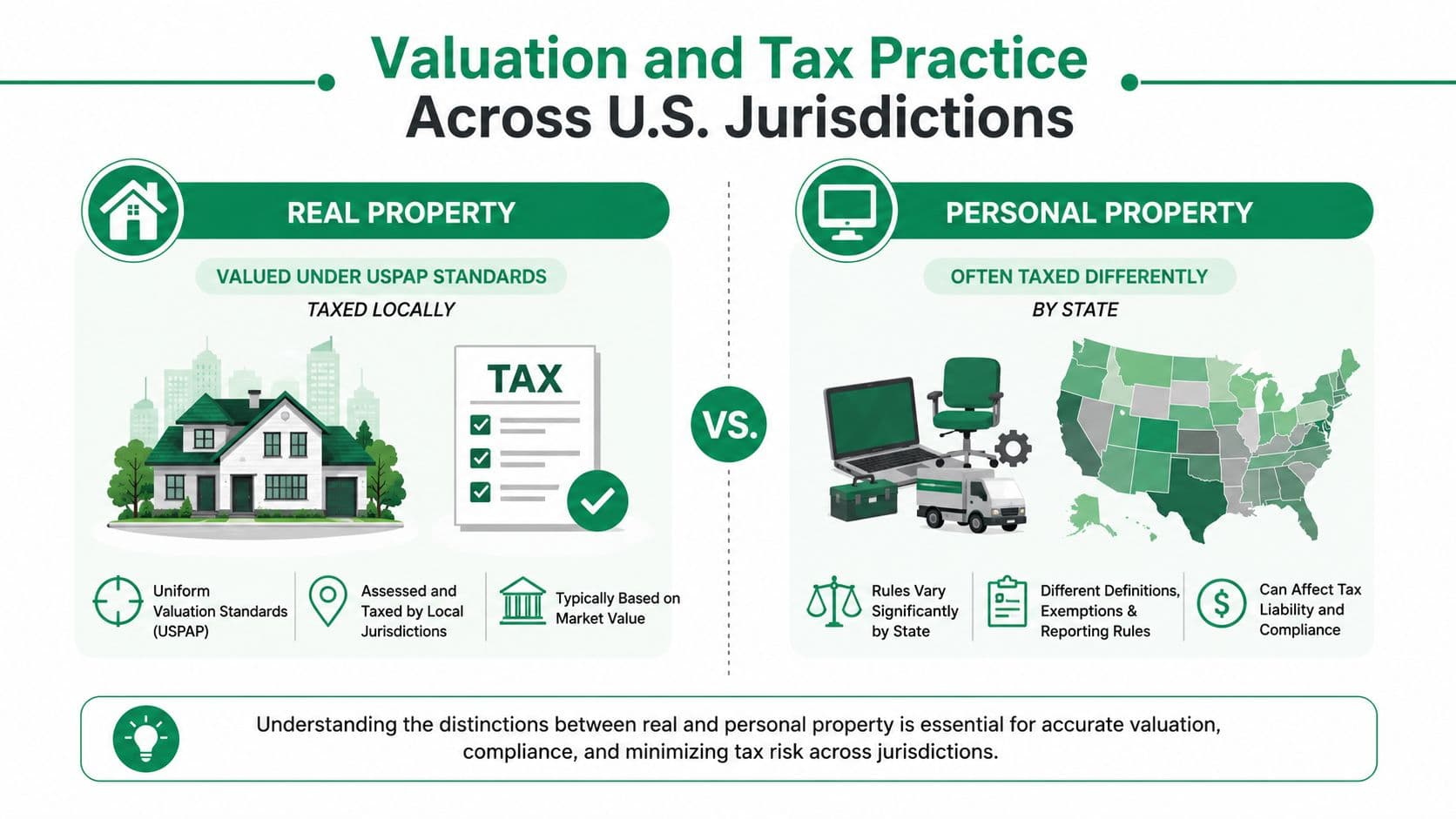
A property can be legally fixed to land in one county, then treated as a separate business asset in another filing system. That is the practical problem assessors face, and it is why the real and personal split is not just a legal theory. It decides what sits in the tax base, who reports it, and whether a jurisdiction is taxing site value or productive capital.
Assessment practice follows that split. Real-property appraisal and personal-property appraisal use different methods, and local governments usually collect real-property taxes at the municipal or county level while business personal property is often reported each year through depreciation schedules and asset listings. That division affects more than paperwork. It shapes how a city reads the parcel, how it values improvements, and how much revenue it captures from land versus machinery, fixtures, and other movable capital.
How the rules show up in filings
Illinois gives assessors a broad real-property category that includes land plus permanent improvements such as buildings, fences, landscaping, driveways, sewers, and drains. That approach shows how permanent site features are treated as part of the taxable parcel, not as separate business assets.
New York uses a legal filter that assessors can apply in disputed cases. If an item would remain after a building is sold, or cannot be moved without material injury, it is treated as real property. That rule is the kind of standard that turns fixture disputes into assessment appeals, because it forces the assessor to focus on attachment, use, and intent rather than on the label the owner prefers.
Those filing rules have real consequences for owners and public budgets. When a county classifies durable site features as part of the parcel, it strengthens the property-tax base. When it classifies equipment, furniture, and vehicles as personal property, it keeps depreciating business capital out of the land record and out of the same tax treatment as the site itself. Property-tax manuals also tell owners to document installation details and keep purchase contracts clean, because the record needs to show whether an asset functions as part of the building or as a separate business item.
For owners trying to sort reporting and deductions, a consumer-facing summary can still help as a starting point. VerticalRent tax deduction tips is not a substitute for local advice, but it does show how tax categories shape what gets reported and how owners think about deductible property expenses.
The policy consequence is straightforward. When the law treats durable site value as real property and movable business capital as personal property, the tax base becomes easier to read and easier to defend. That is why classification sits at the center of cadastral design, revenue administration, and land-value reform. For a related policy comparison, see Unitism's land value tax versus property tax guide.
Land-Use Rights, Site-Value Taxation, and the Unitism Lens
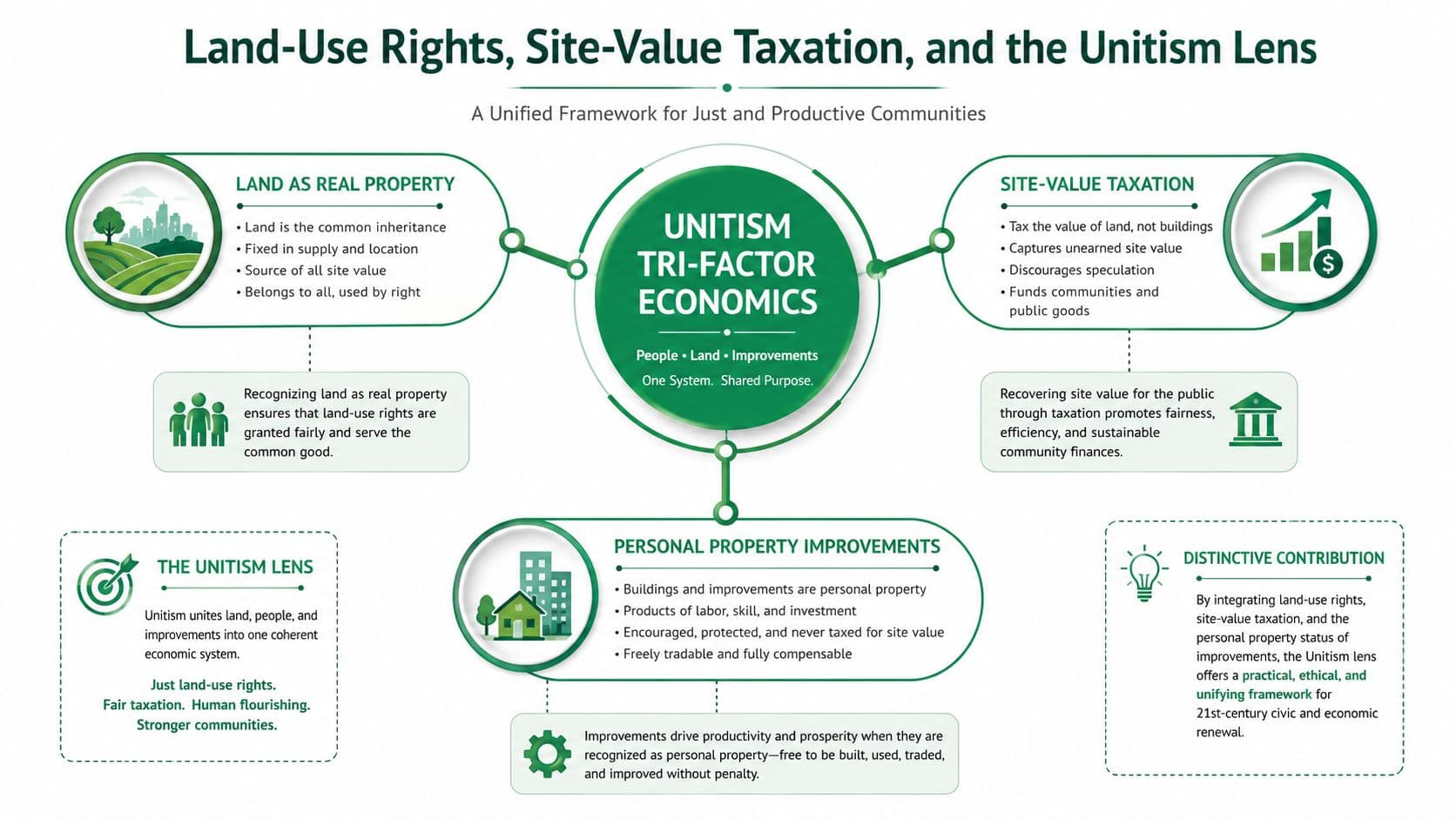
A parcel can be leased, occupied, improved, and taxed through different legal layers, and the split between real and personal property is what keeps those layers from collapsing into one another. Site-value taxation uses that split in a practical way. It directs the fiscal claim at land rent and leaves productive capital, such as buildings, machinery, and business equipment, outside the target when the law classifies them correctly.
Why land-use rights are different from land-value taxes
Land-use rights and land-value taxes are related, but they serve different functions. Land-use rights are land leases that are repriced annually with no expiration dates, and that structure allows people to buy and sell those rights at relatively low cost. A land-value tax is a recurring charge on the unimproved site value of land. One is a tenure arrangement, the other is a tax rule.
That distinction matters in administration. If assessors treat improvements as part of the land, they bring productive capital into the tax base and make the charge harder to defend. If they separate the location value of the site from the value of the plant, equipment, or building, the system can focus on the rent attached to position, access, and public investment rather than on private capital sunk into production. That separation matters most in dense cities, utility corridors, industrial parcels, and green-energy sites where fixtures and site value often sit close together.
The cleaner the split between site value and improvements, the easier it is to move revenue away from work and construction.
Resource dividends and rate reform fit into that same design problem. If a jurisdiction can isolate land rent with enough confidence, it has more room to reduce taxes that fall on labor and business activity. The policy question is not whether land has value, because it does. The primary issue is whether the assessment system can isolate that value from the capital sitting on top of it.
For readers who want the broader framework behind that separation, the internal overview at Unitism's land-value-tax versus property-tax page is a useful companion. It connects the legal category of real property to the fiscal question of who should pay for location value.
How Jurisdictions Handle the Real and Personal Split Differently
The common-law distinction between real and personal property is foundational, yet its application varies across jurisdictions. English-common-law systems typically prioritize real-property and fixture concepts in assessment and conveyancing. Civil-law systems often structure land ownership through distinct legal codes, while mixed systems like those in Quebec and Louisiana integrate elements from both traditions rather than adhering strictly to one model.
Why reform does not port neatly
That variation matters because a policy tool that works in one legal family can misfire in another. If a jurisdiction's property code treats land, buildings, leases, and attached equipment differently, then the same tax reform can hit different parts of the base than intended. In mixed systems, the definition of what counts as immovable or movable can look familiar on the surface while still producing different transfer and assessment outcomes.
Unitism's documented precedents point to places such as Denmark, Estonia, Singapore, Alaska, Canberra, Norway, and Allentown, which shows that land-based revenue design has been implemented in very different settings. The lesson is not that one template fits everywhere. The lesson is that local classification rules shape the feasible design from the start.
For a finance ministry or city planning department, the first question is rarely whether to move toward land value. It is how the existing definitions of real property, personal property, and fixtures shape the revenue base that can be captured. A jurisdiction that already separates site value from business capital can move more cleanly than one that bundles the two together. A jurisdiction with a weaker fixture doctrine may need cleaner legislation, better cadastre data, or both.
That is why comparative reform work starts with legal taxonomy, not slogans. The legal category determines the fiscal object, and the fiscal object determines who gets taxed. Once that base is clear, policy design gets much easier to sequence.
A Working Checklist for Assessors, Lawyers, and Reform Teams
Start with the asset record, not the tax bill. If you are an assessor, ask whether the item is annexed, adapted, and intended to remain. If you are a lawyer, put installation method, ownership language, and removal rights into the contract before the dispute starts. If you are a reform team, map the item to labor, capital, or nature before you write the legislation.
Three questions each team should answer
- Municipal assessors: Is the item physically attached, and would removal damage the item or the building? If yes, classify it like a fixture and document why.
- Counsel and deal teams: Does the lease, purchase agreement, or construction contract say the item stays with the real estate? A written agreement can control the outcome when the facts are otherwise mixed.
- Policy designers: Does the current cadastre separate land value from improvements cleanly enough to support site-value taxation? If not, fix the data structure before you change the rate structure.
The operational lesson is to keep every decision tied to the classification base. That means asset inventories for utilities, solar, manufacturing equipment, and built-in systems need to be drafted with the tax question in mind, not after the first assessment notice arrives. For a practical municipal reference on that side of the ledger, the internal guide at Unitism's DC real estate assessments page is a useful benchmark for how local assessment systems handle property categories.
Best practice: build a paper trail at procurement time. Installation photos, work orders, and contract clauses often settle the fight before appeals begin.
The goal isn't to relitigate centuries of property doctrine. It's to make the tax base administratively clean enough to support site-value taxation, resource dividends, and better revenue design.
Common Questions About Real and Personal Property
Are solar panels real or personal property?
It depends on how they're installed and what the contract says. Roof-mounted panels that are permanently attached and function as part of the building system often look like real property under fixture analysis, while removable equipment with a clear removal plan can stay personal. A clean contract and installation record matter more than guesswork.
What about modular kitchens or built-in storage?
If the unit is built into the structure and removing it would damage the building or the item, assessors are likely to treat it as real property. If it can be removed intact and reused elsewhere, it may remain personal property. The attachment method controls the analysis.
How are EV chargers treated?
Permanently installed chargers often raise fixture questions because the wiring, mounting, and intended permanence can push them toward real property. Portable chargers usually stay personal property. The closer the installation is to the building's electrical system, the more important the fixture test becomes.
What should businesses keep on file?
Keep the purchase contract, installation invoice, photos, and any language about removal rights or ownership at lease end. If the asset is important, add a short memo explaining why the company treats it as real or personal property. That memo can help if the assessor asks later.
What if the fixture test is ambiguous?
Treat the item as a documentation problem before it becomes a tax dispute. Pull the contract, inspect the attachment, and ask whether removal would cause material injury. If the answer is still unclear, get local counsel involved early and keep the classification consistent across the tax, finance, and facilities records.
For more practical answers to edge cases, the Unitism FAQ is a good place to keep going.
If you're sorting out a fixture dispute, a cadastre update, or a land-value reform plan, Unitism® can help you connect property classification to the tax base it shapes. Visit Unitism® to explore land valuation assessments, policy design support, and practical tools for separating land value from productive capital.