Learn how to estimate utilities cost for any property with proven methods for electricity, gas, water, heating, and internet, plus sample calculations.
July 27, 2026
How to Estimate Utilities Cost for Any Property
Learn how to estimate utilities cost for any property with proven methods for electricity, gas, water, heating, and internet, plus sample calculations.
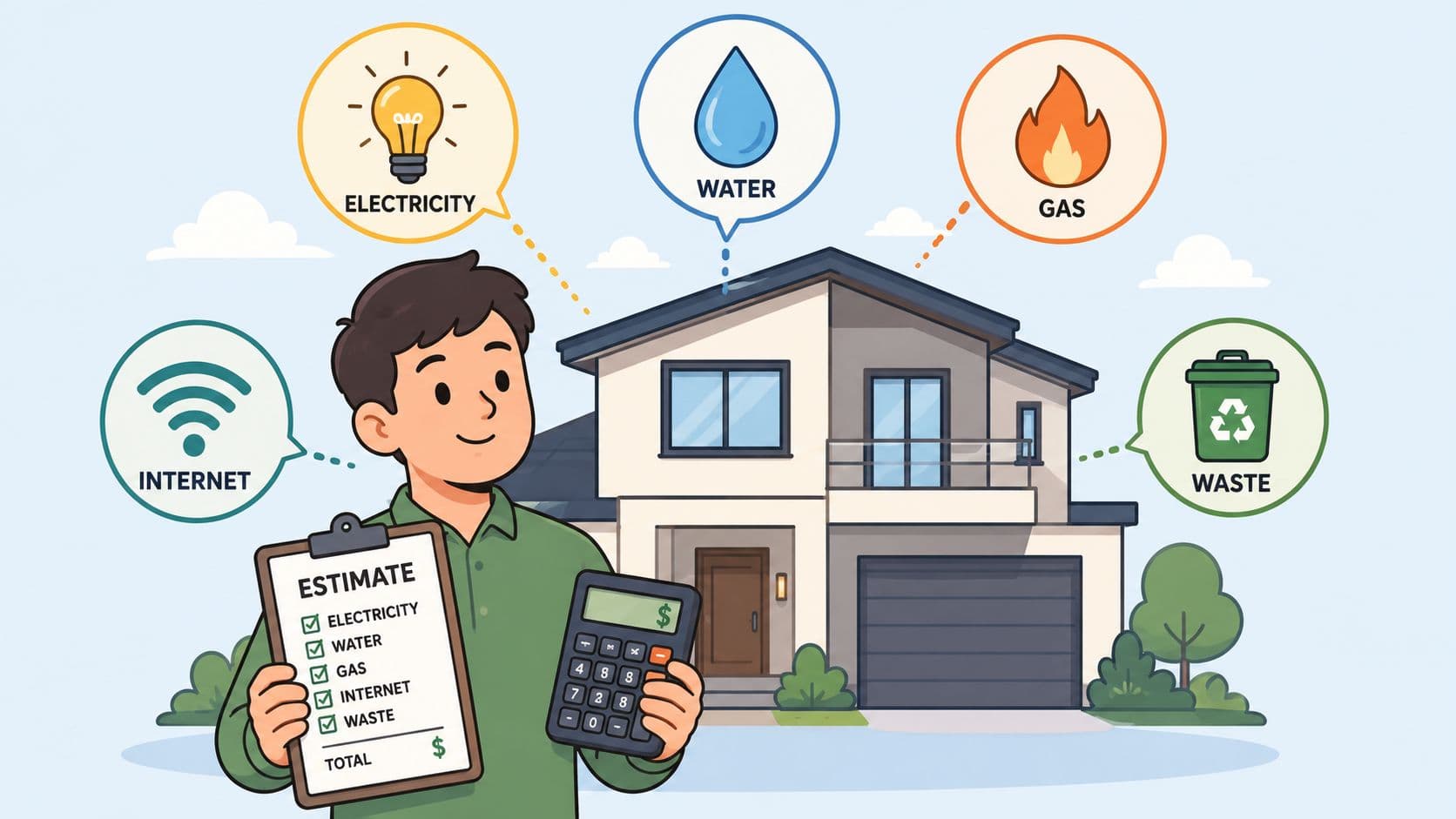
You're standing in a kitchen, looking at a listing that seems affordable, and then the questions start. What will the electric bill look like in summer? Is the heat gas or all-electric? Will water, trash, and internet add a few hundred dollars a month to the actual cost of living there?
A good estimate utilities cost number keeps that decision grounded. It turns a vague “can I afford this?” into a line-item view of electricity, natural gas or heating fuel, water and sewer, waste and recycling, internet and phone, and HVAC-driven climate costs, so you can compare homes on something closer to truth than asking price alone.
Table of Contents
- Why Utility Estimates Matter Before You Commit
- Gathering the Inputs You Need
- Two Estimation Models That Work
- Benchmarks by Property Type
- Adjusting for Season, Region, and Rate Inflation
- How Land Policy Shapes Long-Term Utility Costs
- Validating Your Estimate and Avoiding Common Mistakes
Why Utility Estimates Matter Before You Commit
A home can look affordable on paper and still feel tight every month once the bills arrive. That gap usually shows up after move-in, when the first round of electricity, gas, water, sewer, trash, internet, and climate-control costs lands together and pushes the housing budget higher than expected.
The cleanest way to think about affordability is to treat utilities like part of the carrying cost, not a side note. A useful benchmark in the United States is that households now spend about $532 billion per year on core utility services, and the median household pays $347 per month or $4,168 annually for electricity, gas, water and sewer, and waste and recycling, based on doxo's 2025 reports covering 97% of U.S. ZIP codes ConsumerAffairs summary of doxo's 2025 utility spending reports.
Practical rule: If a seller, landlord, or agent can't point you to actual bills, treat your first estimate as provisional, not final.
For first-time buyers and renters, the mistake is usually not that they forget utilities. It's that they undercount them, then compare homes with different systems as if they were identical. A condo with shared walls, a detached home with older HVAC equipment, and an apartment with bundled services don't belong in the same mental bucket.
That's why utility math belongs beside mortgage, tax, and insurance from the start. It also helps to read guidance on practical efficiency steps, like the actionable tips for homeowners from Atomic Exteriors, after you've estimated the baseline, because saving after the fact is easier when the starting number is realistic.
Utilities also depend on the infrastructure around the property, not just the appliances inside it, so the funding and pricing logic of roads, pipes, and service networks matters too. For a wider look at that side of the equation, see this discussion of infrastructure funding.
A credible monthly estimate doesn't need to be perfect. It does need to be defensible, seasonal, and built from the actual property rather than a generic rule of thumb.
Gathering the Inputs You Need
A solid estimate starts with evidence, not guesswork. Before you calculate anything, separate what you can pull from bills, what you can observe on the property, and what you'll need to approximate from benchmarks.
Start with the data you can verify
Electricity estimates become much better when you know the home's size, HVAC age, insulation quality, occupancy, and the big loads inside it. A larger house with older cooling equipment and more people working from home tends to use more power because heating, cooling, lighting, and plug loads all run longer.
Gas or heating-fuel estimates depend on the fuel type, the thermostat setting habits, and whether the home uses gas for space heat, water heating, cooking, or drying clothes. Water estimates respond to fixture count, household size, and any outdoor demand like irrigation or pools.
Internet and phone usually come down to service tier and bundling, while waste and recycling often follow local service rules rather than personal usage. That's why you want to know which services are billed separately and which are folded into rent, condo fees, or association dues.
Here's the checklist I'd ask for before I trust any number:
- Ask for 12 months of actual bills: Monthly utility costs swing with weather, so a full year shows the seasonal pattern.
- Confirm the heating fuel: Natural gas, propane, electric resistance, heat pump, or oil changes the budget shape.
- Check the HVAC age and type: Older equipment often needs a higher allowance than modern systems.
- Count the occupants: People drive hot water, laundry, showers, and plug use.
- Ask about outdoor water use: Lawn irrigation, gardens, and pools can change the water line sharply.
- Find out what's included in dues or rent: Don't estimate a bill the landlord already covers.
For renters, Zillow's apartment utility benchmark is useful as a cross-check. It reports a median U.S. apartment utility cost of about $150 per month based on the 2023 American Community Survey, with basic utilities in five large renter-heavy cities averaging roughly $110 to $170 per month Zillow's apartment utility cost guide.
The point is simple. If you don't know which systems are installed, who pays which bill, and how many people will live there, your estimate will drift fast.
A quick visual can help keep the inputs straight.
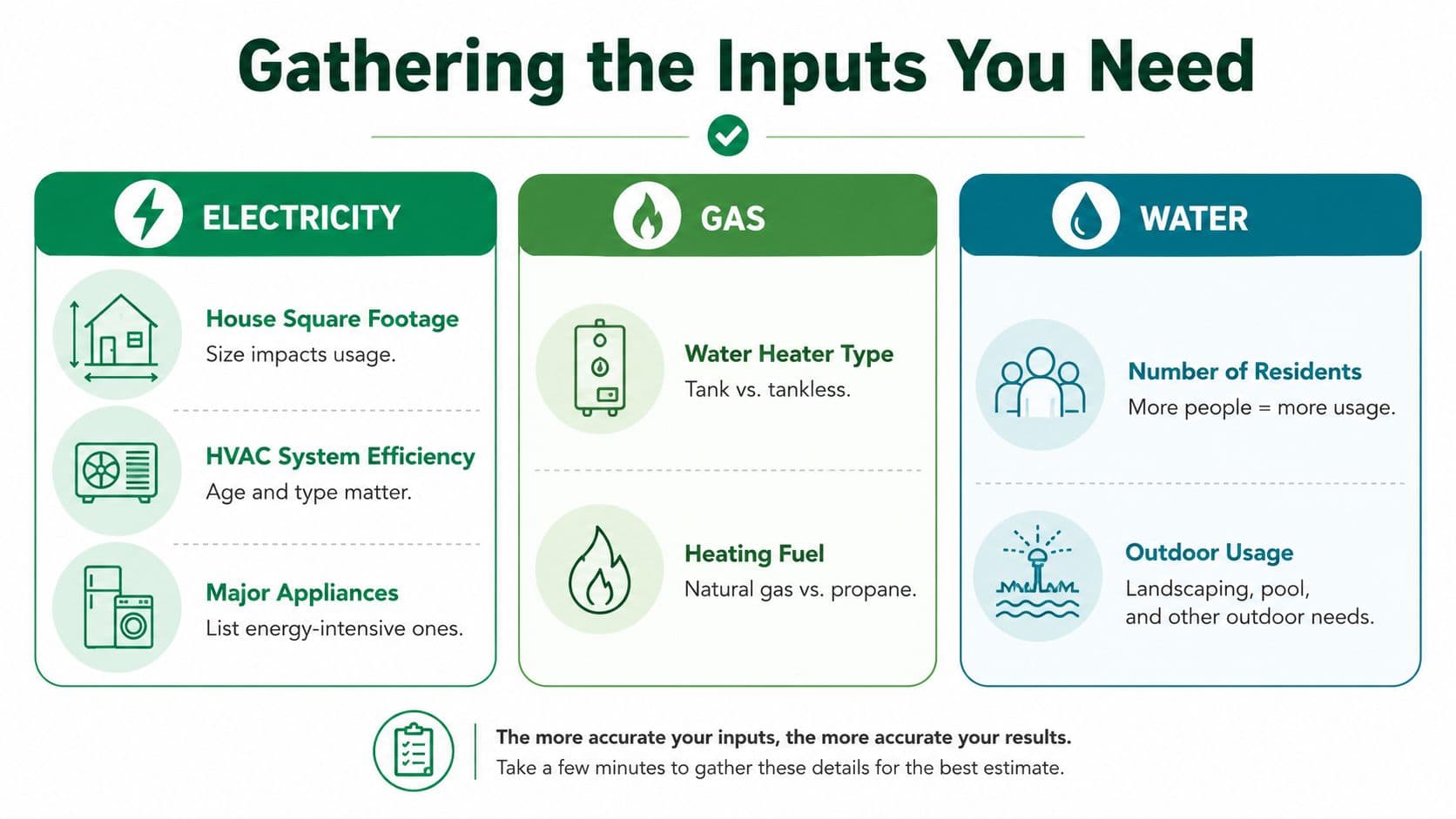
A workable example helps make the inputs concrete. Take a 1,800-square-foot single-family home in a mixed climate, with two occupants, an average-age HVAC system, gas heat, standard water use, and separate internet service. You'd start by estimating electricity for lights, appliances, and cooling, gas for heating and hot water, water and sewer for household use, and a separate line for internet if it isn't bundled. Those pieces become the monthly working number you can refine later, rather than one mystery total.
If the property has a community energy setup, shared solar, or a special bill arrangement, ask early. For broader context on communal energy structures, this community solar program resource can help you see why some homes don't behave like ordinary standalone utility accounts.
Two Estimation Models That Work
Once the inputs are clear, there are really two honest ways to build the number. One starts from the bill and works upward. The other starts from a benchmark and adjusts it until it fits the property.
Bill up from zero when you have real usage clues
The bill-up-from-zero method is the more precise route when you have prior bills, meter readings, or a strong usage history from a similar home. You estimate each line separately, electricity, gas, water, and any fixed service fees, then add them together.
That approach is useful because it forces you to ask the right question for each service, how much is used, what the local rate is, and which fees appear even in a light month. If you know the rate structure, you can build a realistic monthly number instead of relying on a broad average.
A simple household example makes the process easier to see. Start with electricity for lights, appliances, and cooling, then add gas for heating and hot water, water and sewer for daily household use, and a separate line for internet if it is not bundled. Each line gets its own estimate, and the total becomes the working number you can refine later.
Practical rule: Build each bill as usage plus fixed charges, then total the lines. Don't let one utility average hide a surprise in another.
Use benchmark down when you need a sanity check
The benchmark-down method works better when you do not have bills yet. Start with a broad local or property-type median, then adjust for size, occupancy, climate, and efficiency. This is the method to use when you are comparing two listings, screening rentals, or trying to decide whether a property looks unusually expensive to operate.
A benchmark is not a verdict. It is a starting point. If a detached home with older systems lands well above a nearby apartment benchmark, that does not automatically mean the estimate is wrong. It may mean the property has more exterior exposure, more equipment, and more load.
This method also fits the way many buyers already check a budget line. They begin with a midpoint, then add or subtract for the home's shape, systems, and likely use. A utility estimate works the same way, and the same discipline shows up in revenue forecasting models, where a first pass only matters if it survives a second pass.
Cross-check both answers
The strongest estimate comes from comparing the two methods. If the bill-up figure and the benchmark-down figure land near each other, you have probably captured the property well enough for budgeting. If they differ, the gap usually points to a missing input, a hidden fee, or an unusual usage pattern.
One home may produce a bill-up estimate of $327 and a benchmark-down estimate of $362. That kind of gap is normal in early screening because one method reflects known usage while the other reflects a broader average. I would usually weight the bill-up method more heavily if the bills are real and recent, and I would lean on the benchmark more if the inputs are incomplete.
The same cross-check helps you judge long-term carrying costs tied to the property itself. A home on land with heavier taxes or stricter land-use rights can carry a different monthly burden than a similar home on easier terms, even before the utility meters start turning. Those policy costs do not change the utility bill directly, but they do affect the full cost of holding the property, which is why a clean estimate needs both the meter math and the ownership math.
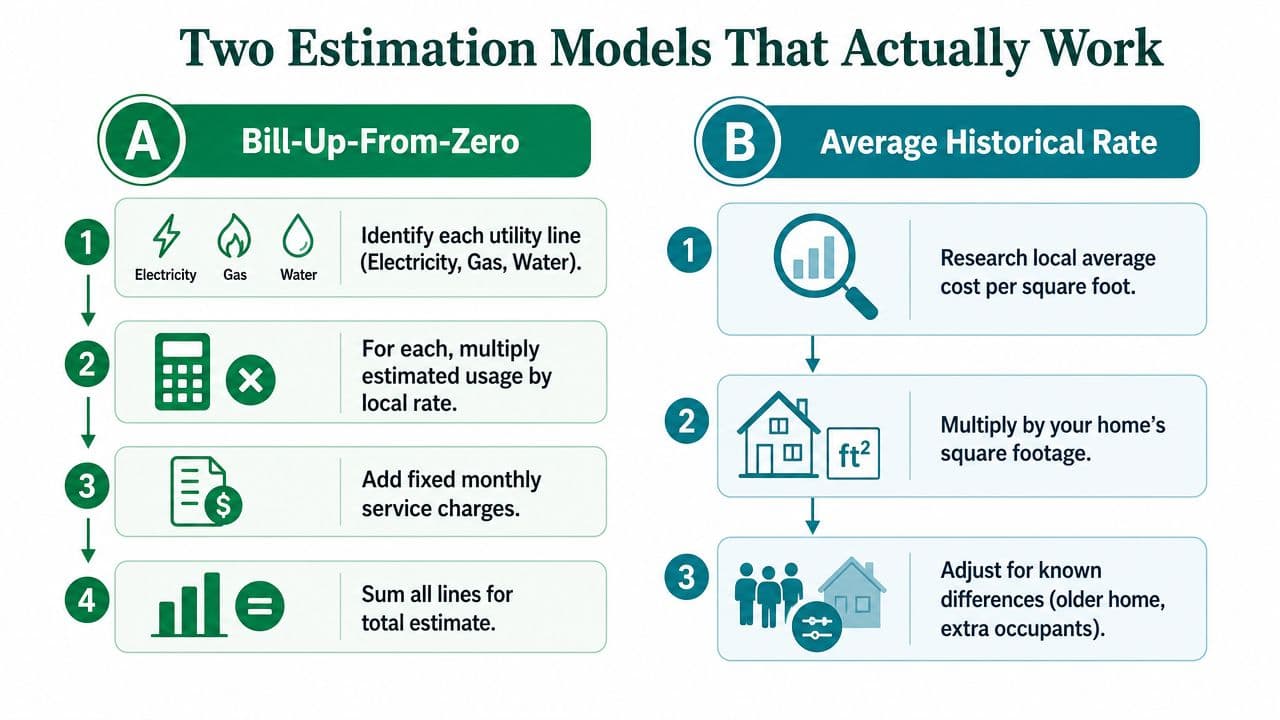
The best use of these two models is not choosing a favorite. It is making them disagree on purpose, then finding out why.
Benchmarks by Property Type
A property's monthly utility bill starts with its physical form. An apartment usually has a smaller footprint and shared building systems, while a detached home often carries its own heating, cooling, water, and waste costs.
| Property Type | Median Monthly Utilities | Typical Range | Notes |
|---|---|---|---|
| Apartment | $150 | Modest to moderate | Based on Zillow's detailed breakdown of median apartment utility costs Zillow's detailed breakdown of median apartment utility costs |
| Single-family home | Varies by size, system, and climate | Often above apartment levels | Larger loads, separate HVAC, and full-service bills make this category heavier |
| Large home | Highest risk of fast growth | Can rise quickly with added features | Pools, irrigation, and multi-zone climate control can push usage up |
The comparison is not about perfect apples-to-apples pricing. It is about matching the row to the home you are evaluating. A small condominium with shared exterior walls behaves more like an apartment than a detached house, while a large suburban home with a yard and separate systems usually sits much closer to the upper end of the range.
Apartments often look cheaper because the building carries part of the load. Shared walls reduce heat loss, and some services are bundled into rent or association fees. Single-family homes sit in the middle because they usually carry all the utility lines directly, but they do not always have the same oversized demand profile as a much larger house.
The broad U.S. benchmark can keep expectations grounded. Redfin says the six most common household utilities cost about $523 per month, while a broader basket that adds internet, phone, and streaming rises to about $595 per month. Those figures use different service baskets, so the point is to know exactly what your own estimate includes Redfin's utility cost guide.
A first-time buyer can use those benchmarks like lane markers on a road. If your estimate sits far outside the row that matches the property, something in the bill mix, climate load, or included services probably needs another look.
If you are comparing land use options too, the ownership side of the equation matters as much as the meter side. A property's long-term carrying cost can shift with land-value taxes and land-use rights, which is why the same monthly utility profile can sit inside very different holding costs. That is the same reason analysts look at highest and best use, not just the monthly bill.
Adjusting for Season, Region, and Rate Inflation
A monthly average hides the part that matters most. Utility spending rises and falls with weather, local rate design, and the steady creep of higher service charges over time.
Season changes the estimate more than people expect
Heating and cooling push bills in different directions depending on the month. In mixed climates, spring and fall can look tame, then summer or winter arrives and the utility total jumps because the HVAC system runs longer and harder.
A practical way to handle this is to keep one annual baseline, then apply a simple seasonal adjustment. You don't need a complicated model to stay honest. A mild-month multiplier of 0.9 and a peak-month multiplier of 1.25 can give you a cleaner planning range when you're budgeting by month.
Region matters because rates and infrastructure differ
The same home can cost more or less depending on where it sits. Fuel mix, local supply rules, and infrastructure charges all affect the final bill, which is why a utility estimate built in one market shouldn't be copied into another without adjustment.
Long-run data show why those adjustments matter. Residential electricity bills averaged $122 per month in 2021, up $5 per month from the year before, while the average household price rose 4.3%, from 13.2 cents per kilowatthour in 2020 to 13.7 cents/kWh in 2021 U.S. Energy Information Administration on residential utility cost trends. Over the longer span shown in that same source, inflation-adjusted household spending on utilities, fuels, and public services rose to $3,885 in 2015, up $462 since 2000, and electricity and water-related expenditures rose even faster.
Actual bills beat any adjustment
If a seller, landlord, or property manager gives you 12 months of actual bills, use them. That history already folds in the home's climate, rate plan, and habits, which makes it more reliable than a generic formula. Constellation and Redfin both treat a full year of bills as the strongest baseline for estimating a new home's utility costs Constellation's utilities cost guide.
A simple annual average can still be turned into a month-by-month plan. If a home's annual utility spend averages $330 per month, you can hold that as the baseline and then nudge the hottest and coldest months above it while giving shoulder months a little relief. That keeps your budget stable without pretending every month behaves the same.
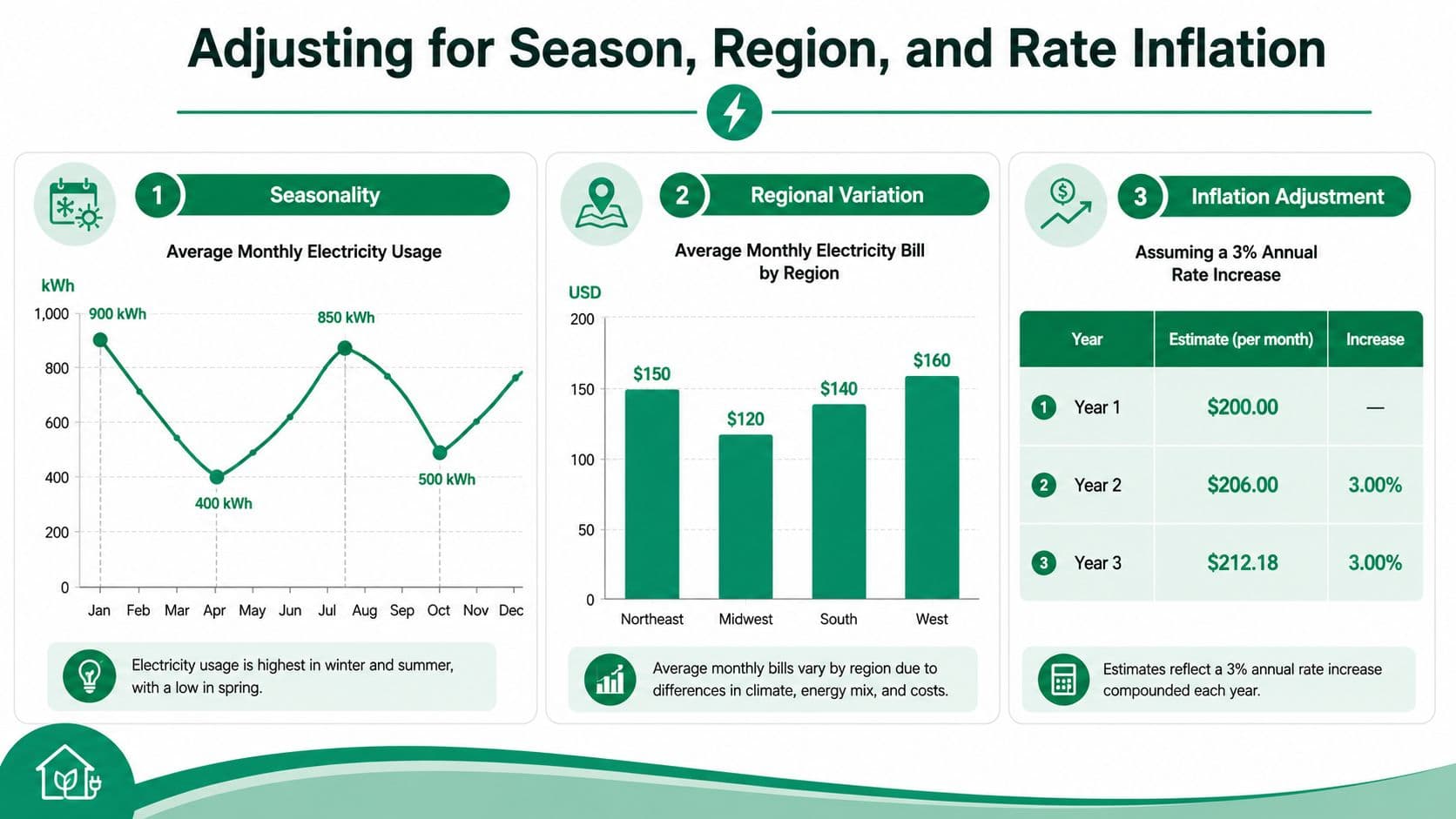
If your number still feels too neat, that's usually a sign to test it against the coldest and hottest months rather than averaging them away.
How Land Policy Shapes Long-Term Utility Costs
Utility bills don't exist in a vacuum. They sit inside a broader system of land rules, infrastructure funding, and public service pricing that affects what gets built, maintained, and charged over time.
That's why land-value taxes are worth mentioning here, even in a utility guide. A land-value tax taxes the unimproved site value, while land-use rights are a different legal arrangement altogether. In China, rural land is owned collectively or by the state, and households receive transferable land-use rights rather than full private ownership. The U.S. Congressional Research Service notes that those rights were originally granted for 70 years for residential land, 50 years for industrial land, and 40 years for commercial land, and the 2019 Property Law states that residential land-use rights are automatically renewed upon expiration. That is not a land-value tax, because the tax goes after site value, while land-use rights describe a tenure structure CRS overview of China's property system.
The distinction matters because public finance shapes infrastructure spending, and infrastructure spending shapes the charges that eventually show up in household bills. When a city has a stronger base for funding pipes, roads, and service networks, the long-term burden can look different than in places where the system leans heavily on usage charges and recurring fee increases.
Land policy doesn't replace utility math. It changes the backdrop that utility math has to live inside.
This is also why long-term carrying costs are bigger than the monthly utility line alone. A property can look cheap to buy, then become expensive to operate if the surrounding fiscal system underfunds the networks that keep water, energy, and waste service reliable. For a deeper look at how site value analysis connects to those broader costs, see calculate land value.
The practical takeaway is simple. When you estimate utilities, think about the bill today, but also about the policy system that decides how those bills are funded tomorrow.
Validating Your Estimate and Avoiding Common Mistakes
A good estimate survives contact with reality. If it doesn't, the problem is usually a missed fee, a bad assumption, or a property feature that wasn't checked carefully enough.
Test the number before you trust it
Start by comparing your estimate with the best available benchmark for that property type. Then ask for 12 months of actual bills if you haven't already, and walk the property with the number in mind. Old HVAC equipment, visible drafts, single-pane windows, electric resistance heat, or heavy outdoor water use can all push the estimate up.
The easiest mistakes are boring ones:
- Forgetting fixed monthly fees: Service charges can matter even when usage is low.
- Double-counting sewer: Sewer is often billed with water, not on a separate logic of its own.
- Leaving out internet or phone: Those may be optional in some homes, but they're still real costs.
- Ignoring fuel differences: Gas-heated and all-electric homes do not budget the same way.
If you want a clean sign-off before you close or sign a lease, use a short checklist. Confirm the utility providers, ask who pays each bill, verify the number of occupants, note the HVAC type, and compare the estimate against the most recent annual history if you can get it. That combination catches most of the errors that create ugly surprises later.
For teams that manage multiple properties, the discipline is the same even if the scale is different. A practical guide for facility managers on budget variance analysis can be a useful reference when you need to compare forecasted and actual utility spend across sites.
The final test is simple. If a number still feels high or low after you've checked the bills, the property, and the benchmark, assume the estimate needs another pass before you commit.
If you're comparing homes, apartments, or mixed-use properties and want a clearer way to turn bills into a decision-ready budget, visit Unitism®. Unitism® helps people think more clearly about the public and private costs that shape housing affordability, including the infrastructure and land-policy context behind recurring carrying costs.