Complete the PA Renters Rebate Form for 2026. Check eligibility, get filing tips, document checklists, and submit on time for your rebate.
August 10, 2026
PA Renters Rebate Form 2026: Easy Filing Guide
Complete the PA Renters Rebate Form for 2026. Check eligibility, get filing tips, document checklists, and submit on time for your rebate.
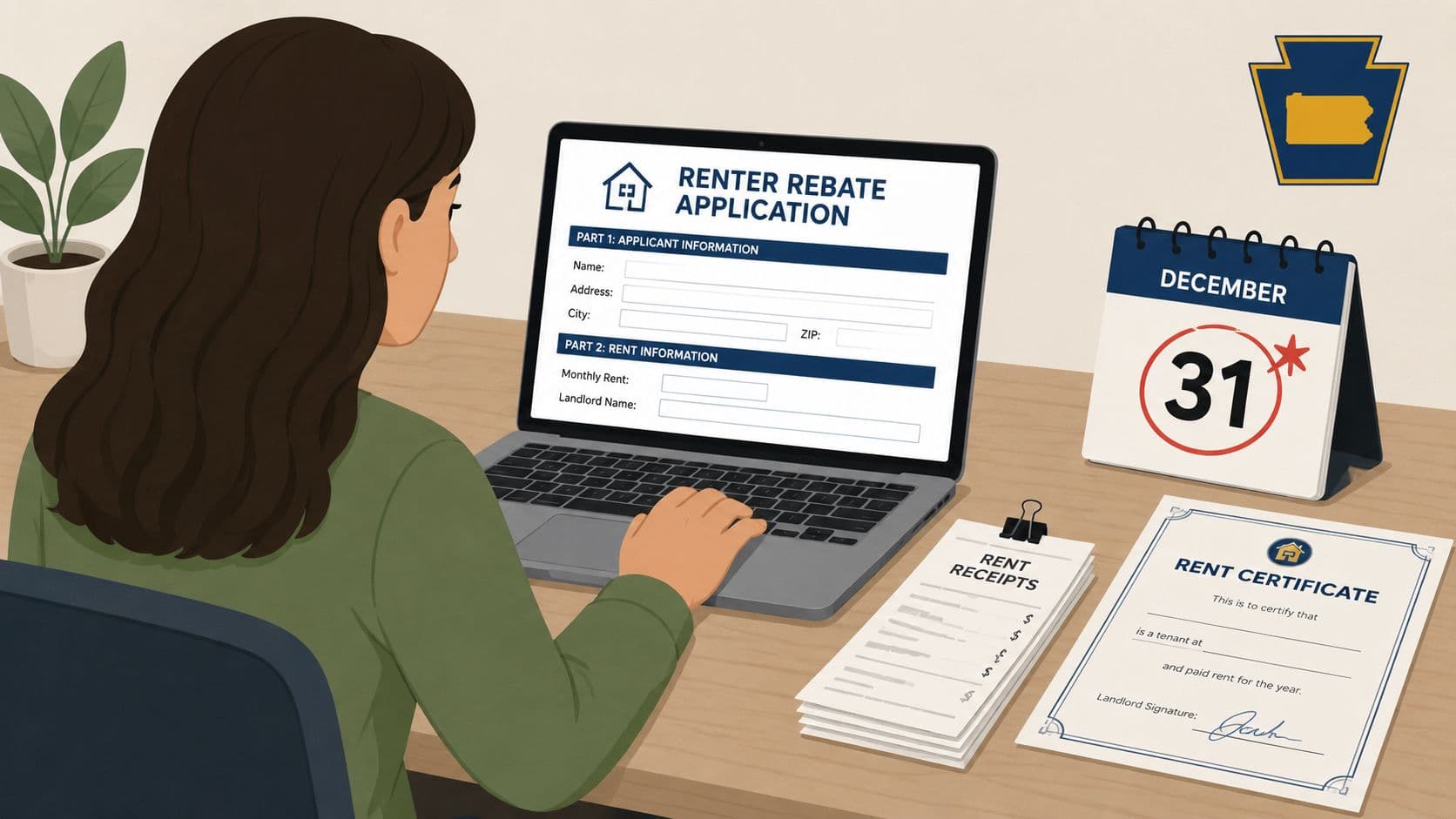
You're staring at a stack of papers on the kitchen table, the rent receipts are mixed with old mail, and the filing deadline keeps getting closer. That's exactly when the PA renters rebate form matters most, because a small paperwork gap can turn into a long delay. The good news is that the Pennsylvania rebate system is straightforward once you know which form to use, which proof to attach, and which outdated instructions to ignore.
Table of Contents
- Understanding the PA Renters Rebate Form
- Confirming Your Eligibility
- Gathering Required Documents
- Accessing and Completing the PA-1000 RC Form
- Submitting Your Application and Tracking Status
- Common Mistakes and Filing Tips
- Conclusion and Additional Resources
Understanding the PA Renters Rebate Form
A renter who waits until the deadline week usually ends up hunting for lease copies, rent receipts, and income records at the same time. The PA renters rebate form sits inside Pennsylvania's Property Tax/Rent Rebate Program, a state relief program that began in 1971 for older adults and people with disabilities. State program statistics for 2022 show that thousands of claims were approved and more than $192.0 million in rebates were paid for taxes or rent covered under the program, which makes it clear that this is a mainstream benefit, not a side filing chore. For a practical way to estimate what rent means for your own household before you fill anything out, personalized rent budgeting strategies can help you total the year's payments and compare them with the rebate rules.
For renters, the main attachment is the PA-1000 RC, also called PA Schedule RC. This is the rent documentation side of the application, and it exists because renters have to show rent paid rather than property tax paid. The form is where you connect your lease history to the rebate request, so the numbers need to match your records, not a rough estimate.
Pennsylvania also began electronic filing for claim year 2020, which changed how many people submit the rebate package. Filing online can reduce avoidable mistakes, especially if your paperwork is split between a landlord statement, bank records, and older receipts. It also makes it easier to catch a mismatch before the application goes out, instead of after the state reviews it.
Practical rule: if you are close to the deadline, start with proof of rent and income documents. Fill out the form after the paperwork is together, so you are not guessing at dates or amounts.
If you are comparing Pennsylvania's rebate with other relief programs, this overview of circuit breaker tax credit concepts helps show the difference. Pennsylvania's rebate is a separate payment based on eligibility and reported rent, not a reduction in the monthly rent bill.
Confirming Your Eligibility
Before you fill out the form, check whether your housing setup fits Pennsylvania's rebate rules. The state requires a landlord-tenant relationship, and the landlord must have been required to pay property taxes or have made a payment in lieu of taxes on the rental property, as explained in the Revenue Department qualification guidance. If your arrangement does not match that structure, the application may stop there.
Mixed housing situations can still qualify. Pennsylvania allows some applicants who were part owner and part renter during the year, and it also allows certain people who paid rent for land under a home while paying property tax on the land beneath it. The rule is broader than a simple renter-versus-owner check, so match your actual setup to the state's categories instead of forcing it into a quick yes-or-no answer.
One more rule catches people off guard. Renters who received cash public assistance during the year are not eligible for rebates for those months. That does not automatically end the whole application, but it does change which months you can include.
Practical rule: if your living arrangement changed during the year, map it month by month before you fill out the form.
If you want tenant-focused housing rights context while you check your records and landlord details, tenant protection guidance can help you compare those details against common occupancy issues.
Gathering Required Documents
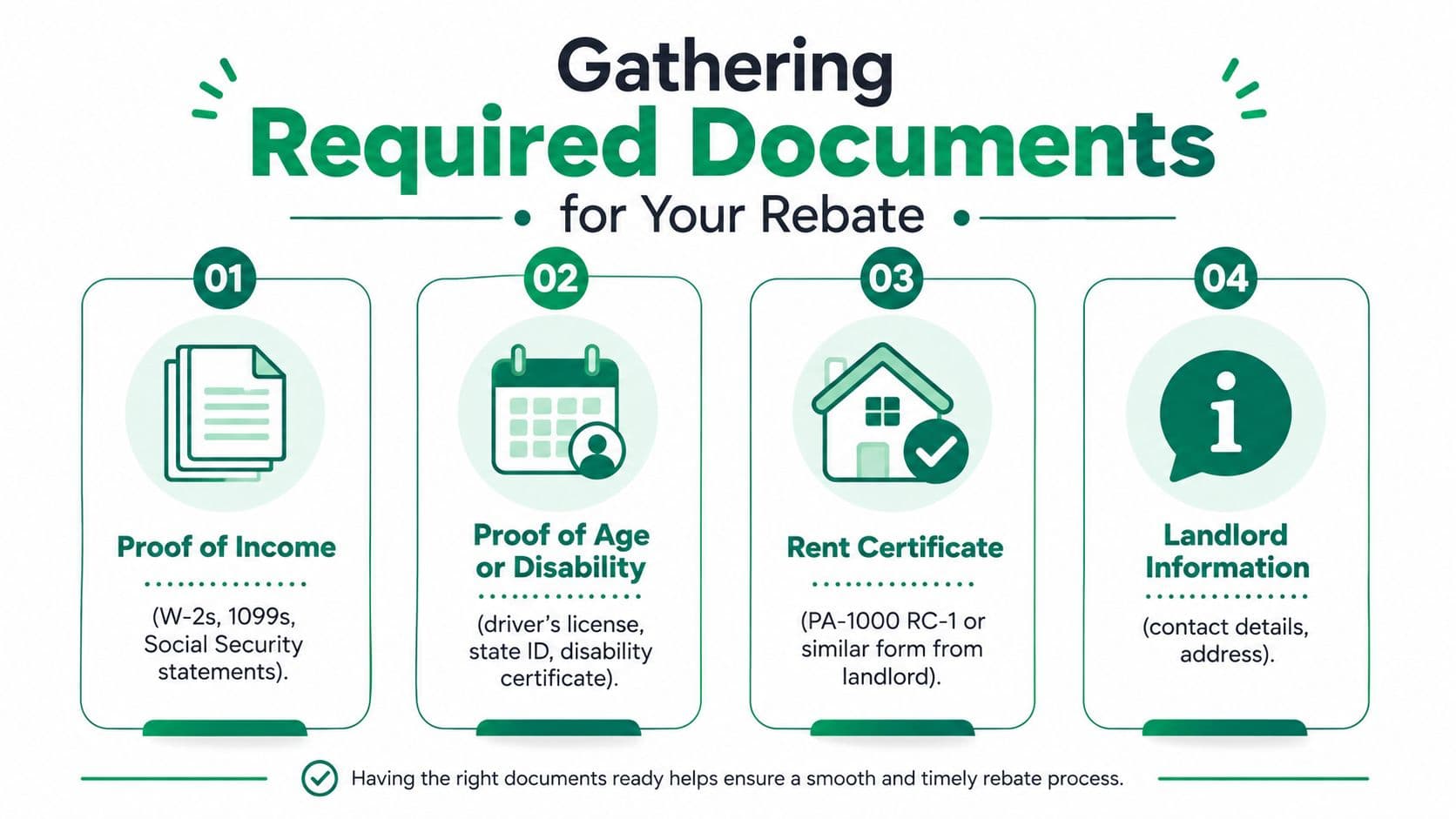
A complete rebate packet starts with the right folder, not the right mood. Renters need proof of income, proof of age or disability when applicable, and the rent documentation that matches where they lived. The state's documentation rules are strict because the rebate depends on verifiable rent, not estimates or memory.
What to gather first
Start with the PA rent certificate for every place you lived during the claim year. Pennsylvania says a renter must provide a rent certificate for each residence, signed by the landlord or the landlord's agent, and if that signature can't be obtained, a notarized affidavit is required because unsupported rent receipts are not accepted (rent certificate guidance). That detail matters because the rent certificate isn't optional paperwork, it's the evidence the state uses to verify your claim.
Then assemble proof of age or disability if you're a first-time filer, along with income records that show the household numbers you'll enter on the application. Don't overcomplicate this step. A clean stack of documents beats a scattered pile of receipts every time.
Here's the part that saves time at the end:
- Proof of income: gather your W-2s, 1099s, or Social Security statements so you can match the figures you enter.
- Proof of age or disability: keep your driver's license, state ID, or disability documentation together if the state asks for first-time proof.
- Rent certificate: get the landlord or agent signature before you submit, because incomplete certificates slow the file.
- Landlord contact details: keep the name, address, and phone number handy in case the state needs follow-up.
For a planning check that many renters skip, estimate utilities cost can help you separate rent from other housing expenses before you total the year.
Practical rule: if you lived at more than one address, don't assume one certificate covers the whole year. Match each residence to its own rent evidence.
Accessing and Completing the PA-1000 RC Form
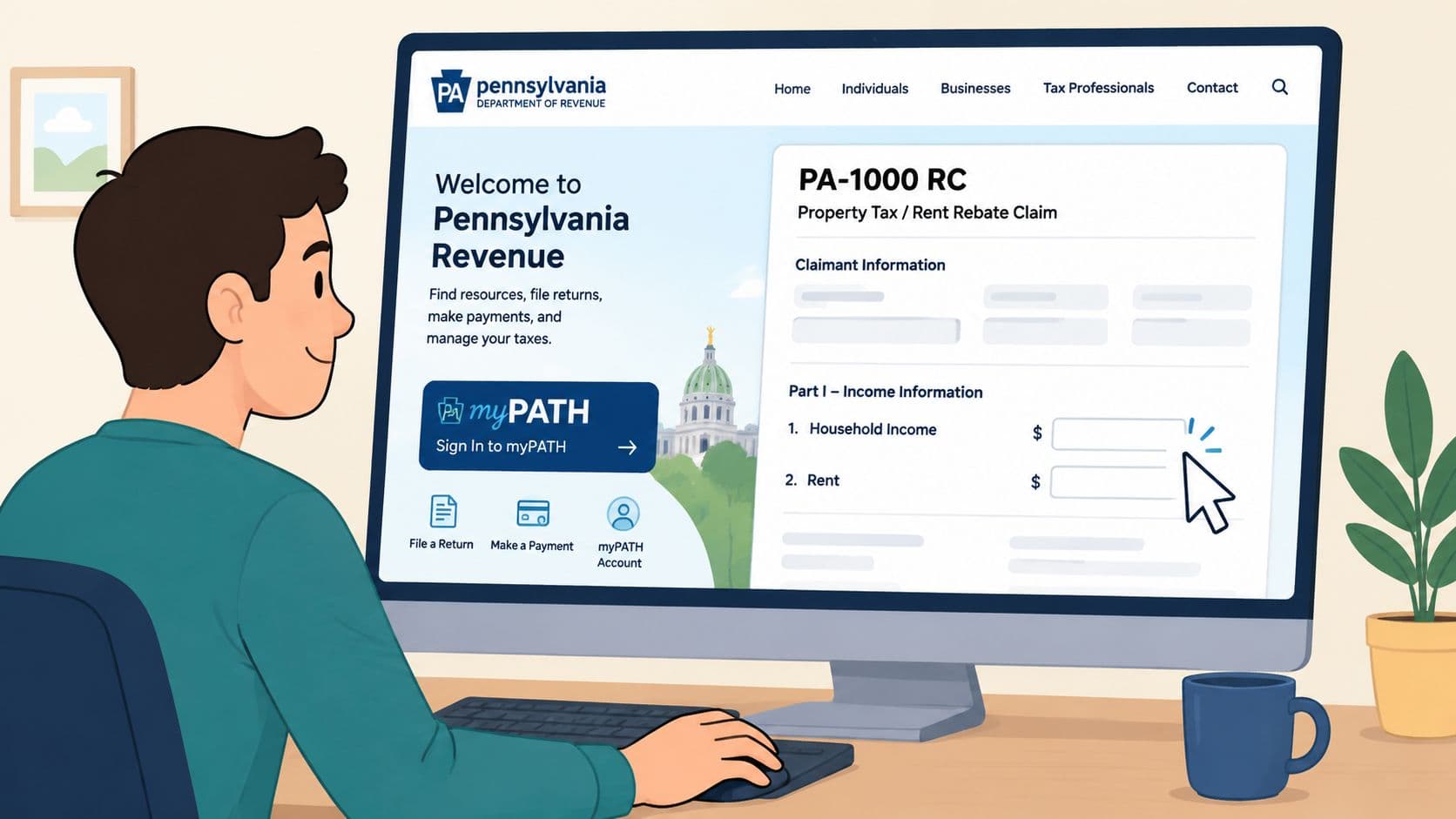
Start with the current Pennsylvania Revenue forms page, since older copies of the renter schedule can leave you working from outdated instructions. Renters file PA-1000 RC (PA Schedule RC) with the main PA-1000, and some households also need additional schedules in situations such as multiple owners or cash public assistance (forms and information). The renter schedule is part of the full claim, so filling it out correctly depends on matching it to the rest of your packet.
How the form works
The 2025 PA-1000 instructions use a rule-based benefit formula. Renters figure the rebate by taking the total rent paid, applying the program formula, and then comparing that amount with the maximum rebate allowed for the income level, with the final award set at the lesser amount after those comparisons (2025 PA-1000). That is why each line has to be right. One wrong entry can place a claim in the wrong bracket or change the rebate amount.
The instructions also say half of Social Security and/or Railroad Retirement income is excluded from income calculations. For many applicants, that changes the filing result more than any other single line on the form. Enter income carefully and separate what counts from what does not.
A practical check helps here. If you are comparing the paper form with your notes, make sure the annual rent total matches your receipts, and make sure the income section reflects only the amounts the instructions call for.
Where people usually get stuck
The form keeps owner and renter computations separate, so do not mix them together. The state's preparation guidance says property-tax and rent rebates must be calculated separately, and myPATH handles those calculations automatically when filed electronically (2025 PA-1000). Online filing is the cleaner option if you want fewer math errors.
If the landlord will not sign the rent certificate, stop and get the notarized affidavit instead of hoping the application will go through anyway. The state wants the rent evidence attached before it can process the claim efficiently.
For household-level filing questions, review this FAQ resource before you decide whether a special schedule is needed.
Practical rule: enter the annual rent total only after you have checked every month and every address. The rebate is calculated from the yearly total, not from a quick estimate.
Submitting Your Application and Tracking Status
Once the packet is complete, filing becomes a matter of proof and timing. Pennsylvania's official deadline for 2025 Property Tax/Rent Rebates should be confirmed on the current state page before you mail anything, since older guidance can lag behind program updates. The same official page lists a household income cap of $48,110 and maximum standard rebates up to $1,000 (PTRR official page). If you are comparing notes from a printout, use the live page instead of relying on an older copy.

Best filing path
Once the forms are ready, decide whether speed or paper control matters more to you. myPATH is the cleaner choice if you want automatic calculations and fewer entry errors, while paper filing gives you a physical packet you can review line by line. Keep a copy of everything either way, because a lost page is harder to untangle than a corrected one.
The state's filing flow is straightforward if you handle it in order.
- Complete forms and attach documents. Check that every required line is filled in and that each supporting page is present before you send anything.
- Choose online submission. myPATH is usually the faster option if you want to cut down on math mistakes and keep a receipt trail.
- Mail the application if needed. Follow the state's mailing instructions exactly when you submit a paper packet.
- Track status in myPATH. Use the portal to confirm that the claim was received and to watch for any processing update.
A paper filer should keep the mailing date, the full packet copy, and the rent certificate pages together in one place. That makes it easier to answer a follow-up question without rebuilding the file from memory.
If a small mistake turns up after you submit, correct it quickly instead of waiting for the state to sort it out. That is usually the difference between a brief delay and a long back-and-forth. For people who want a quick refresher on filing questions before they call or resend anything, this FAQ page is a useful place to check the basics. For a practical cross-check on common filing errors, see Allied Tax Advisors' tips.
Common Mistakes and Filing Tips
The applications that stall usually do not fail on the main claim, they fail on a small omission. Missing rent certificates, unsigned affidavits, and poorly assembled paper packets are common reasons a claim gets delayed, while online filing through myPATH still helps reduce entry and math errors by handling calculations for you. That is the trade-off. Paper gives you more control over the packet, but online filing gives you fewer preventable mistakes.
What to avoid
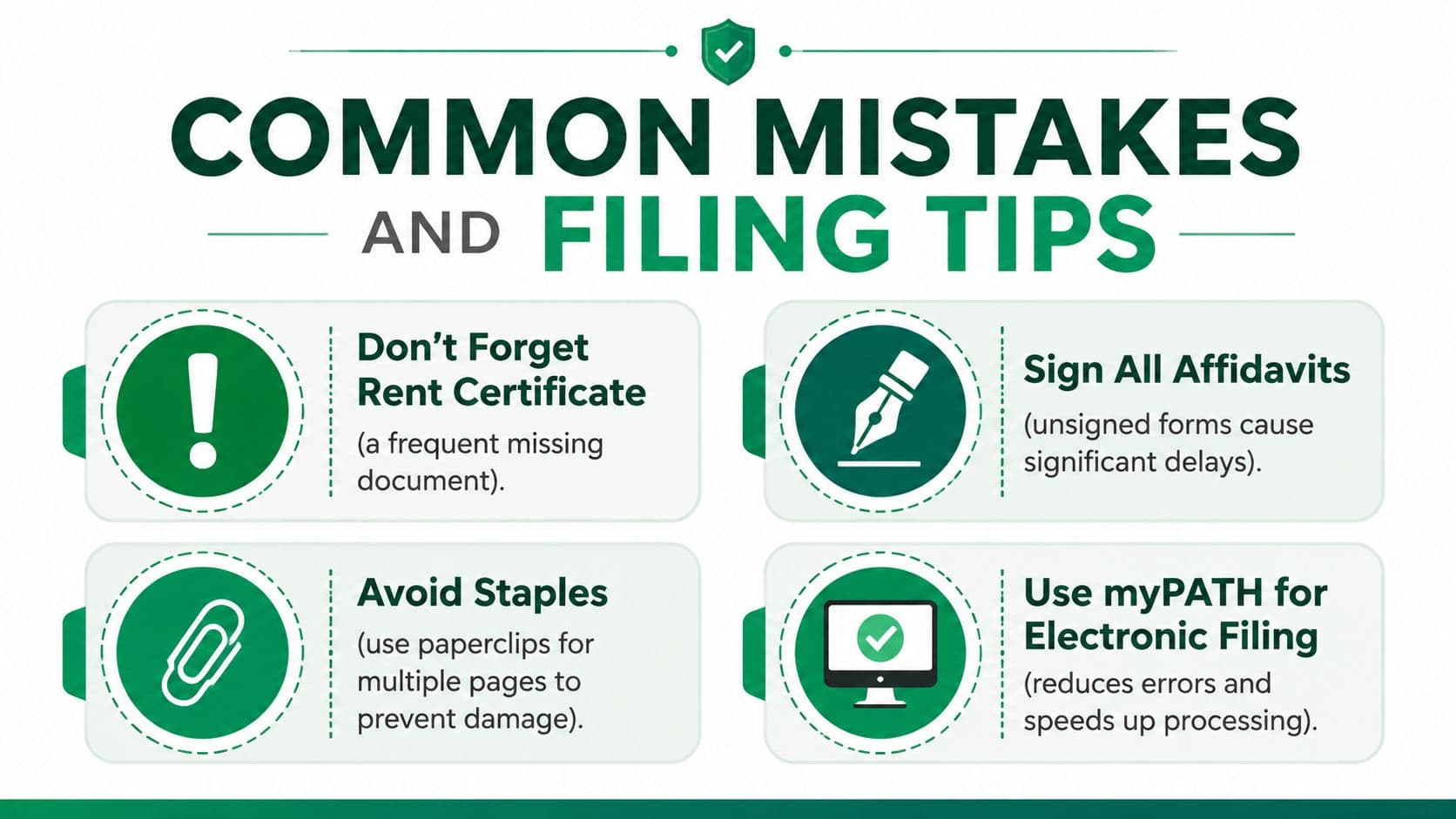
A few habits save the most time. Do not send a rent packet with a missing landlord signature unless you have moved to the notarized affidavit route. Do not staple multi-page attachments, because stapled pages are a common processing problem and can make handling harder on the state side.
- Don't forget the rent certificate: this is the most common missing document in renter claims.
- Sign every affidavit: unsigned forms slow the file and can force follow-up.
- Avoid staples: paperclips are easier on document handling and reduce damage.
- Use myPATH when possible: electronic filing cuts down on math and entry mistakes.
A paper filer should also build a quick pre-submission checklist before anything goes out the door. Confirm that every page is present, every signature is in place, the rent totals match the period you are claiming, and the supporting pages match the story on the form. If one item feels off, stop and fix it now.
It also helps to use outside reminders. Allied Tax Advisors' tips are useful as a second pass if you want a quick check on the kinds of errors that usually cause delays.
For readers who want a broader context on why these filing details matter, housing affordability policy explains how rent relief programs fit into the larger housing-cost picture.
Conclusion and Additional Resources
The renter who starts with a pile of papers and ends with a clean filing usually does three things right. They verify eligibility, gather the correct rent certificate for every residence, and use the official filing path instead of relying on outdated instructions. That's how the process shifts from stressful to manageable.
For a broader housing-policy lens, housing affordability policy shows why rent relief programs matter beyond one household's refund. If you're still unsure, keep the official Pennsylvania Revenue pages open while you file, because those are the rules that control the current cycle. A careful submission today can save you weeks of avoidable back-and-forth later.
Unitism® helps people and institutions understand housing costs, tax design, and the policy choices that shape affordability. If you want clearer explanations and practical frameworks connected to programs like this, visit Unitism® and use its research-led resources to make your next filing or policy conversation easier.