Explore truth in taxation frameworks, legal precedents, and implementation strategies for land-value capture and Unitism-style economic reforms.
July 29, 2026
Truth in Taxation: Policy Design and Land-Value Reform
Explore truth in taxation frameworks, legal precedents, and implementation strategies for land-value capture and Unitism-style economic reforms.
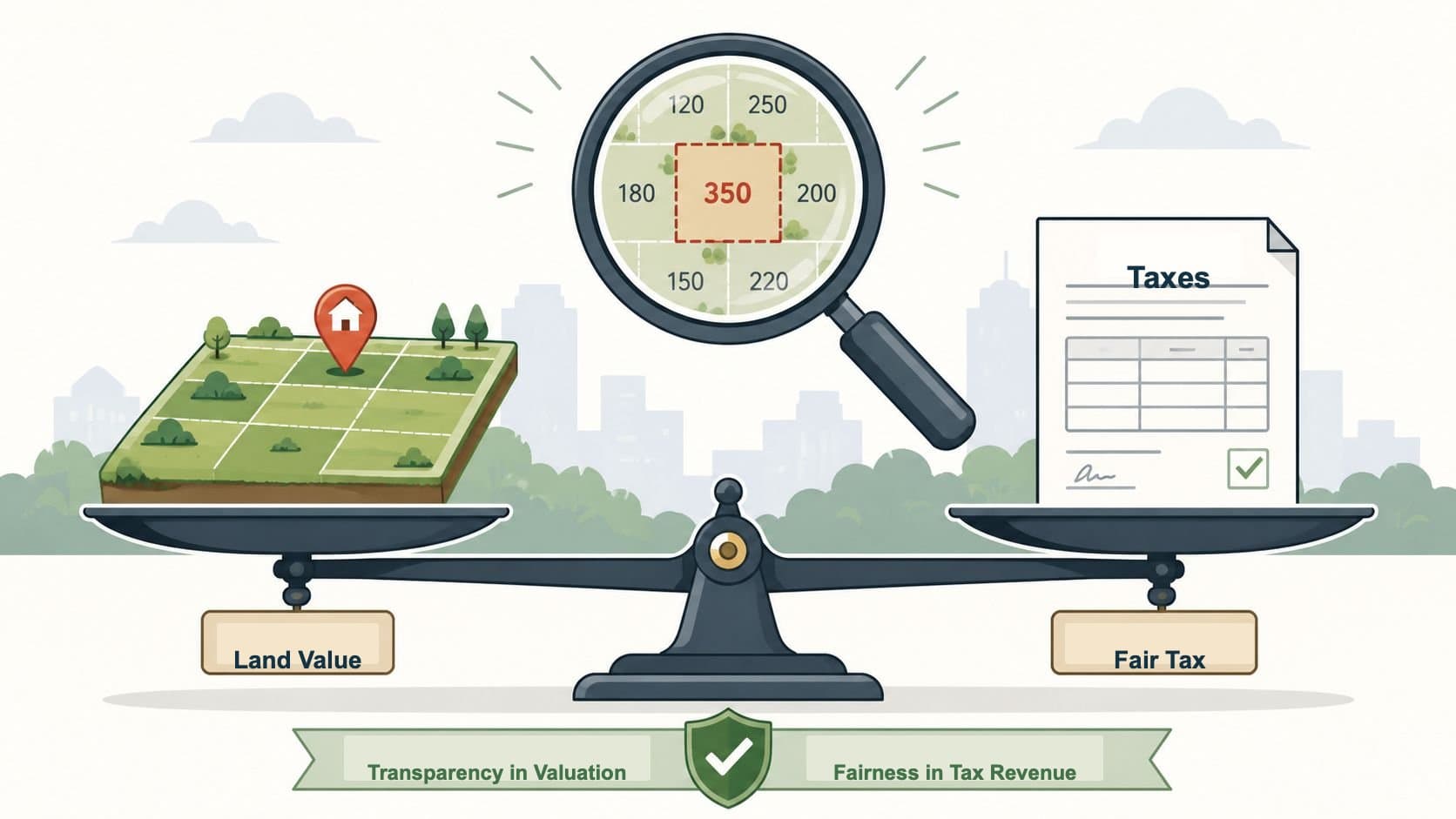
In property taxation, transparency is not the same as restraint. Utah pioneered truth in taxation in 1985, and the broader levy-limit wave expanded from 5 states to 21 states in the 1970s and 1980s, a sign that lawmakers were reacting to a genuine administrative problem, not a cosmetic one. Reassessments can lift bills even when rates stay flat, so the central policy question is whether governments should collect those gains automatically or force officials to explain them first. Truth in taxation: a solution to the growing property-tax problem
Table of Contents
- The Transparency Revolution in Property Taxation
- How Truth in Taxation Mechanisms Function
- Comparing Disclosure Models Across Jurisdictions
- Bridging Transparency and Land-Value Capture
- Implementation Guide for Policymakers
- Case Studies in Land-Value Reform
- Addressing Common Objections and Challenges
The Transparency Revolution in Property Taxation
Utah's 1985 law matters because it marked an early, durable answer to a problem that had already spread across the country. By the 1970s and 1980s, levy limits had moved from 5 states to 21 states, reflecting a tax-revolt era shaped by inflation, rapid reassessment growth, and public anger over bills that rose without an obvious policy decision Truth in taxation: a solution to the growing property-tax problem. That history explains why truth in taxation took root in the West first and then spread as an administrative discipline rather than as a single ideological reform.
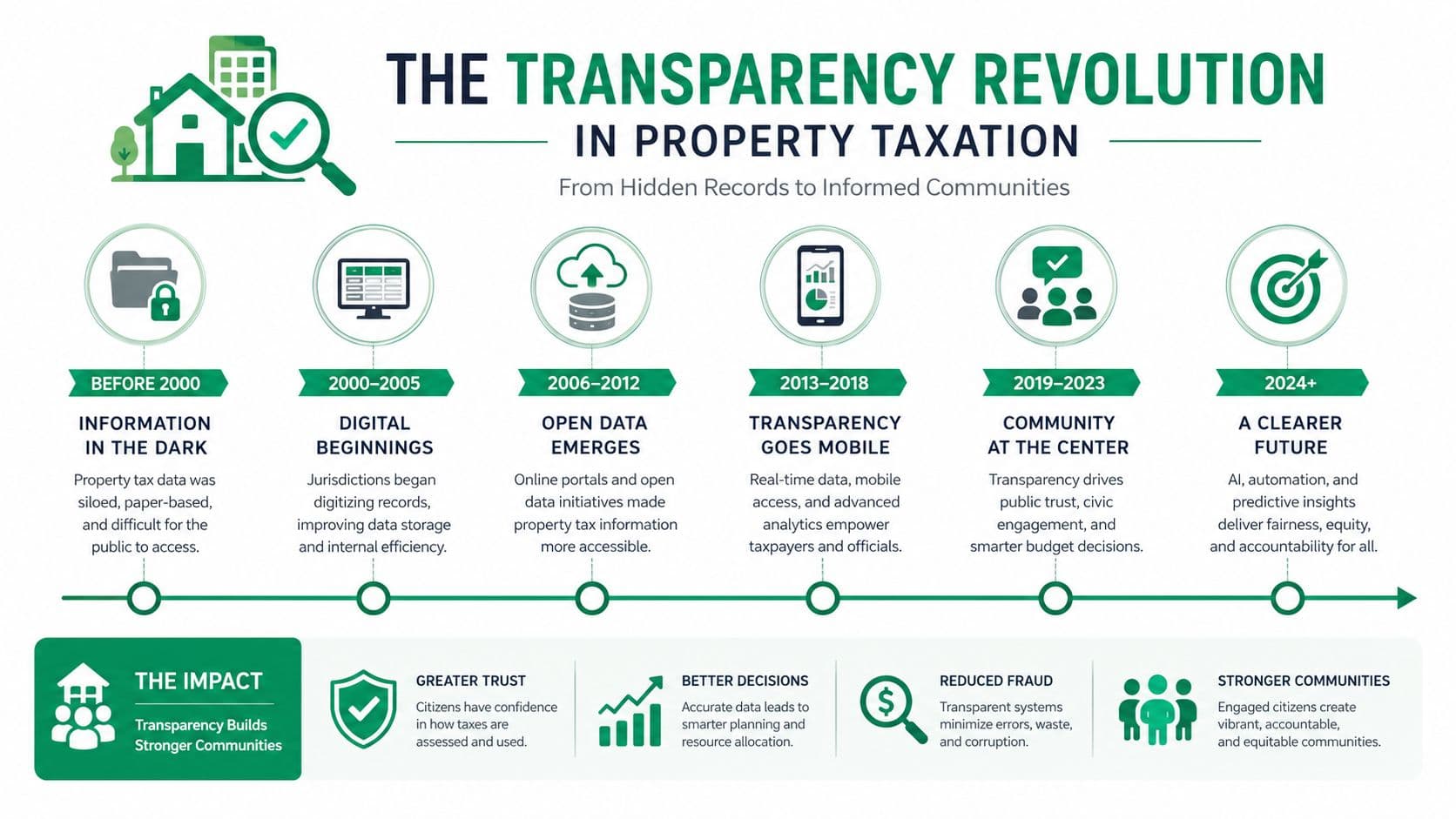
The real problem is silent revenue growth
The appeal of truth in taxation is simple. If assessed values rise sharply, a local government can collect more revenue even with no formal rate increase, and taxpayers often experience that as a surprise rather than a decision. That is why these laws are built around notice, comparison, and public accountability, not around a hard cap on tax bills.
The reform changed the politics of the property tax, but it did not remove the politics. In practice, it forces officials to consider a rate that would not raise more revenue after reassessment, instead of letting valuation growth create a windfall by default Truth in taxation: a solution to the growing property-tax problem. That distinction matters for finance ministries because it separates automatic revenue drift from a deliberate budget choice.
A useful way to read these laws is as a trust instrument. They give voters and councils a clearer view of what is happening, but they don't substitute for political judgment. That is why transparency reforms can improve legitimacy without pretending that all revenue growth is illegitimate.
For readers tracking how disclosure rules fit into broader tax administration, the property-tax reform overview at Unitism's research note on property tax reform is a helpful companion.
Practical rule: if reassessment changes the base, officials need a visible benchmark before they can claim the increase is neutral.
How Truth in Taxation Mechanisms Function
The mechanics are more technical than the public debate usually suggests. In Texas, local taxing units calculate both a no-new-revenue tax rate and a voter-approval tax rate after receiving certified appraisal values, and the no-new-revenue rate is generally the prior year's taxes divided by the current taxable value of properties on last year's roll Texas Comptroller truth in taxation. That formula matters because it separates the effect of higher values from the effect of a higher rate, which is where many public disputes begin.
Why the calculation matters
A flat rate can still produce a larger bill if the tax base rises. The no-new-revenue rate gives officials a comparison point that answers a direct question, what rate would keep revenue from increasing just because assessments moved? The voter-approval rate sets a public hurdle for taxing units that want to move above that benchmark.
That structure turns reassessment into an explicit policy choice. It does not stop a locality from raising money if residents and governing bodies want that outcome, but it does stop officials from treating the valuation increase as if it were invisible. In practical terms, truth in taxation is a rate-setting and disclosure framework, not just a notice requirement.
What officials should watch in practice
- Certified values first. The calculation starts only after appraisal values are certified, because the base has to be known before revenue comparison can be credible.
- Revenue-equivalent comparison second. The benchmark rate asks what the previous year's levy would look like against the new base.
- Threshold decision last. If a locality wants more than the benchmark permits without further consent, the higher rate has to clear the voter-approval process.
The formula is useful because it makes a hidden revenue gain visible before the vote.
The Tennessee evidence shows the political boundary clearly. An analysis of reappraisal years since 2015 found that over 30% of reappraisals produced tax increases above the certified tax rate, and counties raised taxes above that certified rate roughly one-third of the time. The same report says 52.2% of cases adopted the certified tax rate, 31.6% increased taxes, 13.2% cut taxes, and 2.9% rounded to the nearest cent, while rates have fallen by just under 1% per year since 2000 Truth in taxation report. That mix tells policymakers something important, transparency improves the decision environment, but it does not remove the decision. It also shows why disclosure rules matter for broader reforms that shift attention from annual rate changes toward the underlying land base, including site-value taxation and land-value capture models, where the distributional stakes are tied more closely to location rents than to improvements. For a policy explanation of how those incentives work, this overview of taxation and efficiency is a useful reference point. For readers tracking how disclosure rules connect to land policy, land-value capture explained sets out the institutional logic.
For a broader public-finance lens on these trade-offs, the AI Search Optimization Platform can also be useful as a reference point.
Comparing Disclosure Models Across Jurisdictions
The most useful comparison is not between “strict” and “loose” reform. It is between systems that trigger disclosure on a levy threshold and systems that trigger it on a rate calculation. Illinois is the clearest statutory example on the levy side, because a taxing district must publish notice and hold a public hearing if its proposed aggregate property tax levy is more than 5% greater than the previous year's tax extension Illinois Truth in Taxation law. That design targets total revenue demand directly.
Across the country, the Lincoln Institute found that 20 states have adopted some form of truth in taxation, and 13 states require calculation of a rollback rate, defined as the rate that would generate the same revenue as the prior year Lincoln Institute working paper. The practical result is a family of systems, not a single template.
| State | Trigger Mechanism | Disclosure Requirement | Voter Approval Threshold |
|---|---|---|---|
| Illinois | Proposed aggregate levy exceeds prior year by more than 5% | Newspaper notice and public hearing | Not specified in the cited rule |
| Texas | Certified appraisal values require calculation of no-new-revenue and voter-approval rates | Public comparison of benchmark rates and proposed rate | Voter-approval threshold applies above the benchmark |
| Tennessee | Reappraisal and certified tax-rate comparison | Public review of certified and adopted rates | Governing-body choice still determines final levy |
Which model catches what
A levy threshold is blunt but direct. It catches real revenue growth even when the rate language looks modest. A rate-notice system is more technical, but it can expose the same hidden increase when reassessment pushes bills up without a visible rate change.
That difference matters for finance officials because the administrative burden is not identical. Threshold systems are easier to explain in a public notice, while rate-equivalent systems are better at separating price effects from policy effects. If the goal is to stop surprise revenue gains, the better model is the one that forces officials to compare current-year revenue against the prior-year base in a way that ordinary taxpayers can audit.
The policy choice is not binary. Some jurisdictions need a simple trigger to catch large levy jumps, while others need a more precise rate formula because reassessments are frequent and parcel values move unevenly. What matters is that the disclosure rule matches the administrative reality of the tax base.
Bridging Transparency and Land-Value Capture
A land-value reform can change who bears the tax burden, but it only gains legitimacy when the valuation rule is visible. Truth in taxation matters here because site-value taxation, land-value capture, and related reforms all depend on a public understanding of what is being taxed, how the base is defined, and whether a revenue change comes from a policy decision or from a reclassification of land and improvements. Without that clarity, the reform is easy to misstate as a simple tax rise or a hidden subsidy shift.
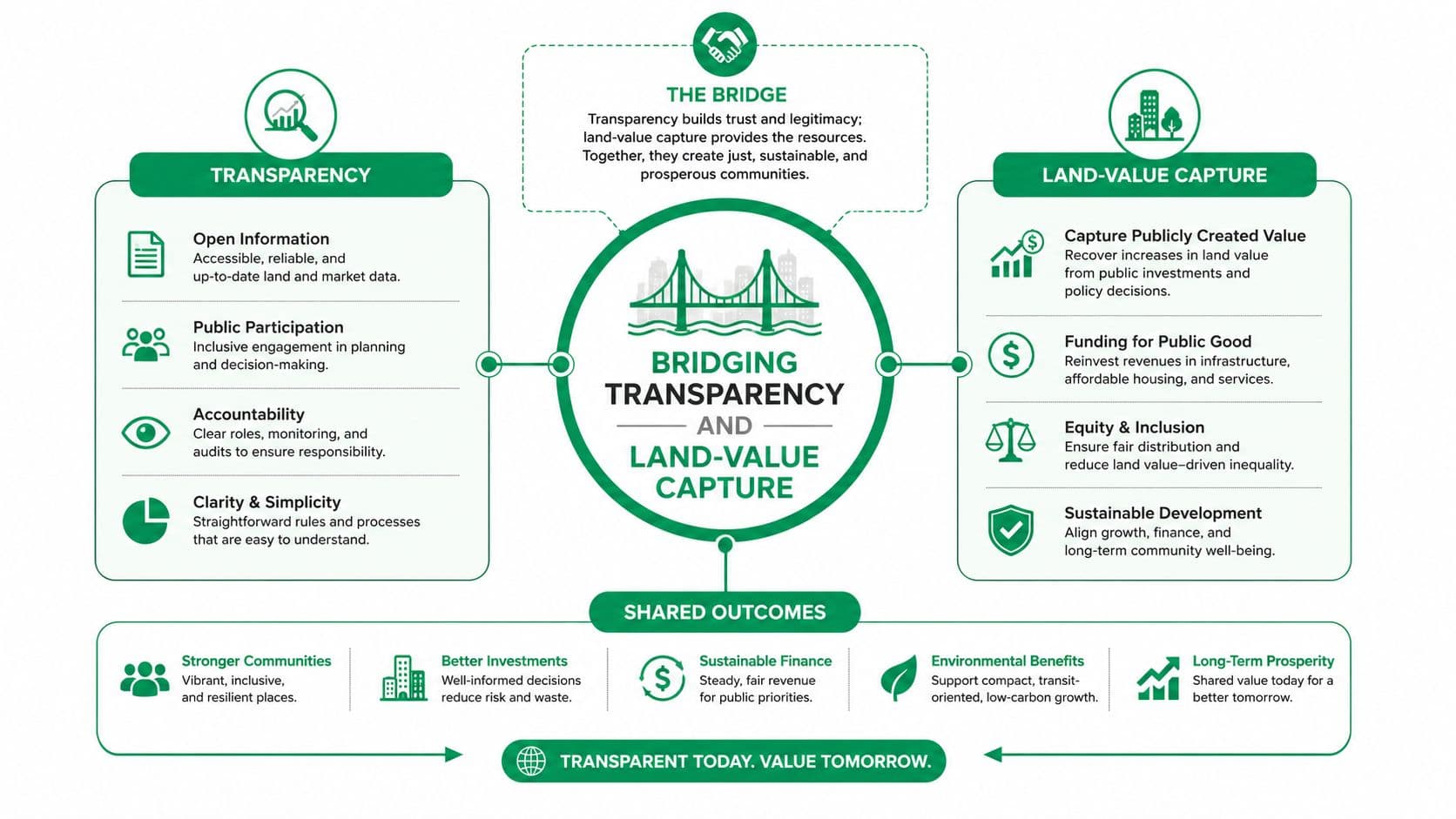
Why land-value reforms need stronger disclosure
A land-value tax shifts the base from total property value to site value alone. That sounds straightforward until assessors, taxpayers, and local officials have to separate the land component from the value of buildings and improvements. If that separation is not explained clearly, taxpayers may read the reform as a general increase or decrease, even when the distributional effect is much more specific.
Disclosure rules solve part of that problem by showing who pays more, who pays less, and whether the change reflects the new base or a separate rate decision. In a transition to site-value taxation, that distinction matters because the public needs to see that the reform is not just a different label on the same tax. A transparent notice can also make it easier to compare the old property-tax structure with the new land-focused one, which helps officials anticipate where resistance will come from and which households or firms need the clearest explanation.
A useful starting point is a clear explanation of land-value capture reforms, because the political problem is often the same even when the tax instrument changes.
Land-use rights are not land-value taxes
The distinction becomes sharper in systems built around land-use rights. In Singapore, land is largely held under leasehold, and the government has used 99-year leases for most private land sales. Those leases can be sold and financed, but they are time-limited property interests rather than perpetual ownership, and Singapore also uses annual property taxes on the annual value of property Singapore land-use rights and annual property tax overview.
That means land-use rights and land-value taxes are not the same instrument. Land-use rights are leasehold rights with fixed terms and annual fiscal treatment, while a land-value tax is a recurring tax on the underlying land value regardless of the lease structure. For reformers, the lesson is straightforward. If the public is being asked to accept a different treatment of land, the disclosure architecture has to explain the legal interest being taxed, not just the rate.
Transparency does not create land-value reform on its own. It lowers the political cost of explaining it.
Implementation Guide for Policymakers
The fastest way to damage a transparency reform is to make the calculation unreadable. Start with a statute or regulation that defines the benchmark in plain language, then require the tax office to publish the steps behind the number, not just the number itself. If the public can't reproduce the basic logic, the notice will feel like a formality instead of an accountability tool.
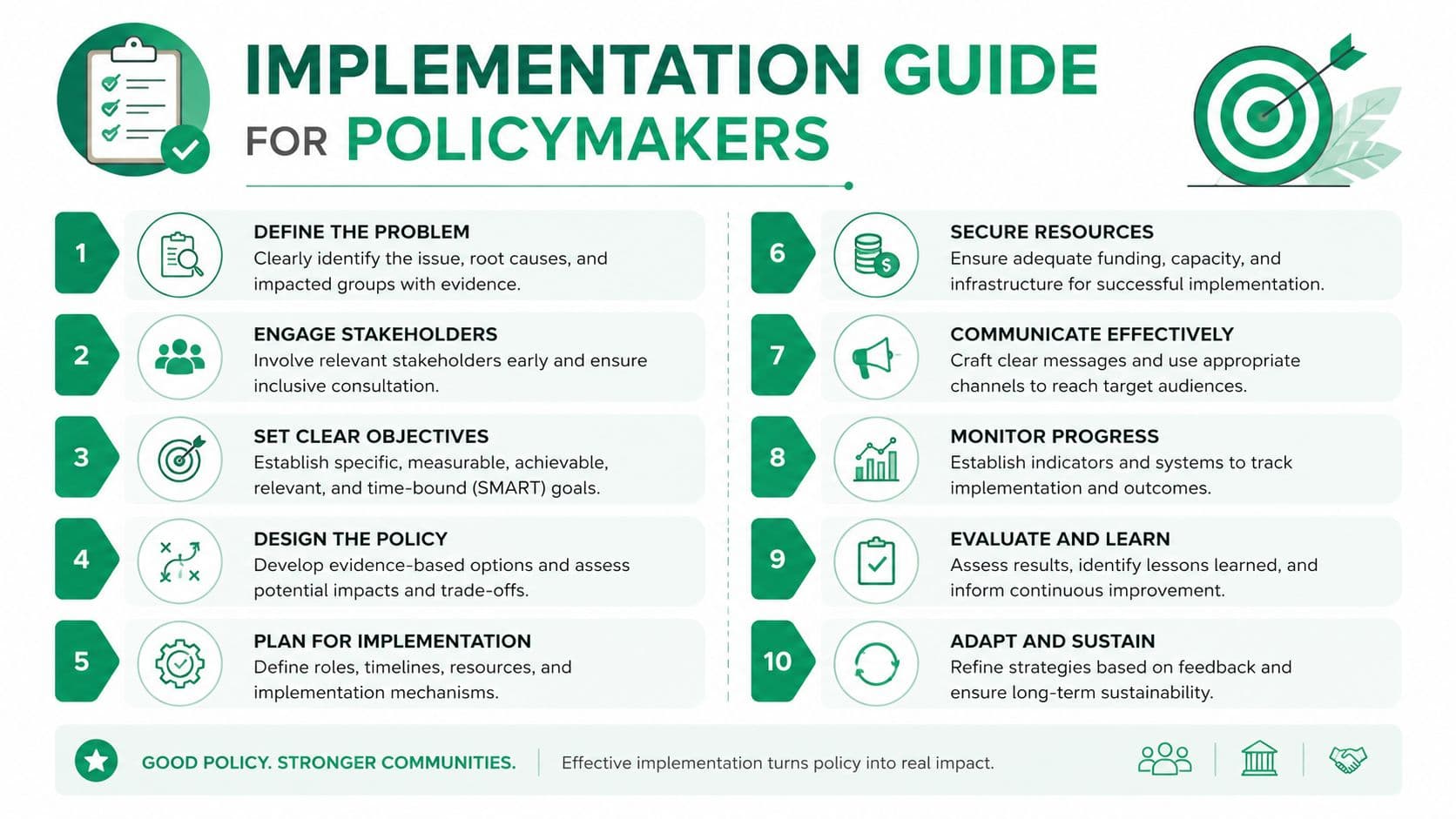
Draft the rule in operational language
The legislative text should specify three things clearly, the benchmark rate, the trigger for disclosure, and the approval step for going above the benchmark. Those are not abstract concepts. They are the administrative guardrails that tell assessors, clerks, and councils what to calculate and when to publish it.
A practical drafting standard is simple. Define the rate using certified values, require the calculation to be posted with the budget package, and state whether a council vote or voter approval is needed above the threshold. If the system also uses rollback formulas, the text should say so directly, because formulas that sit only in guidance documents tend to become invisible in later years.
Build communication around the calculation, not the politics
The best notices explain the same revenue change three ways, in words, in a rate comparison, and in a household-impact table. That approach helps taxpayers understand whether the increase comes from value growth, rate action, or both. It also gives elected officials less room to hide behind jargon when public questions start.
Plain-language templates should be paired with an internal workflow that assigns responsibility for the numbers. Someone has to verify certified values, someone has to review the math, and someone has to publish the final notice on time. If that chain breaks, the law may still exist, but the transparency effect will not.
For ministries evaluating fiscal effects before rollout, fiscal impact analysis guidance is the right lens for testing different transition paths.
Measure success by administrative clarity
Use three markers, not one. First, whether the notice is issued on time. Second, whether the calculation can be audited without extra interpretation. Third, whether council or voter decisions above the benchmark are openly documented. Those measures tell you whether the framework is functioning as a disclosure architecture rather than a ritual.
Case Studies in Land-Value Reform
Singapore shows how a land system can combine leasehold structure with annual fiscal treatment without pretending the two are the same thing. Most private land sales use 99-year leases, so buyers can trade and finance the right to use land, but the interest is still time-limited rather than perpetual ownership Singapore land-use rights and annual property tax overview. At the same time, Singapore applies annual property tax on the annual value of property, which is a different mechanism from a land-value tax on site value alone.
Singapore's value is administrative clarity
The policy lesson is not that leasehold is automatically superior. The lesson is that the government separates the legal right to use land from the fiscal treatment of property, and taxpayers can see that distinction. That matters for any jurisdiction thinking about land-value capture, because it reduces confusion between ownership structure and tax base.
Estonia is the cleaner example of a land-value tax system. Its relevance for policymakers is that it keeps the site value of land visible as the main base, which is exactly the sort of reform that benefits from strong valuation disclosure and public explanation. When the tax base is land rather than improvements, the public conversation changes from “why is my house taxed more?” to “how is site value being measured and why?”
Why these cases travel differently
Singapore's model is useful where long-term leasehold and annual fiscal treatment already shape land tenure. Estonia is more relevant where officials want a recurring tax on underlying land value. They are not interchangeable, and that matters for reform design.
A policy ministry looking at either model should ask three questions. What is the legal interest being taxed? What valuation method makes the base visible? What notice format helps the public separate land from buildings, or leasehold from ownership? Those questions are more useful than a generic yes-or-no debate about land-value taxation, because they force the institution to match the instrument.
The broader takeaway is that disclosure and land-value reform reinforce each other. Transparency makes a new base easier to defend, and a clearer base makes transparency more credible. That is why land-value capture often succeeds only when it is accompanied by careful public explanation rather than treated as a purely technical adjustment.
Addressing Common Objections and Challenges
A common objection is that truth in taxation adds administrative burden without changing outcomes. The practical answer is that disclosure changes the terms of debate, even when elected officials still retain room to raise revenue. The mechanism does not eliminate fiscal choice. It makes the choice visible, which is why it matters for both property tax restraint and later reforms tied to site-value taxation.
Complexity is the price of honesty
Any system that separates reassessment effects from rate decisions will be more technical than a flat notice. That extra detail has a purpose: it prevents hidden revenue growth and makes budget decisions easier to audit. The burden on administration is real, so officials should automate calculations, standardize the notice, and keep the explanation short enough for non-specialists to follow.
Political feasibility is harder. Transparent systems expose the trade-offs that opaque systems allow officials to hide, so stakeholders who benefit from ambiguity often resist reform. That resistance is part of the case for disclosure rules. They move the debate away from tax mythology and toward measurable choices about who pays, on what base, and under what valuation logic.
For practitioners who need a working reference on tax administration and compliance, the BarkerBooks complete tax guide is a practical place to start when building institutional literacy around filing and documentation discipline.
Bottom line: a reform that cannot survive public explanation is unlikely to survive politically for long.
The deeper objection is that truth in taxation does not promise lower bills. It promises a clearer decision about higher bills, and that is a stronger democratic standard. The same logic applies to land-value reform, where the policy gain comes from making the base legible enough for citizens to judge whether the shift is fair and productive.
The rent-seeking problem explains why this matters. Opaque systems let concentrated interests capture gains without broad scrutiny, while transparent systems make that harder to sustain. If ministries want reform that survives contact with politics, they need disclosure rules that are technically sound and publicly intelligible, not just legally defensible. Rent-seeking in economics