Does easement run with the land? Learn the legal rule, appurtenant vs. personal distinctions, and how easements differ from leases and land-use rights.
September 15, 2026
Does Easement Run with the Land
Does easement run with the land? Learn the legal rule, appurtenant vs. personal distinctions, and how easements differ from leases and land-use rights.
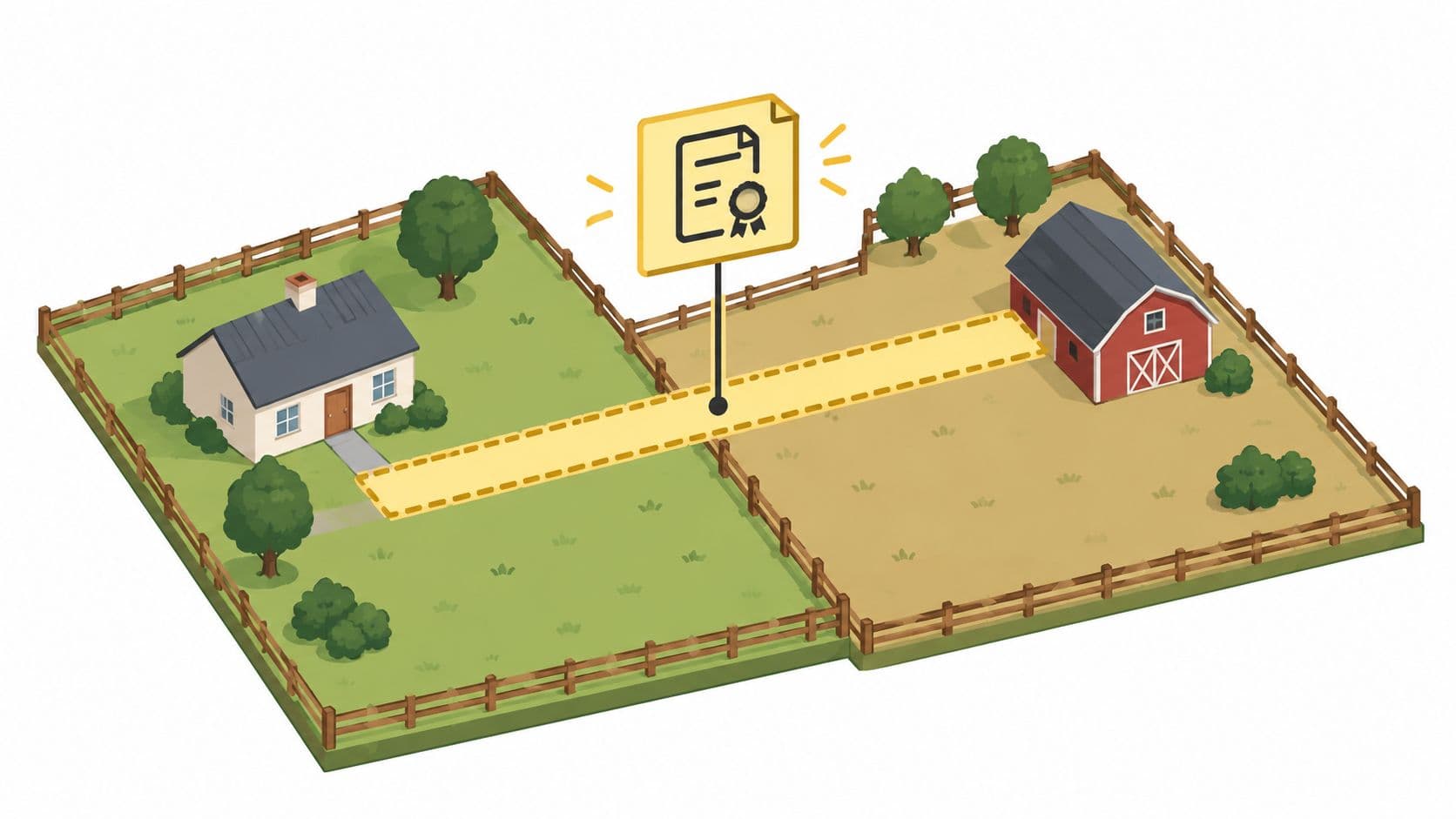
Maria thought she was buying a quiet rural lot. After closing, she discovered a recorded driveway easement crossing the back of the property, giving her neighbor a legal route to the public road. Her first questions were immediate: Can she block the driveway? Will the burden pass to the next owner? Will her lender treat the easement as a problem?
Those questions arise because an easement is neither ordinary ownership nor a casual permission slip. It's a limited property right that can affect how land is used, transferred, financed, and valued. A buyer may own the soil beneath an access route while another parcel retains the legal right to cross it.
Understanding the difference between real property interests and personal rights, as outlined in this overview of real and personal property, helps frame the issue. The answer to “does easement run with the land” depends on several legal tests, including the type of easement, the wording that created it, the parties' intent, and notice to later purchasers.
Table of Contents
- Why Buyers Keep Asking Whether an Easement Runs With the Land
- The Core Rule of Running With the Land
- Appurtenant Versus Easements in Gross
- What Makes the Burden Bind Future Owners
- When an Easement Stops Running
- Easements Compared With Leases and Land-Use Rights
- Why This Matters for Land-Value Reform
- Practical Takeaways and Common Questions
Why Buyers Keep Asking Whether an Easement Runs With the Land
Maria's situation is common enough to deserve careful attention. A title report may reveal a driveway, utility corridor, drainage route, conservation restriction, or access right that wasn't obvious during a property tour. The document might sit in the public records, yet the buyer may not understand what it permits, where it runs, or whether it limits future construction.
The central rule is simple but conditional: an easement generally runs with the land when it's attached to a parcel rather than merely granted to a particular person. In that situation, a later owner usually receives the benefit or inherits the burden because the right is part of the property's legal bundle.
What Maria needs to know before acting
Maria shouldn't assume that a recorded easement gives her neighbor unlimited use. Easements ordinarily have a defined purpose and scope. A driveway easement may permit access, but it doesn't automatically authorize storage, widening, parking, or unrelated commercial activity. The document's language and applicable law control those questions.
She also shouldn't assume that selling the lot will erase the issue. A purchaser of land subject to a qualifying easement generally takes title with the burden attached. Likewise, the owner of the benefited parcel usually keeps the access right after selling that parcel because the benefit follows the dominant land.
Practical rule: A title search tells you that an easement exists. The recorded instrument tells you what the easement actually allows.
Title companies, surveyors, attorneys, and lenders flag easements because they can affect access, building plans, marketability, and perceived value. The uncertainty isn't unusual. Buyers often discover the practical consequences only after they've signed a contract, ordered a survey, or reviewed Schedule B exceptions in a title commitment.
The safest response is neither panic nor casual acceptance. Identify the benefited and burdened parcels, read the original instrument, inspect the survey, and determine whether the right was created to bind successors. The deed's silence alone doesn't answer the question.
The Core Rule of Running With the Land
Think of an appurtenant easement as a sticky note glued to the property's title, not to the current owner's wallet. When ownership changes, the note stays attached to the relevant parcel. The legal doctrine is commonly called running with the land.
For the burden to bind later owners, authorities identify three technical requirements. The easement generally must be in writing, the original parties must have intended the burden to bind successors, and later purchasers must have notice. A properly recorded easement is especially important because recording typically supports the notice requirement and helps make the burden enforceable against future buyers. See the Cornell Legal Information Institute explanation of running with the land and this summary of easement requirements.
The three-part test
-
Writing: The right should appear in a deed, easement agreement, reservation, court order, or another legally sufficient written instrument. An informal conversation about “using the driveway whenever needed” may not provide the same protection.
-
Intent: The document should show that the parties meant the right or restriction to continue beyond the original owners. Language referring to heirs, successors, or assigns can help demonstrate that purpose, though the exact legal effect depends on the jurisdiction and the instrument.
-
Notice: A later purchaser must have a legally recognized form of notice. Recording supplies constructive notice in many situations, while the property's appearance or the buyer's actual knowledge may raise separate notice questions.
Maria's driveway example becomes easier once the test is applied. If the easement was written, intended to bind successors, and recorded or otherwise brought to a later buyer's notice, Maria generally can't terminate it by selling the lot. The next owner inherits the servient parcel with the same qualifying burden.
The benefit and burden travel in opposite directions. The dominant estate is the parcel that benefits, while the servient estate is the parcel that carries the restriction. An owner of the dominant parcel usually receives the benefit automatically when the parcel is conveyed, while an owner of the servient parcel takes the land subject to the qualifying burden.
For readers evaluating broader property-right questions, the definition of private property rights offers useful background. If a title dispute raises wider ownership concerns, a resource such as recovery news for investors may also help distinguish property-right issues from investment-related claims.

Appurtenant Versus Easements in Gross
The most important classification question is who or what receives the benefit. An appurtenant easement benefits a particular parcel. An easement in gross benefits a person, company, utility, government body, or another entity without requiring a dominant parcel.
Maria's driveway is the classic appurtenant example. Her neighbor's ranch is the dominant estate, and Maria's lot is the servient estate. If the ranch changes hands, the access benefit generally travels with it because the right is connected to the ranch, not to the neighbor personally. An appurtenant easement usually transfers even if a later deed doesn't restate it. This distinction is also reflected in educational material on appurtenant easements.
An easement in gross works differently. A gas utility may hold a recorded right to install, inspect, repair, or replace a line across Maria's land. The right benefits the company or service system, rather than a neighboring parcel. Commercial easements in gross are often treated as transferable under modern law, but the document, governing statute, and nature of the right still matter.
Personal easements create more uncertainty. A recreational access right, horse path, or fishing privilege granted to a named individual may be personal in character and may not automatically pass to that person's successor. The key question isn't merely whether the document is recorded. It's whether the right was designed to benefit land or a particular holder.
| Feature | Appurtenant Easement | Easement in Gross |
|---|---|---|
| Primary beneficiary | A specific dominant parcel | A person, company, utility, or agency |
| Transfer pattern | Usually transfers with the benefited land | Depends on the document, law, and character of the right |
| Dominant estate | Required | Not required |
| Typical example | Neighbor's driveway access | Utility company's line corridor |
| Main caution | Scope follows the land-related purpose | Personal rights may not pass automatically |
This isn't the same concept as a usufruct. A usufruct definition and explanation describes a different kind of right to use or enjoy property. Classifying the instrument correctly prevents buyers from treating every use right as an easement that automatically survives a sale.
What Makes the Burden Bind Future Owners
A recorded document is strong evidence, but it isn't a substitute for legal analysis. A reader auditing an easement should focus on the connection between the land, the original parties, and the chain of title.
A practical successor-liability checklist
-
Intent to bind successors: Look for language showing that the parties meant the easement to continue for successors and assigns. The wording doesn't need to be treated as magic, but it should reveal a continuing land-related obligation.
-
Connection to the land: Ask whether the right affects the use, value, access, development, or enjoyment of the parcels. A driveway route usually has that connection. A purely personal favor may not.
-
Proper legal relationship: The original conveyance, grant, reservation, or recorded instrument should establish the relevant relationship between the estates. A written and recorded land transaction can help show that the parties created a property interest rather than a revocable personal permission.
The chain of title works like a relay baton. Each recorded instrument passes the burden forward only when the legal requirements are satisfied. If the original holder never created a valid written right, later documents may have nothing enforceable to carry.
Oral agreements are a frequent weakness. So are documents that identify only a person, fail to describe the affected land, or omit language showing that successors should be bound. A title examiner may locate the instrument, but a lawyer may still need to interpret its scope and enforceability.
Document check: Read the easement's purpose, location, duration, successor language, maintenance obligations, and release provisions together. One sentence rarely answers the whole question.
A dispute can also arise when the public record contains inconsistent deeds, unclear legal descriptions, or competing claims. Readers dealing with conflicting title records may benefit from understanding quiet title lawsuit costs explained before deciding whether litigation is appropriate.
When an Easement Stops Running
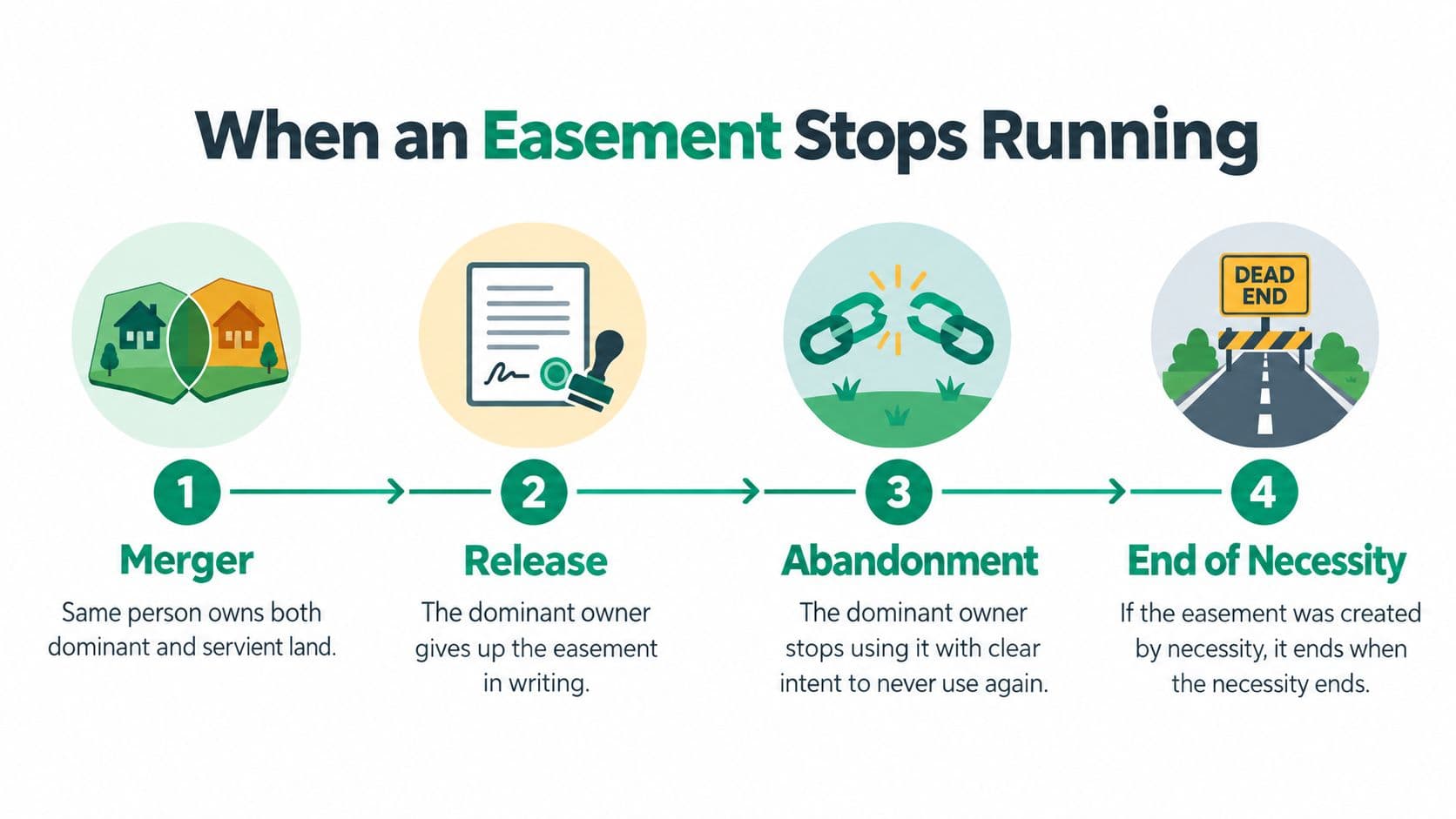
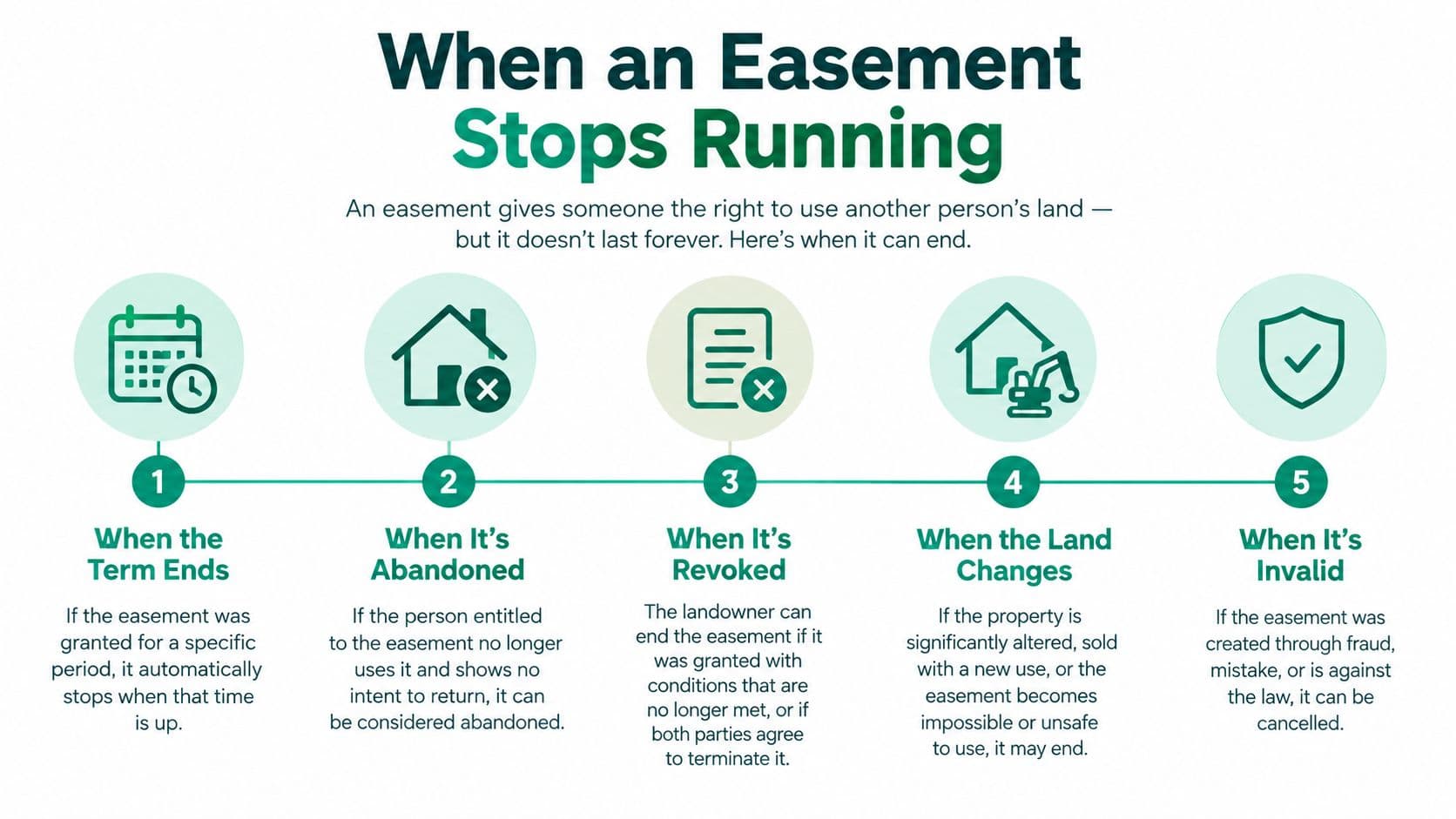
“Forever” is often legal shorthand for no stated expiration date, not a promise that an easement can never end. The underlying property rule allows an easement to continue indefinitely unless a valid termination doctrine, contractual condition, or court decision removes it.
Four common pathways deserve attention:
-
Merger: If one person acquires both the dominant and servient parcels, the separate estates can merge. The easement may end because an owner no longer needs a right over land that the same owner also owns.
-
Release: The easement holder can give up the right, commonly through a written release that's recorded in the land records. A release should identify the easement and affected property clearly.
-
Abandonment: Nonuse alone usually isn't enough. The holder generally must also show clear intent to abandon the right. A permanent structure blocking a driveway may provide stronger evidence than simple inactivity, but courts often examine the facts closely.
-
Prescription or other extinguishment: In some jurisdictions, a servient owner's openly hostile interference for the applicable statutory period can affect the easement. The precise rule varies by location, so a fence or obstruction shouldn't be treated as an automatic termination.
The overgrown-path analogy helps, but it has limits. One person stops walking, another builds a fence, and the legal path may eventually disappear only if the conduct and time satisfy the governing doctrine. Silence by itself usually doesn't erase a real-property right.
Courts tend to interpret abandonment narrowly because purchasers and owners need reliable title expectations. A person who hasn't used an easement recently may still intend to preserve it for future access, construction, or resale. That's why a written release or a formal legal determination is safer than assuming the right has vanished.
Easements Compared With Leases and Land-Use Rights
People often use land-use rights as a loose label for any agreement involving land. That creates confusion. An easement is generally a nonpossessory right to use another person's land for a defined purpose. A lease grants possession for a term. A genuine indefinite land-use right, as used in land-value reform frameworks, has different economic features from both.
A fixed-term land lease has a defined expiration date and a fixed price. A renewable lease provides certainty only until its term ends. At renewal, the accumulated gap between the contract rent and market rent can close in a single repricing event, creating a built-in risk in a fixed-price structure. A non-renewable lease can become harder to refinance and sell as its remaining term shortens. Fixed leases don't correctly price risk. They postpone it.
A genuine land-use right is indefinite, requires no renewal, doesn't expire, and is repriced each year. That annual repricing distinguishes it from a short commercial lease, even if someone casually calls both arrangements land-use rights. If an agreement has a fixed term, requires renewal, or freezes its price, it's still a lease under this framework.
The movie-ticket analogy clarifies the difference. A fixed lease resembles a ticket for a defined showing. A renewable lease resembles a season pass that must be renewed. An indefinite land-use right resembles a library card that remains available under continuing rules and is regularly assessed according to current conditions. The analogy describes economic structure, not the legal label a court will apply.
| Feature | Easement | Fixed-Term Lease | Renewable/Indefinite Lease | Land-Use Right |
|---|---|---|---|---|
| Primary function | Limited use of another parcel | Possession for a defined term | Possession subject to renewal terms | Indefinite use without renewal |
| Expiration | May have no default expiration | Defined end date | Renewal framework controls | Doesn't expire under the stated model |
| Pricing | Usually tied to the original grant | Fixed during the term | Can face repricing at renewal | Repriced each year |
| Transferability | Depends on appurtenant or in-gross status | Depends on contract and law | Depends on contract and law | Designed for low-cost transfer |
| Risk structure | Scope and enforceability risk | Frozen-price and expiration risk | Repricing risk at renewal | Ongoing valuation and assessment |
Property professionals also use mapping and parcel analysis to understand how access corridors, infrastructure, and surrounding uses affect land decisions. Readers interested in that perspective can explore location intelligence insights from Bridge Global. For a focused definition, see what is a land-use right.
Why This Matters for Land-Value Reform
Running-with-the-land doctrine answers a legal question: who inherits a right or burden after a transfer? Land-value reform asks a related economic question: how should ongoing land value be measured and shared?
An easement can preserve a use restriction or access benefit across transfers, often indefinitely unless it's extinguished. That stability can protect access and infrastructure planning, but it can also leave the economic terms of the original arrangement disconnected from present land conditions. A fixed historical agreement may continue even as surrounding development, public investment, and land demand change.
Repricing instruments work differently. A land-value tax assessment, recurring land-use fee, or ground-rent structure can respond to current site value rather than freezing the economic relationship at the time of the original agreement. The distinction is between a static property right and a live land-rent mechanism.
Legal stability and economic repricing are different goals
An easement usually defines a limited use. It isn't automatically a tax, a rent, or a transfer of ownership. Treating it as though it were a land-value instrument confuses private land-use control with public revenue design.
Land-value reform instead focuses on capturing publicly created site value while reducing reliance on taxes that penalize work, construction, or productive capital. In a tri-factor framework, land or nature remains distinct from labor and capital. That separation helps policymakers ask whether a payment reflects a private service, a constructed asset, or the location value associated with land itself.
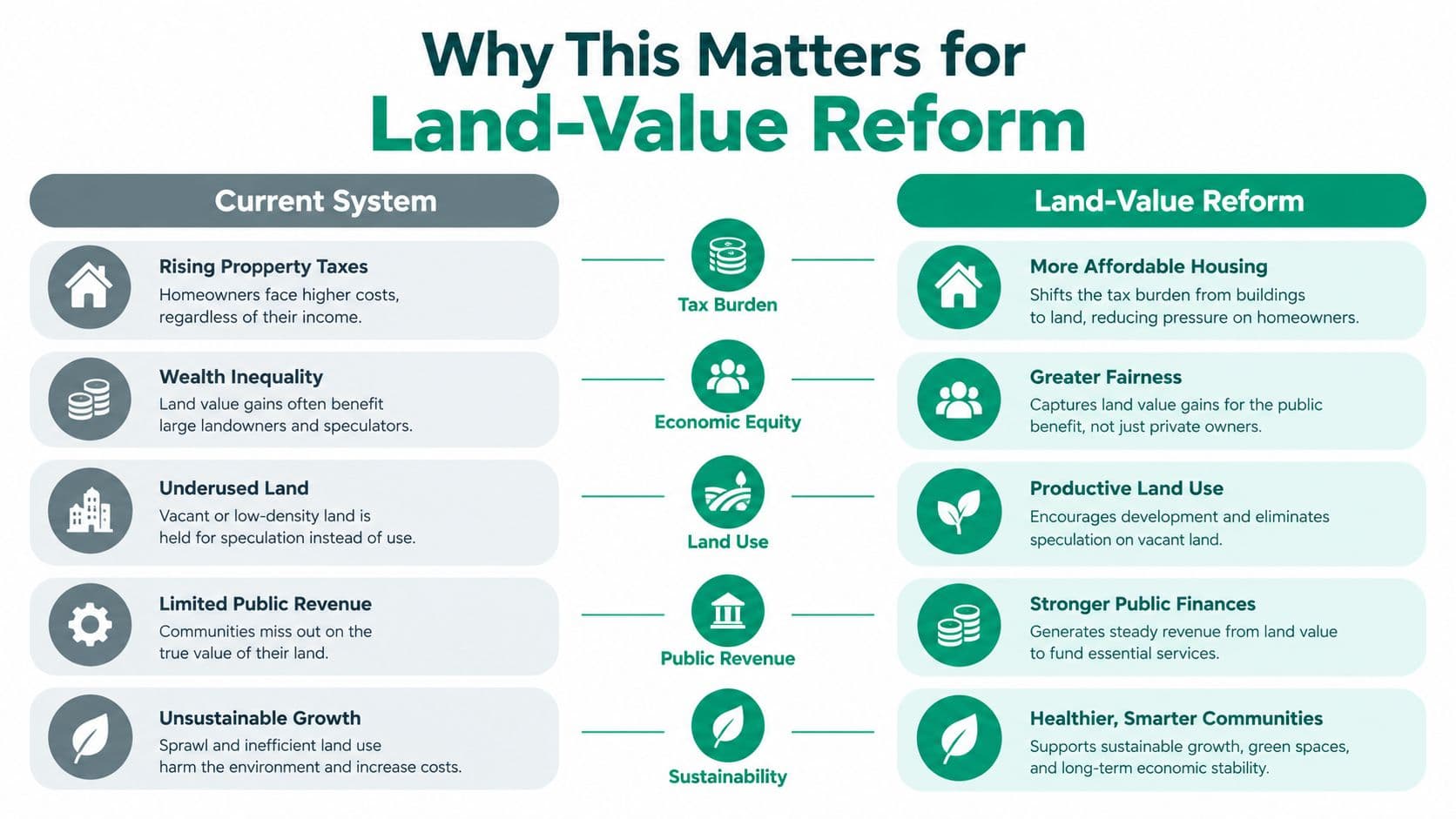
A credible reform debate therefore needs precise categories. An access easement, a fixed lease, an annual land-use charge, and a land-value tax may all affect property decisions, but they don't perform the same legal or economic function. The land-use policy overview provides a useful policy context for examining those distinctions.
Practical Takeaways and Common Questions
Start with the title records, not the seller's summary. Read every Schedule B exception, compare the legal description with a current survey, and obtain the complete easement instrument rather than relying on a short title reference.
Use this working checklist:
- Classify the right: Decide whether it's appurtenant, in gross, personal, contractual, or another type of use right.
- Test successor liability: Look for writing, intent to bind successors, and notice.
- Read the limits: Identify the purpose, route, maintenance duties, construction restrictions, and termination language.
- Separate instruments: Don't call a fixed lease a land-use right unless it has no expiration, needs no renewal, and is repriced each year.
Common questions
Can a personal easement bind the next owner? Generally, not automatically. It may bind successors when the language, legal character, notice, and governing law support that result.
Does paying for an easement create ownership? No. Payment may establish or support a granted right, but an easement is ordinarily a nonpossessory use interest. The servient owner retains ownership of the land.
How long does an easement last? It may continue indefinitely when no expiration applies, but merger, written release, abandonment, prescription, or another recognized termination method can end it.
Before buying or modifying affected land, ask a property attorney to review the recorded instrument and survey together. That review can reveal whether the answer to “does easement run with the land” is clear, conditional, or disputed.
Unitism® helps readers and decision-makers understand how land rights, leases, annual land-use charges, and land-value reform differ. Visit Unitism® to explore plain-language guides and practical policy resources for evaluating land value and land-use systems.