Shifting Tax Burden. Understand shifting the tax burden from labor and buildings to land value, and how reform boosts housing, reduces speculation, and funds
October 3, 2026
Shifting Tax Burden to Land Value: The Complete Guide
Shifting Tax Burden. Understand shifting the tax burden from labor and buildings to land value, and how reform boosts housing, reduces speculation, and funds

What happens when a city raises the cost of building, then wonders why developers delay projects, rents rise, and vacant sites remain unused? The usual answer focuses on the tax rate. The more important question is what the tax makes expensive: work, construction, investment, or just holding valuable land out of use.
Shifting the tax burden to land value changes that target. It asks governments to rely less on taxes that suppress productive activity and more on the value created by location, public services, infrastructure, and natural scarcity. The idea sounds straightforward, but its results depend on valuation, legal design, rental-market conditions, and the way land access is structured.
Table of Contents
- What Shifting the Tax Burden Actually Means
- Why Tax Land Value Instead of Buildings
- Land Leases vs Land-Use Rights Explained
- Who Gains and Who Pays Under Reform
- Phased Implementation Pathways
- Evidence from Real-World Case Studies
- Common Misconceptions and Open Incidence Questions
- Next Steps for Policymakers and Practitioners
What Shifting the Tax Burden Actually Means
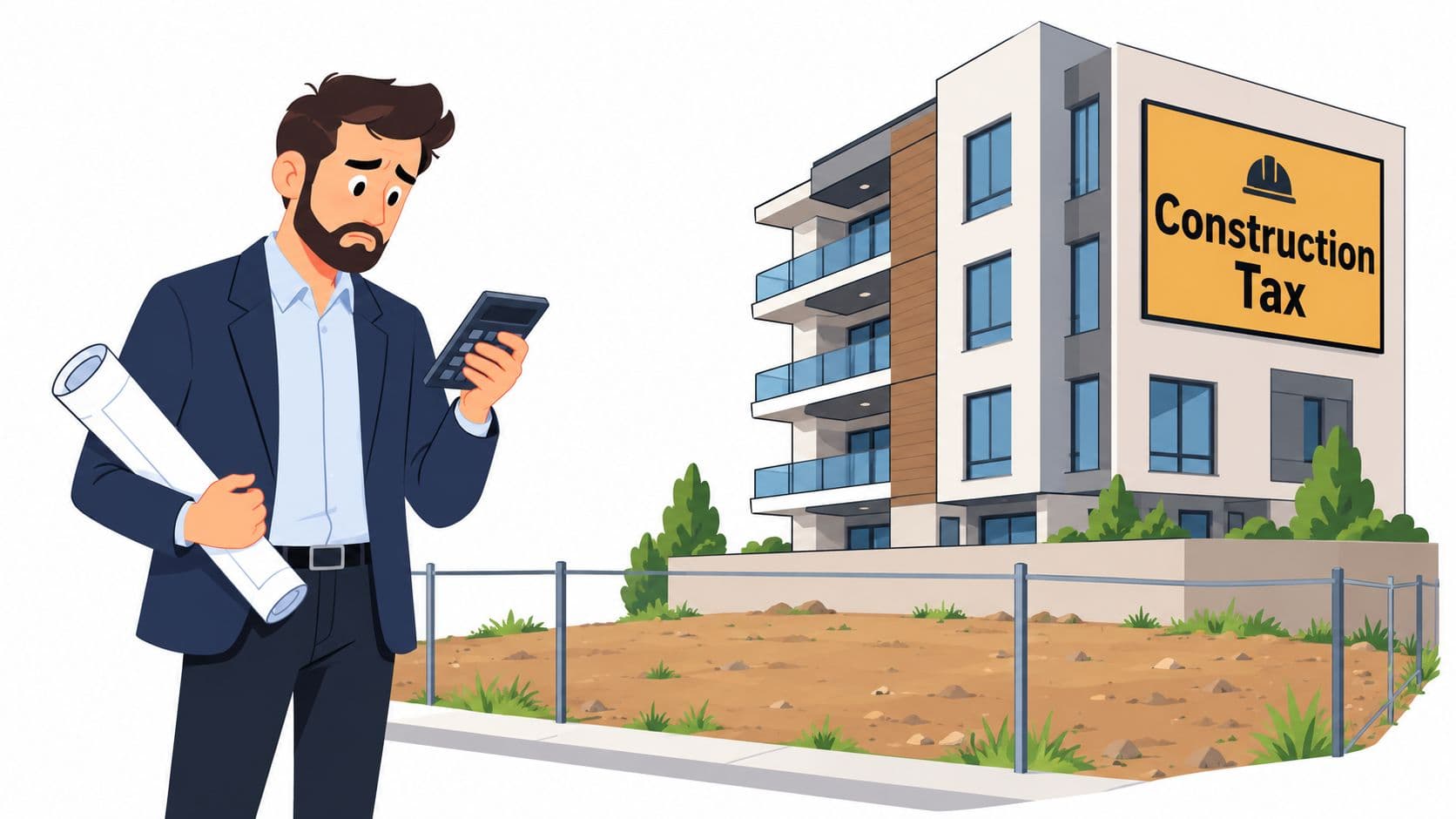
A small builder receives an unexpected increase in inspection fees and property taxes on improvements. The project still makes sense on paper, but the extra cost reduces the margin. The builder may postpone construction, reduce the building's quality, or pass the cost into sale prices and rents. The city collects revenue, yet the policy has also made new housing and productive investment harder.
Shifting the tax burden means changing where public revenue comes from. Instead of relying so heavily on wages, buildings, transactions, or business investment, a government can place more weight on the rental value of land and natural sites. Land value here means the value of access to a location, separate from the value of the house, factory, equipment, or other improvements placed on it. A plain-language overview of this distinction appears in Unitism's explanation of land value tax.
The basic policy choice
A tax on labor reduces the reward for earning another dollar. A tax on construction raises the cost of adding homes, workshops, or commercial space. A tax on land value works differently because the location exists whether its owner builds, leaves it vacant, or replaces an old structure.
That difference matters in places where public decisions make land valuable. Transport links, schools, utilities, planning permissions, and access to customers can raise a site's value even when the owner has done little to create that value. A land-focused charge seeks to recover part of that location value for public purposes without taxing the productive activity that uses the site.
Practical rule: Before asking whether taxes are high or low, ask whether they penalize making something useful or reward holding a scarce location idle.
The phrase also covers revenue-neutral reform. A city can reduce one source of revenue while increasing another, keeping overall funding broadly stable while changing incentives. That approach is more credible than promising that a new charge will solve every fiscal problem. Policymakers should also review broader real estate tax planning advice because owners, developers, and public agencies may face different tax consequences during a transition.
Why Tax Land Value Instead of Buildings
A building can be altered, abandoned, demolished, or moved from one economic use to another. Inventory can be sold or removed. A factory can close. Land is the fixed base, so taxing its value doesn't make the location disappear. That is the central efficiency argument for a land-value-focused tax.
Suppose two neighboring sites have similar location advantages. One owner builds apartments, offices, or a workshop. The other holds the site vacant while waiting for prices to rise. If the tax falls mainly on buildings, the active owner carries more of the bill. The vacant owner can avoid much of that cost while still benefiting from the site's scarcity. A tax focused more on land narrows that gap.
Taxing the site rather than the improvement
The distinction isn't between “taxing property” and “not taxing property.” A conventional property tax often combines the value of the site with the value of the buildings. A site-value tax separates those components and places greater emphasis on the unimproved location.
That separation changes the owner's calculation. If adding a floor, renovating a storefront, or replacing an inefficient structure raises the tax bill, the owner may delay the work. If the charge falls primarily on the site, the owner has less reason to avoid productive improvements. The tax still raises revenue, but it doesn't treat construction itself as the problem.
This is also why land-value reform is different from a general tax on capital. Capital includes tools, machinery, buildings, and other produced assets. A policy discussion that treats land and capital as one category can miss the behavioral difference between taxing something people create and taxing access to a scarce location. The distinction is developed further in this guide to land, labor, and capital.
What revenue neutrality can and cannot do
A revenue-neutral shift keeps the public budget's intended revenue broadly intact while changing the mix of charges. In practice, the government might lower the building portion of a property tax and raise the land portion. The exact design still requires credible valuation, legal authority, appeals procedures, and protection against sudden household hardship.
Revenue neutrality also doesn't guarantee that every owner pays less. Owners with valuable land and modest improvements may face a larger bill, while owners who have invested heavily in buildings may benefit from lower charges on improvements. The policy question is therefore both fiscal and distributive: which activity should receive relief, and which form of economic advantage should contribute more?
Land Leases vs Land-Use Rights Explained
Tax policy and land-access contracts solve different problems. A tax determines how public revenue is collected. A lease or land-use right determines how a person or organization obtains access to a site. Confusing these instruments can create hidden risks even when the tax rate looks reasonable.
A fixed-term land lease is a contract for a defined period at a fixed price. It can be renewable or non-renewable. A renewable lease offers certainty during the term, but it doesn't remove the risk of repricing. When the term ends, the difference between the old lease rate and the market rate can be closed in one major adjustment.
A non-renewable lease creates a different problem. As expiry approaches, the remaining term becomes less attractive to lenders, buyers, and business operators. Refinancing and resale can become progressively harder because the right to occupy the site is running out. Fixed leases, in effect, postpone risk rather than pricing it continuously.
The three tests for a true land-use right
A true land-use right has three defining features:
- No expiration: The right is indefinite and doesn't require renewal.
- Annual repricing: The price is reset each year to reflect current land value.
- Low-cost transferability: Because the right doesn't depend on a looming expiry date or a major renewal event, people can buy and sell it without carrying postponed lease risk.
The annual reset is the defining feature. It means the holder pays for current access rather than relying on an old price that may later require a dramatic correction. The definition of this structure is set out in the explanation of intergenerational land equity.
| Feature | Fixed-Term Lease | True Land-Use Right |
|---|---|---|
| Duration | Ends after a stated term | Indefinite |
| Renewal | May require renewal | No renewal required |
| Pricing | Fixed during the term | Repriced annually |
| Main risk | Repricing or declining value near expiry | Ongoing adjustment to current land value |
| Transfer | Can become difficult as expiry nears | Can support lower-cost buying and selling |
| Policy meaning | Access risk is postponed | Access is continuously priced |
Some systems call fixed leases “land-use rights,” but terminology doesn't change the contract. A fixed-term right remains a fixed lease if it expires, requires renewal, or uses a price that stays unchanged throughout the term. Policymakers should read the legal terms, not rely on the label.
This distinction is especially important when governments replace or supplement property taxes with land charges. A policy can encourage better land use while a poorly designed lease still locks entrepreneurs into a future repricing shock. The separate discussion of 99-year land leases and their limitations helps illustrate why a long term isn't the same as an indefinite, annually repriced right.
Who Gains and Who Pays Under Reform
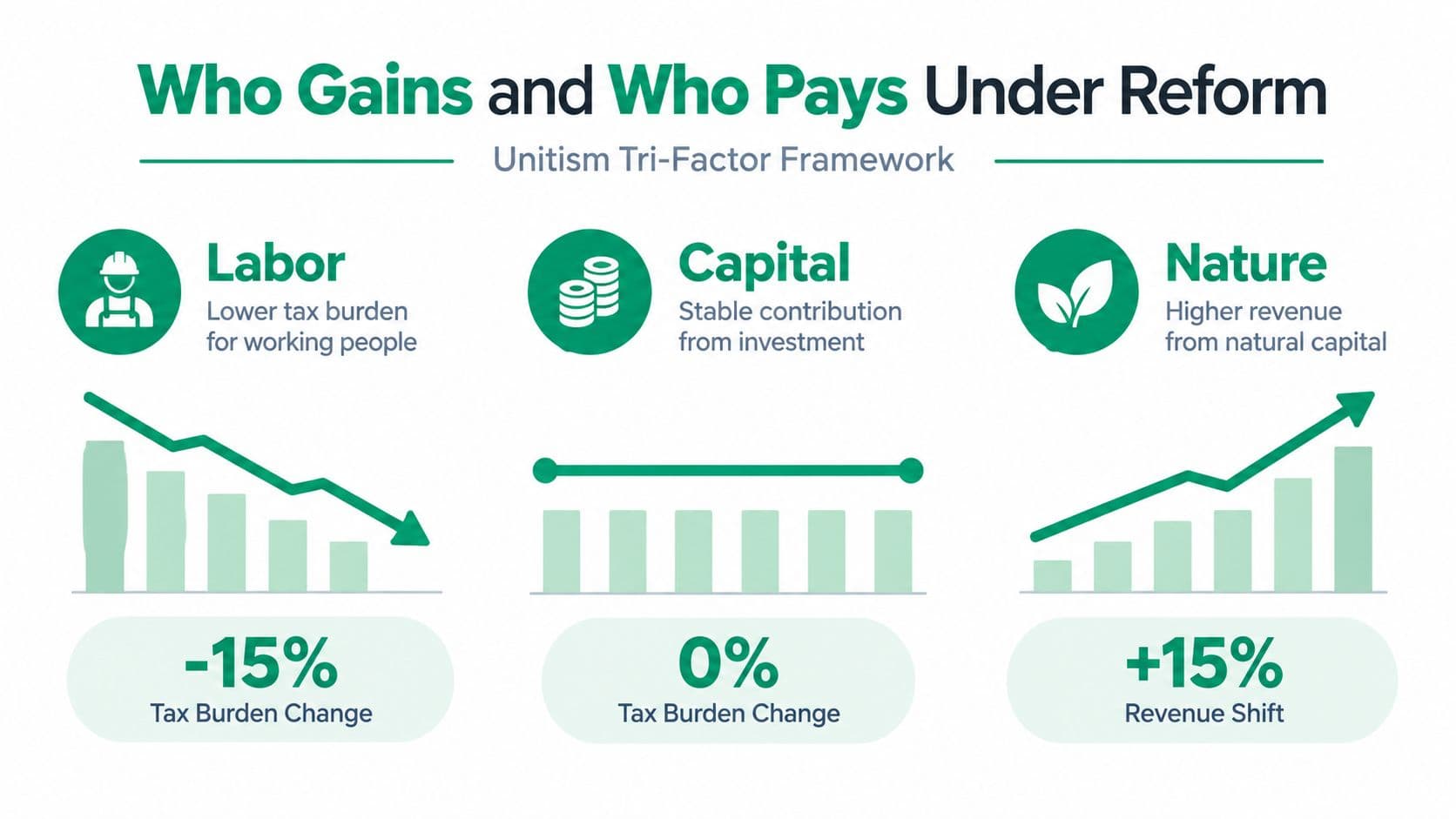
The distributional result depends on which factor carries the burden. A useful framework separates labor, capital, and nature. Labor refers to human effort and skills. Capital refers to produced assets and investment. Nature includes land and other scarce natural opportunities.
A shift toward land value can reduce charges on wages and productive investment while placing more responsibility on those who control valuable sites. That doesn't mean every worker gains or every landholder loses. Household outcomes depend on income, tenure, location, debt, and whether a person owns land directly or pays for access through rent.
The IMF's analysis projects a progressive revenue-neutral shift from labor income taxation to land value taxation. It finds that low-income households gain strongly because they pay little land tax and benefit from lower labor taxes, middle-income households gain slightly, and the net burden rises for high-income households. The mechanism is that land is an inelastic base, while labor taxation can suppress work incentives. These distributional findings are described in the IMF analysis of shifting taxation from labor income to land value.
Why ownership patterns matter
Land value doesn't fall evenly across a population. A household with a modest home in a low-demand area faces a different exposure from an owner of several highly valuable sites. A renter may not receive a land-tax bill, yet the landlord's response can affect rent, maintenance, redevelopment, and the availability of homes.
The reform can therefore be progressive in aggregate while still creating concentrated hardship for particular owners. A retired owner with limited cash income but valuable land may need deferral, installment payments, or another transition mechanism. Without those safeguards, a sound long-term tax principle can produce an avoidable short-term political crisis.
Distributional test: Publish the expected effect by income, tenure, property type, and location. An average result can hide the households that need protection.
Capital also deserves careful treatment. Lower taxes on buildings and productive investment can improve incentives, but investors may still pay more if they control land with high rental value. The goal isn't to exempt investment. It's to distinguish returns created by work and capital from returns associated with exclusive control of a scarce site.
Phased Implementation Pathways
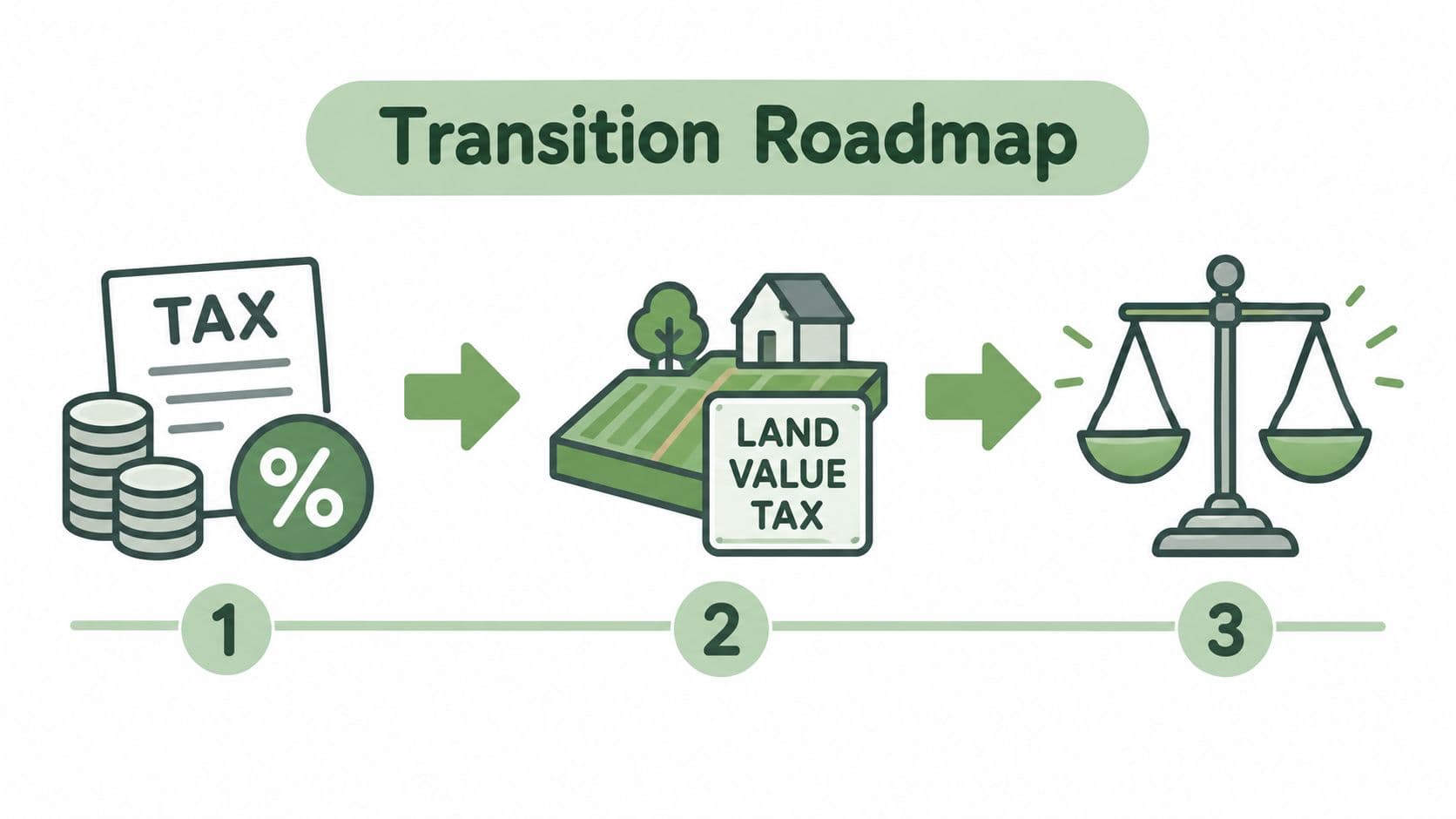
A government rarely moves from a mixed property-tax system to a land-value-focused system with one administrative switch. The transition needs a sequence that residents can understand and assess. It also needs enough time for assessors, registries, finance departments, planning offices, and courts to use the same definitions.
Start with the evidence
The first task is to build a land valuation system that separates site value from improvement value. That requires current cadastral records, consistent property identifiers, sales and rental evidence where available, information about planning permissions, and a method for handling sites with unusual restrictions.
A valuation model should explain why one location is worth more than another. It should also show how the authority treats agricultural land, vacant urban parcels, public land, environmentally sensitive sites, and properties with development constraints. If residents can't see the reasoning, officials will struggle to defend the assessment.
Reduce shocks during the transition
A phased reform can begin by lowering the tax rate on buildings while increasing the charge on land value gradually. The government can then monitor revenue, construction activity, appeals, vacancy, rents, and owner behavior before changing the next rate.
Protection for vulnerable owners should be designed before the first bill arrives. Options can include deferrals tied to a future transfer, installment plans, targeted relief, or carefully defined exemptions. Each option has a fiscal cost and can create new distortions, so the rules should be transparent rather than improvised under political pressure.
Align law, administration, and communication
Legislative drafting must define the taxable base, valuation date, appeal rights, collection process, treatment of public land, and consequences for nonpayment. Administrative teams then need workflows that connect the cadastre, assessment office, treasury, planning department, and housing agencies.
Implementation support can include legislative drafting, cadastre integration, valuation methods, distributional modeling, and training for officials and community stakeholders. Revenue-neutral tax reform guidance offers one example of the policy questions that must be resolved before a rate schedule is adopted.
Public communication should use household examples, not only economic terminology. Residents need to know how the reform treats a vacant site, an owner-occupied home, a rental building, a farm, and a business property. They also need a clear explanation of what the reform does not promise, such as an automatic rent reduction or immediate development where zoning still blocks construction.
Evidence from Real-World Case Studies
The case for shifting the tax burden becomes more useful when readers can distinguish documented experience from theory. Land-related charges and split-rate systems have appeared in different forms across Denmark, Estonia, Singapore, Alaska, Canberra, Norway, and Allentown, Pennsylvania. These examples operate under different legal systems and market conditions, so they shouldn't be treated as interchangeable proof of one universal formula. They do show that governments have applied land-based revenue ideas in varied institutional settings.
The strongest behavioral evidence in the supplied research comes from Finland. A natural experiment found that municipalities adopting a higher tax rate on undeveloped zoned land saw single-family housing starts rise by about 12%, demonstrating that taxing idle land can change owner behavior where land values are high. The study attributes the mechanism to a higher opportunity cost for holding development sites vacant. The finding is reported in the Finnish study of taxation on undeveloped zoned land.
What the Finnish result does and doesn't prove
The Finnish evidence supports a specific conclusion: owners can respond to a charge on underused, developable land by bringing sites into production. It doesn't prove that every city will obtain the same response. Development may still be blocked by zoning, infrastructure limits, financing conditions, environmental rules, or slow permitting.
That distinction matters for policymakers. A land charge can change the cost of waiting, but it can't by itself issue a building permit, extend a water network, or make an infeasible project viable. The right evaluation therefore tracks both owner behavior and the constraints that remain outside the tax system.
Recent policy activity also reflects this implementation question. A 2026 Colorado brief describes revenue-neutral shifts that reduce taxes on properties with above-average improvement-to-land ratios and raise them on underused land. The brief can be reviewed in the Colorado legislative analysis of land-value taxation. Virginia and Kentucky also expanded split-rate authority in 2026, indicating active policy experimentation rather than purely academic discussion.
These developments create a practical research agenda. Compare urban cores with suburbs. Separate vacant land from land awaiting permits. Track assessed values, construction applications, completed projects, vacancy, rents, appeals, and revenue through the transition. A useful comparison with conventional property taxation is available in this land-value-tax and property-tax guide.
Common Misconceptions and Open Incidence Questions
The most common overstatement is that taxing land more and buildings less automatically makes housing cheaper. The efficiency case is clear enough: reducing taxes embedded in construction can make more projects feasible. But who bears the charge in a tight rental market remains an open incidence question.
Landlords may absorb some of the cost through lower land prices or lower returns. They may also try to pass part of it into rents, especially where tenants have few alternatives. Buyers may face a different adjustment if the expected future charge is capitalized into the price of land. A reform can therefore help long-term supply while still creating short-run pressure for some renters or owners.
The 2026 Florida debate explicitly warned that a tax shift could move the burden from homeowners onto renters, showing that incidence is a live policy issue rather than a settled slogan. The broader housing discussion is covered in this analysis of property taxes, land value, and housing supply.
Questions a serious pilot should answer
- Who pays first: Measure effects on landlords, tenants, homeowners, first-time buyers, and land-rich owners during the phase-in.
- What gets capitalized: Test whether expected charges appear in land prices, rents, development feasibility, or investment returns.
- What blocks supply: Identify whether zoning, permits, infrastructure, or financing prevents owners from responding to the incentive.
- Which safeguards work: Compare deferrals, caps, installments, and targeted relief without hiding the long-term cost.
A credible reform combines incidence modeling with vacancy and rent data. It doesn't promise that the tax alone will solve affordability. It shows who pays at each stage and changes the design when evidence reveals an avoidable burden.
Next Steps for Policymakers and Practitioners
A ministry, city, or civic organization considering a shifted tax burden should begin with four questions. Can the authority value land separately from buildings? Does the legal framework define the taxable interest clearly? Can the administration phase the change and process appeals? Will the public be able to see who gains and who pays?
The answers should be tested before adoption through a pilot, a simulation, or a limited geographic application. A useful preparation process includes:
- Build the data foundation: Link cadastral parcels, ownership records, planning permissions, sales evidence, rental information, and improvement assessments.
- Define land access precisely: Keep fixed-term leases separate from true land-use rights, which are indefinite, require no renewal, and are repriced annually.
- Model distributional effects: Report outcomes by income, tenure, property type, geography, and exposure to rent changes.
- Design the phase-in: Set a predictable schedule for shifting charges, with targeted protections for households that have valuable land but limited cash income.
- Test administrative readiness: Specify valuation reviews, appeals, collection, compliance, public reporting, and coordination between planning and finance offices.
- Measure behavior: Track vacant land, redevelopment, permits, housing starts, rents, land prices, and tax revenue rather than relying on assumptions.
The Finnish evidence shows that land taxation can influence development behavior, while the IMF analysis shows why a revenue-neutral shift can have progressive effects. Neither result eliminates local design choices. A city still needs to determine whether its valuation system is credible, whether its zoning allows a response, and whether its transition protects renters and vulnerable owners.
Policymakers should publish the assumptions behind every projection. Residents are more likely to trust a reform when officials explain the valuation method, disclose uncertainty, identify possible losers, and commit to reviewing the results. That transparency turns shifting the tax burden from an abstract slogan into a testable public policy.
Unitism® offers land valuation assessments, distributional modeling, legislative and administrative implementation support, and education for public officials and community stakeholders working on land-value reform. Visit Unitism® to explore practical guidance for designing, testing, and communicating a fairer tax shift.