Design benchmark rate reform with practical guidance on rate selection, contract migration, administration, distribution, and stakeholder engagement.
October 22, 2026
Benchmark Rate Reform Implementation Guide
Design benchmark rate reform with practical guidance on rate selection, contract migration, administration, distribution, and stakeholder engagement.

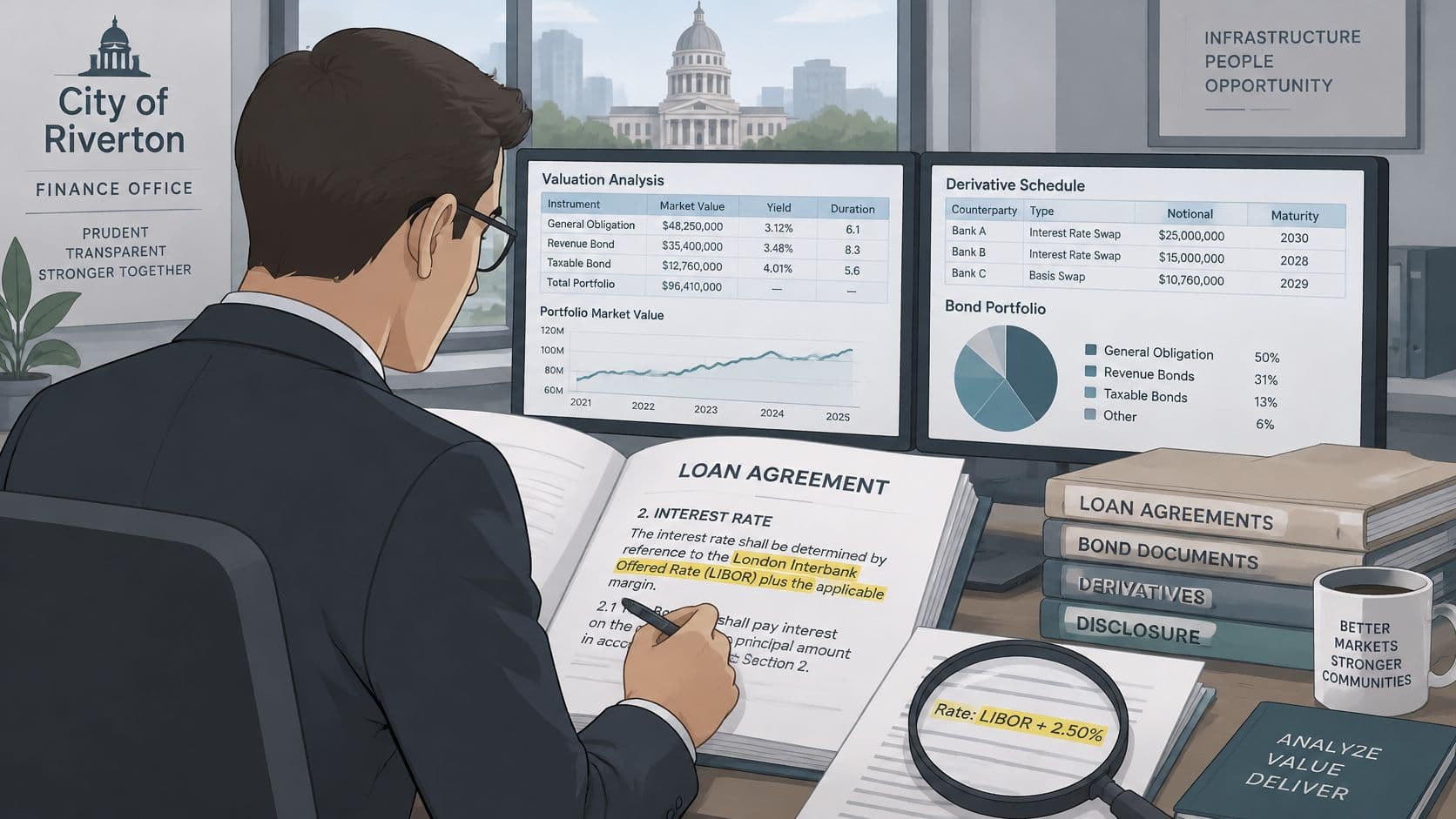
Your municipal finance team opens a loan agreement before approving the next budget forecast and finds a legacy benchmark in the interest clause. The lender proposes a replacement, but the treasurer still needs answers: Will payment dates change? Does the associated swap still offset the loan? Who can approve the amendment? Benchmark rate reform starts with those administrative questions, not with choosing a new rate.
Table of Contents
- Why Benchmark Rate Reform Changes More Than a Number
- Build the Reform Foundation Before Choosing a Rate
- Compare Overnight Risk-Free and Term Rate Options
- Measure Cash Flows and Distributional Effects
- Integrate Contracts Systems and Stakeholder Communication
- Avoid Common Failures and Test Reform Readiness
- Use a Practical Implementation Checklist
Why Benchmark Rate Reform Changes More Than a Number
Consider that loan agreement as an implementation exercise, not a documented case study. Legal staff may find a fallback clause, while treasury staff discover that their forecasting spreadsheet assumes a different reset convention. The accounting team then needs to establish whether the proposed amendment changes its assessment of the instrument.
A ministry shouldn't mistake the lender's readiness for the municipality's readiness. Ask whether the borrower can calculate, authorize, explain, and reconcile the revised obligation. A replacement benchmark is useful only when the institutions using it can perform those tasks safely.
Integrity required more than a new calculation
International reform followed misconduct investigations that exposed manipulation vulnerabilities and the growing disconnect between major interbank offered rates, especially LIBOR, and actual funding transactions. In July 2013, IOSCO published its Principles for Financial Benchmarks, organized around governance, benchmark quality, methodology quality, and accountability, establishing expectations for conflicts management, input integrity, methodological disclosure, complaints, and transition planning (IOSCO Principles for Financial Benchmarks).
The Financial Stability Board subsequently pursued a dual approach: strengthen existing interbank benchmarks and develop alternative nearly risk-free reference rates, alongside arrangements for adoption and transition monitoring (FSB benchmark reform framework). The policy lesson is straightforward: fixing the published number without fixing institutional responsibilities leaves the underlying implementation problem unresolved.
Advisory position: Treat the benchmark as shared financial infrastructure. Assign responsibility for what happens when its methodology changes, its inputs weaken, or its publication stops.
Make the administrative consequences explicit
For a finance ministry, the relevant decisions span several responsibilities:
- Treasury: Determine which obligations and investments need attention.
- Budget authorities: Establish how revised payment mechanics affect appropriations and liquidity planning.
- Legal and accounting teams: Resolve amendment authority, contractual interpretation, and treatment of the change.
- Public leadership: Explain the decision without promising that every borrower will experience an identical outcome.
The right sequence is to establish exposures, evaluate the replacement, examine fiscal and borrower effects, prepare administration, and verify readiness. Don't announce completion because an administrator has launched a rate. Completion means each responsible institution can demonstrate that it can use that rate correctly.
Build the Reform Foundation Before Choosing a Rate
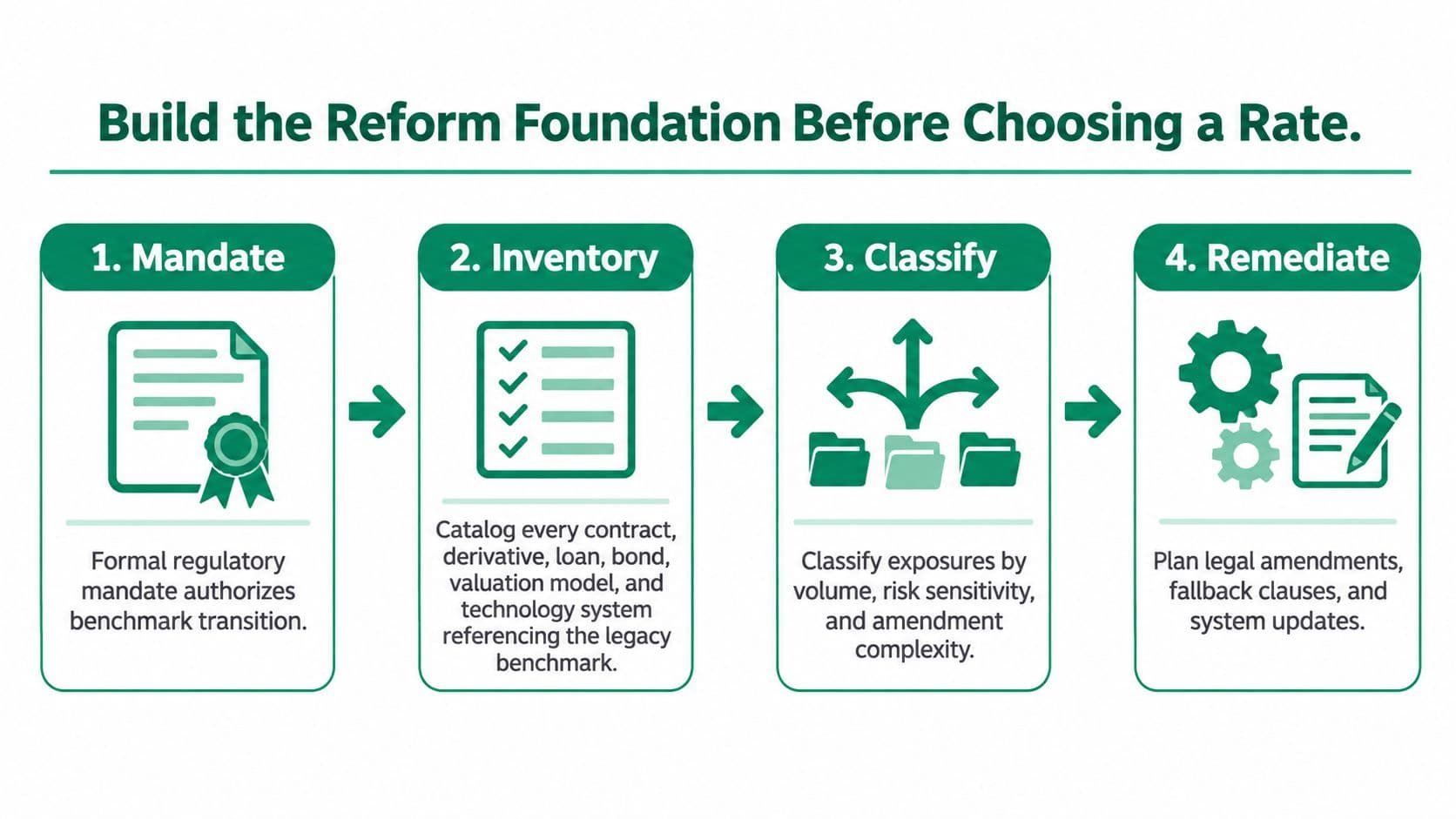
Start with a mandate, not a shortlist of benchmarks. The mandate should identify who coordinates the reform, which institutions must participate, who can approve exceptions, and which decisions require ministerial, legislative, or municipal authorization. Don't assume that a national policy announcement grants every participating body authority to amend its contracts.
Establish an exposure register with accountable owners
The technical starting point is a complete inventory of contracts, derivatives, loans, bonds, valuation models, and systems referencing the legacy benchmark. Exposure identification, enforceable fallbacks, and system readiness are central implementation priorities because amendments can require counterparty consent and accounting reassessment (BIS benchmark-rate reform resources).
Build the register around decisions people must make, rather than documents they can collect:
- Identify the exposure: Record the currency, tenor, product, maturity, contractual reference, and institution responsible.
- Classify amendment feasibility: Distinguish straightforward bilateral changes from instruments requiring wider consent or unresolved legal interpretation.
- Locate operational dependencies: Connect each exposure to its payment engine, valuation model, accounting process, and data feed.
- Assign a decision owner: Name the official who must resolve each outstanding issue, with an escalation route.
Include investment portfolios and guarantees where relevant to the institution's actual exposure. Require departments to attest to the completeness of their submissions, while retaining supporting documents for review.
Define what the benchmark must represent
Before evaluating candidates, write a plain-language statement of the economic market the benchmark is intended to measure. Separate that question from the institution's preferred payment convention: a convenient reset schedule doesn't establish that a rate represents the relevant market.
Then divide governance responsibilities. The administrator should own benchmark methodology and input controls; participating institutions should own contract interpretation, product suitability, and their implementation decisions. The coordinating ministry should maintain the decision record and resolve cross-agency dependencies.
Use transition planning to connect those responsibilities to evidence, approvals, and sequencing rather than to a single target date.
The minimum defensible foundation is an approved mandate, a reconciled exposure register, a defined market, named owners, and documented acceptance criteria. Specify what counts as adequate data, operational continuity, successful migration, and an acceptable unresolved exception.
Don't let an incomplete inventory become a hidden policy assumption. If an institution can't establish what it holds, its next task is discovery, not rate selection.
Compare Overnight Risk-Free and Term Rate Options
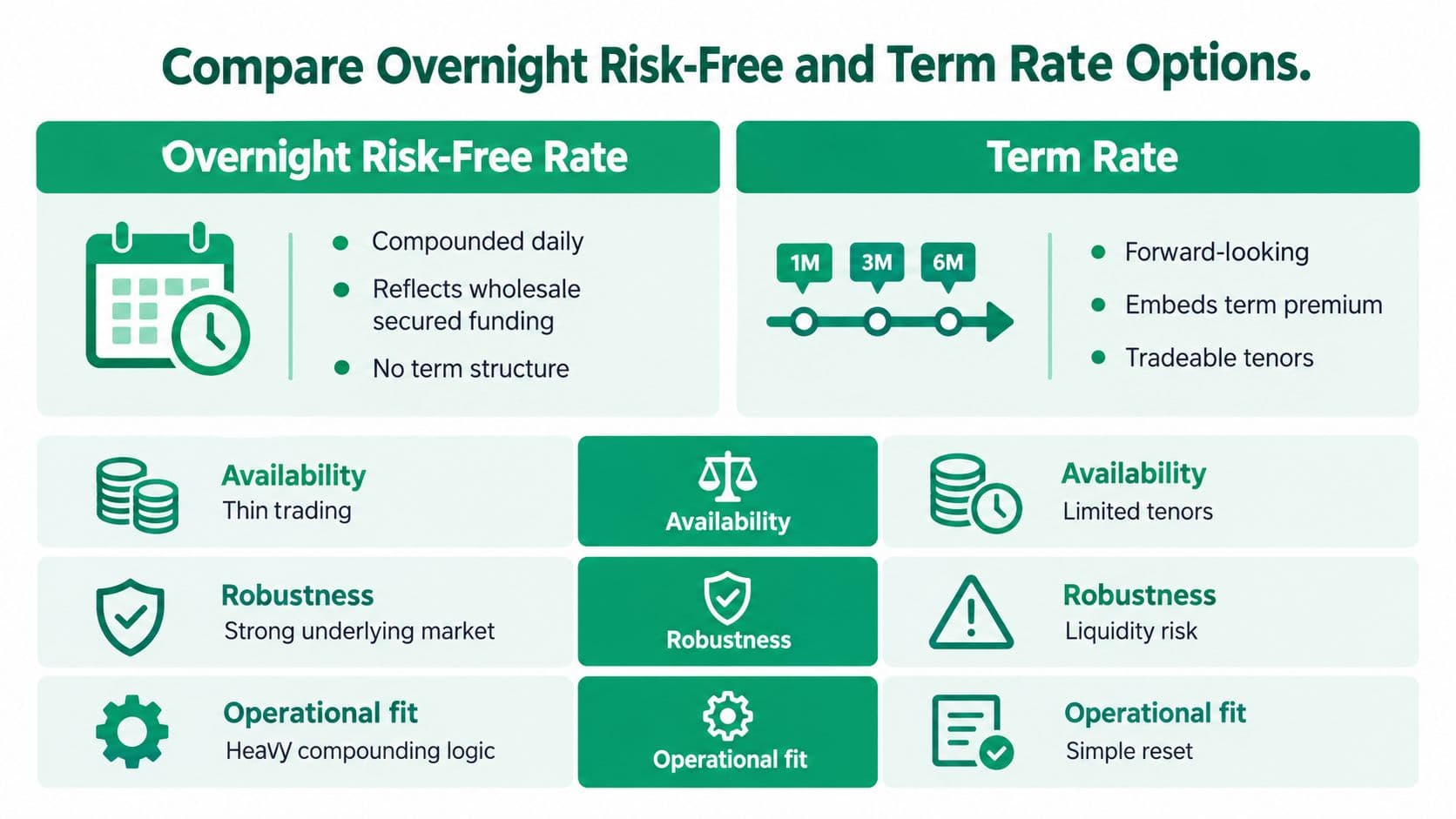
An overnight risk-free rate isn't an interbank offered rate with a different name. Historical IBORs incorporated bank-credit and term-liquidity components across multiple maturities; overnight replacements require a separate assessment of product conventions and economic fit.
The choice is therefore not “overnight or term.” Officials must decide which underlying market is credible, how the contract will calculate interest, and whether users need a payment amount known at the start of the period.
Separate the underlying rate from the contractual structure
Sterling provides a concrete example. The Bank of England became SONIA's administrator in April 2016 and implemented methodological reforms in April 2018; reformed SONIA measures eligible sterling deposit transactions using a volume-weighted trimmed mean of the central 50% of transaction rates, rounded to four decimal places (Bank of England sterling market data methodology).
That example also guards against an important mistake: overnight risk-free doesn't automatically mean secured funding. Assess each benchmark's actual market and methodology rather than generalizing from another currency's replacement.
Using an overnight rate across a longer interest period requires a contractual calculation convention. A forward-looking term rate instead requires its own supported methodology; it shouldn't be accepted merely because it resembles a familiar IBOR reset.
Benchmark choice questions
| Criterion | Question to answer | Implementation implication |
|---|---|---|
| Rate structure | Is interest calculated from daily observations or a forward-looking term fixing? | Establish when the payable amount becomes known. |
| Market basis | Which eligible transactions or market inputs support the rate? | Match the methodology to the stated economic market. |
| Credit sensitivity | Which credit and liquidity components are included or excluded? | Assess the economic gap rather than assuming equivalence. |
| Tenor support | Is there representative activity at the required maturity? | Restrict unsupported uses or select a different structure. |
| Product fit | Can the borrower and its systems apply the convention correctly? | Test calculation, reporting, and payment requirements. |
| Administrator controls | How are input gaps and methodology changes handled? | Require documented governance and cessation arrangements. |
For implementation staff translating conventions into calculations, CEFCore's resource to compare interest accrual methods can support the technical discussion. The governing contract and approved benchmark methodology must still determine the actual calculation.
Reject any candidate whose administrator can't demonstrate representative support for the intended use. Convenience is a product-design consideration, not evidence of benchmark quality.
Measure Cash Flows and Distributional Effects
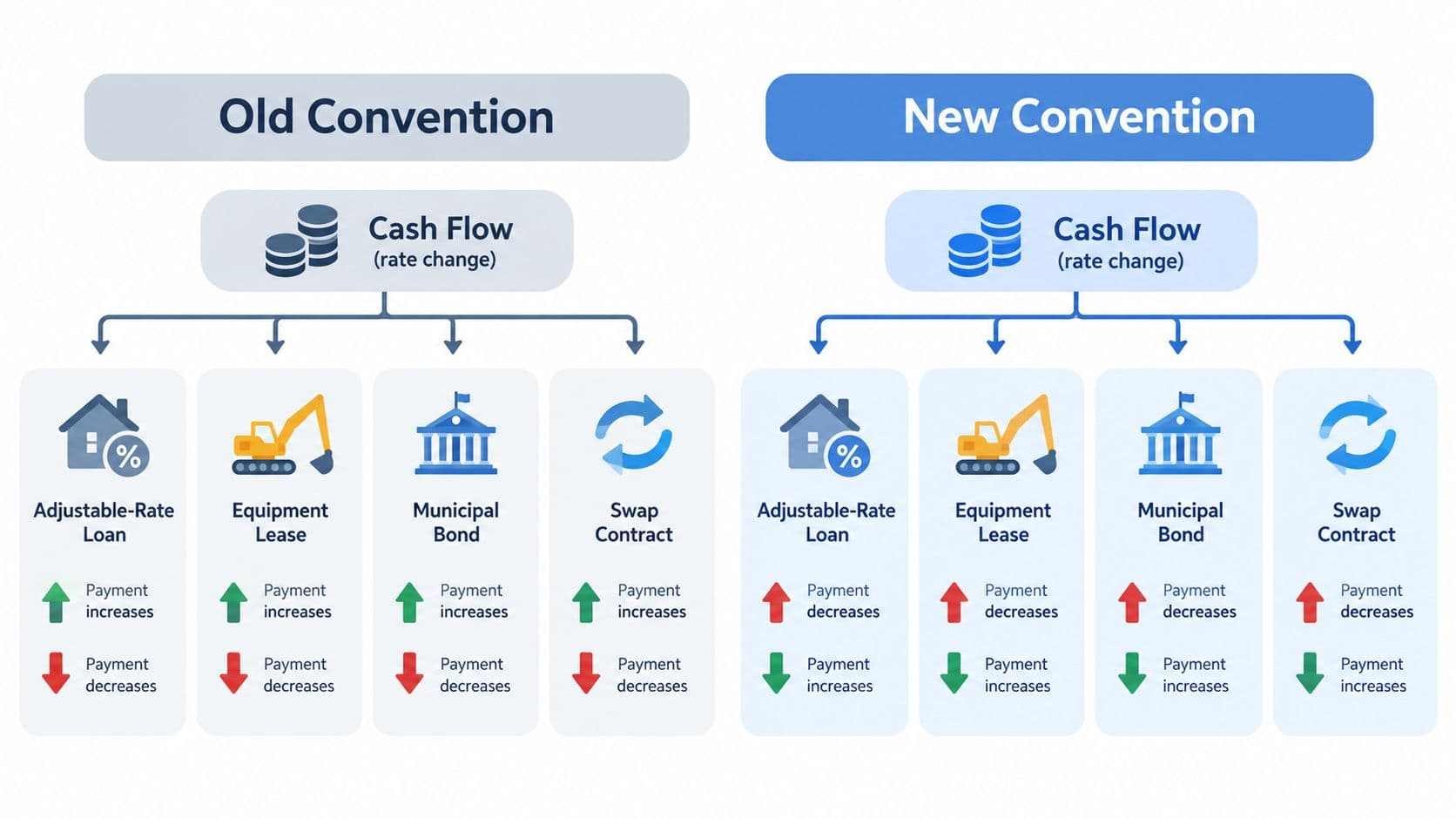
Compare payment schedules, not just rate levels. A proposed replacement can appear economically reasonable while changing when the borrower knows the amount due, when cash must be available, and how the finance office prepares its forecast.
The borrower-level problem is particularly important where overnight, backward-looking calculations replace forward-looking term conventions. Daily compounding, simple averaging, observation shifts, payment lags, fallback provisions, and spread adjustments can produce different budgeting requirements across contracts (Bloomberg LIBOR transition resource center).
Use a borrower-level scenario worksheet
Select representative instruments from the exposure register: adjustable-rate loans, benchmark-linked equipment leases, municipal debt, and associated derivatives. Use the same underlying assumptions when comparing old and new conventions so that reviewers can distinguish a methodology effect from a different interest-rate scenario.
| Worksheet field | What the reviewer should see |
|---|---|
| Contract and borrower | Instrument identifier, responsible institution, and affected borrower group |
| Baseline assumptions | Rate path, balances, interest periods, calendars, and applicable contractual terms |
| Replacement mechanics | Compounding or averaging, observation rules, payment lag, and spread adjustment |
| Payment comparison | Old and new amounts, notification dates, and settlement dates |
| Economic difference | Cash-flow and valuation differences, with their causes identified |
| Outstanding decisions | Legal interpretation, accounting assessment, approval owner, and resolution status |
Apply sensitivity analysis techniques to identify which assumptions materially affect the result. Change the rate path separately from the calculation convention; otherwise, officials won't know what caused the difference.
Distinguish affordability from valuation neutrality
A valuation comparison alone is insufficient for a borrower who needs advance certainty about a payment. Ask treasury staff to identify the date on which the amount becomes reliable and whether the institution can fund it under its existing cash-management procedures.
Segment results by borrower, institution, product, and exposure type. Review the loan and its hedge together, while retaining separate calculations so that any mismatch remains visible.
An economically representative benchmark doesn't guarantee an unchanged budgeting experience. Show the borrower the payment schedule, not only the replacement formula.
Will total borrowing costs and payment volatility change? Answer contract by contract. A spread adjustment may address an economic difference without preserving payment timing, forecast visibility, or every outcome under stressed conditions.
Publish the material assumptions and distinguish modeled results from contractual guarantees. Where officials propose to accept an adverse distributional effect, require an explicit decision rather than hiding it inside technical implementation.
Integrate Contracts Systems and Stakeholder Communication
Migration should proceed through documented release gates, not a blanket instruction to switch every reference simultaneously. Treasury, legal, accounting, technology, and communications teams should share an implementation record, while retaining clear responsibility for their own approvals.
For document control, Kons Law's guidance on how to standardize and centralize business contracts offers a useful organizational reference. Central storage should make executed terms and amendment status retrievable; it must not erase differences between instruments that require different treatment.
Turn the approved design into controlled execution
Begin with legal review of fallback triggers, amendment powers, consent requirements, and the relationship between linked instruments. Have accounting specialists assess the proposed treatment before staff post the first revised accrual.
Technology teams should then configure benchmark identifiers, data interfaces, calendars, calculation rules, and payment instructions against the approved documentation. Require independent reconciliation between the contractual specification and the system output, not just confirmation that software runs without errors.
Use this launch checklist to demand evidence rather than verbal assurances:
| Release gate | Accountable owner | Evidence required |
|---|---|---|
| Contract authority | Legal lead | Approved interpretation, executed amendments, and required consents |
| Accounting treatment | Accounting lead | Signed assessment and tested posting instructions |
| Calculation accuracy | Treasury operations | Reconciled test outputs and reviewed exceptions |
| Data and interfaces | Technology lead | Verified mappings, access controls, and error handling |
| Staff readiness | Operations manager | Completed training and usable operating procedures |
| Counterparty notification | Relationship owner | Approved notices and recorded delivery |
| Exception management | Reform coordinator | Assigned cases, escalation rules, and approved interim controls |
Keep tough legacy contracts in a separately governed register. Don't classify an unresolved instrument as migrated because the standard product template has changed.
Communicate the decision people actually face
Finance staff need operating instructions. Elected officials need the fiscal consequences and approval choices. Borrowers need the calculation convention, notice timetable, and a route to challenge an apparent error.
Use stakeholder engagement strategies to identify those needs before notices are drafted. Test explanations with the people who must use them, including municipal staff without specialist derivatives expertise.
- Before activation: Provide contract-specific notices, explain material changes, and identify the responsible contact.
- At activation: Confirm the effective convention and show how recipients can reconcile the first calculation.
- After activation: Log inquiries, investigate discrepancies, and correct recurring misunderstandings in operating guidance.
Communications are an acceptance test. If staff can't explain an obligation accurately without relying on a specialist's verbal reassurance, the institution hasn't finished preparing to administer it.
Avoid Common Failures and Test Reform Readiness
Calling a benchmark transaction-based doesn't establish that it has adequate support at every maturity. After EURIBOR's hybrid reform, actual transactions represented about 30% of one-week submissions, but less than 10% for one-month and longer maturities, illustrating why aggregate descriptions can conceal tenor-specific weaknesses (IOSCO review of benchmark reform implementation).
Require administrators and users to examine the relevant market in detail. A methodology can be well documented yet still leave officials with a difficult decision about whether the available evidence supports their intended use.
Ask diagnostic questions that can stop a launch
A readiness review should identify corrective action, not merely produce a reassuring status label.
- Is coverage representative? Inspect transaction volume, dispersion, and coverage at each relevant tenor. Restrict unsupported applications rather than averaging away the weakness.
- Are inputs concentrated? Examine whether a narrow contributor base could undermine continuity. Require an explicit contingency for missing or withdrawn submissions.
- How much judgment is used? Review the frequency and reasons for interpolation, models, or expert judgment. Investigate changes rather than treating the data hierarchy as a formality.
- Can publication continue under stress? Test disrupted inputs, delayed data, methodology escalation, and cessation procedures with the administrator.
- Do fallbacks work in practice? Examine activation events, enforceability, calculation responsibility, and unresolved disputes.
- Can officials explain value differences? Trace unexpected transfers to assumptions, conventions, or contractual choices before approving them.
For internal testing, choose scenario modeling software that preserves assumptions, versions, and review decisions. An attractive dashboard isn't enough if an auditor can't reproduce the calculation.
Don't export major-market assumptions into thin markets
Smaller and emerging markets need a readiness strategy tied to local financial infrastructure. The IMF identifies benchmark bonds as important to deep and liquid market development, connecting reference-rate quality to the development of sovereign debt markets rather than legal compliance alone (IMF analysis of market development and benchmark bonds).
My recommendation is to assess local transaction depth, government securities, repo activity, derivatives support, administrator capacity, enforceability, and user coverage before selecting the architecture. An internationally recognized rate may suit a foreign-currency exposure without representing local-currency funding conditions.
If the alternative overnight market can't support a reliable term rate, don't manufacture confidence through methodology labels. Limit approved applications, strengthen data collection and market infrastructure, and specify what evidence would justify broader use.
Readiness test: A delayed migration has identified obstacles, accountable owners, and lawful interim arrangements. An unsafe migration has unresolved obstacles that officials have relabeled as acceptable.
Generic spread adjustments and late communications deserve the same scrutiny. Require product-level evidence for the former and tested explanations for the latter, rather than accepting completion certificates from disconnected workstreams.
The minister's final question should be practical: Which unresolved issue could prevent this institution from calculating, paying, defending, or explaining its obligation? If the answer lacks an owner and an approved control, withhold authorization for that exposure.
Use a Practical Implementation Checklist
A responsible official should be able to turn the reform record into an authorization decision without reconstructing months of discussions. Keep the checklist concise, but attach the evidence needed to substantiate every approval.
Separate preparation from authorization
Teams can begin discovery, document collection, dependency mapping, and preliminary testing while formal decisions remain pending. They shouldn't treat those preparatory activities as permission to choose a benchmark, amend obligations, or accept material fiscal effects.
Use the following checklist at the institutional approval meeting:
- Mandate and ownership: Confirm the coordinating authority, participating institutions, decision rights, and escalation route.
- Exposure completeness: Obtain institutional sign-off on the register and its operational dependencies.
- Market definition and rate choice: Approve the intended economic market and the evidence supporting the candidate.
- Borrower and fiscal effects: Review scenario results, material differences, and the proposed treatment of affected groups.
- Legal and accounting clearance: Verify authority, consent, interpretation, and documented treatment.
- Operational acceptance: Require tested calculations, working interfaces, trained staff, and reconciled outputs.
- Public explanation: Approve audience-specific messages and responsibility for responding to questions.
- Residual risk: Record exceptions, interim controls, monitoring duties, and conditions for closing outstanding cases.
Authorize stages, not optimism
Use phased implementation to make each release conditional on evidence. Set the migration timetable around resolved dependencies and lawful cessation constraints, rather than asking teams to certify readiness against an arbitrary announcement.
Benchmark rate reform is an institutional operating model. Officials must sustain governance, calculations, oversight, and communication after the migration project ends.
Bring the checklist to the next treasury coordination meeting. Assign a responsible official to every open decision, identify the evidence still missing, and distinguish matters staff can resolve from those requiring public or institutional approval before committing to migration.
Unitism® offers policy design, distributional and fiscal modeling, administrative implementation support, and stakeholder education for land-value reform. For governments applying the same disciplined approach to broader fiscal transitions, visit Unitism® to explore its research and implementation resources and discuss your institution's reform needs.