Design legislative drafting training for land-value reform with curriculum, exercises, and stakeholder engagement that turn policy into workable law.
August 29, 2026
Legislative Drafting Training for Land-Value Reform
Design legislative drafting training for land-value reform with curriculum, exercises, and stakeholder engagement that turn policy into workable law.

A finance ministry can have a clear policy objective, a competent tax team, and a tight legislative timetable, yet still receive a bill that fails in committee. The usual cause isn't lack of legal intelligence. It's a drafting team that hasn't been trained to translate land economics, valuation practice, administrative capacity, and political compromise into operative text.
That problem becomes acute when officials shift a fiscal base toward land. A clause that treats a fixed lease as an annually repriced land-use right can change who bears risk, how property is transferred, and whether the revenue system works at all. Legislative drafting training for land-value reform must therefore be designed as a delivery system, not as a theory course.
Table of Contents
- Why Land-Value Reform Needs Its Own Drafting Program
- Choosing the Right Delivery Model for Drafters
- Building the Core Drafting Curriculum
- Land Leases Versus Land-Use Rights Versus Annual Land-Value Charges
- Designing Drafting Exercises and Assessment
- Stakeholder Engagement and Implementation Support After Training
Why Land-Value Reform Needs Its Own Drafting Program
A generic course may teach statutory structure, delegated powers, interpretation, and amendment technique. Those skills matter, but land-value reform adds a difficult policy layer. The drafter must understand what is being valued, who has the legal interest, when the liability arises, how improvements are excluded, and how an assessment can be challenged without destabilizing the revenue base.
The work also sits at the intersection of constitutional fiscal limits, valuation methodology, transition rules, and politically sensitive exemptions. A ministry can't move from a policy slogan such as “tax land value” directly to a workable bill. It needs definitions, charging provisions, assessment machinery, collection rules, reliefs, appeals, enforcement, secondary legislation, and a credible commencement plan.
Practical rule: Train drafters to identify the fiscal object before they draft the charging clause.
That means distinguishing the site value of land from buildings and other improvements, separating ownership from use rights, and explaining whether the instrument is a tax, rent, lease payment, or charge. A useful primer on land economics can help legal trainees build this vocabulary, such as this introduction to land economics. For students who need broader legal foundations alongside specialist instruction, AQA Edexcel OCR law practice can provide a separate practice resource, but it won't replace policy-specific drafting work.
The program should follow a deliberate arc:
- Choose the delivery model. Decide whether the ministry can support apprenticeship, formal coursework, or a hybrid.
- Teach the methodology. Make problem definition, policy framing, instrument selection, drafting, revision, and cross-checking observable skills.
- Select the legal instrument. Force an explicit choice between an annual land-value charge, a lease arrangement, and a fixed-term land-use right.
- Build assessment design. Test whether trainees can produce precise, internally consistent clauses under realistic pressure.
- Support implementation. Keep trained drafters involved through consultation, clearance, committee scrutiny, commencement, and the first operational cycle.
The core question is simple: can the trainee turn an approved policy into text that valuers, registrars, revenue officers, ministers, courts, and taxpayers can all apply consistently?
Choosing the Right Delivery Model for Drafters
The best delivery model depends less on institutional prestige than on the reform's timetable and the department's capacity to coach. In-service apprenticeship gives trainees access to institutional memory, political context, and live instructions. Its weakness is uneven exposure. A trainee can learn local practice quickly while never being forced to articulate a complete drafting method.
Formal coursework has the opposite profile. A law school or revenue institute can teach a repeatable sequence, use controlled exercises, and compare alternative instruments without the distractions of a live bill. Yet classroom success can mislead. A trainee may identify a drafting principle in an examination and still struggle to reconcile valuation rules with existing revenue legislation.
The Commonwealth experience supports treating apprenticeship as a serious method rather than an informal convenience. A survey of legislative drafting training found that 70% of jurisdictions used master-and-apprentice training in 1985, while modern guidance emphasizes structured stages such as problem definition, policy analysis, legal research, outlining, drafting, revision, cross-checking, dialogue, and polishing. The Commonwealth Association of Legislative Counsel also records that its Course in Legislative Drafting began in 1964 and has since been attended by more than 600 legal officials from 60 countries according to its documented training history.
India illustrates the value of throughput and tiered provision. Its Annual Report 2023-2024 records 25 Appreciation Courses benefiting 444 officers, and 33 Basic Courses benefiting 418 officers, across central, state, and union territory administrations as reported by the Institute of Legislative Drafting and related training program. That is a substantial pipeline, but volume alone doesn't establish first-draft quality. The program must connect cohorts to coached bill work.
| Delivery Model | Strengths | Weaknesses | Fit for Land-Value Reform |
|---|---|---|---|
| In-service apprenticeship | Institutional memory, live political literacy, direct exposure to instructions | Dependent on senior coaches, vulnerable to caseload pressure, quality varies | Strong where experienced legislative counsel can protect coaching time |
| Formal coursework | Structured methodology, controlled exercises, shared terminology | Can remain detached from ministry practice and political negotiation | Useful for foundations, especially where specialist trainers are available |
| Hybrid model | Combines method with supervised bill work and stakeholder exposure | Requires coordination across institutions and a disciplined timetable | Usually the most balanced choice for a complex fiscal reform |
A hybrid is usually preferable if the reform timetable permits a six-month build before bills are due, but the decision should account for trainer availability and current drafter caseload. Guidance on phased implementation is useful here because training itself should be sequenced with policy design, data preparation, consultation, drafting, and enactment. If the ministry can't spare senior counsel for review, a short course may be more honest than a nominal apprenticeship with no supervision.
Building the Core Drafting Curriculum
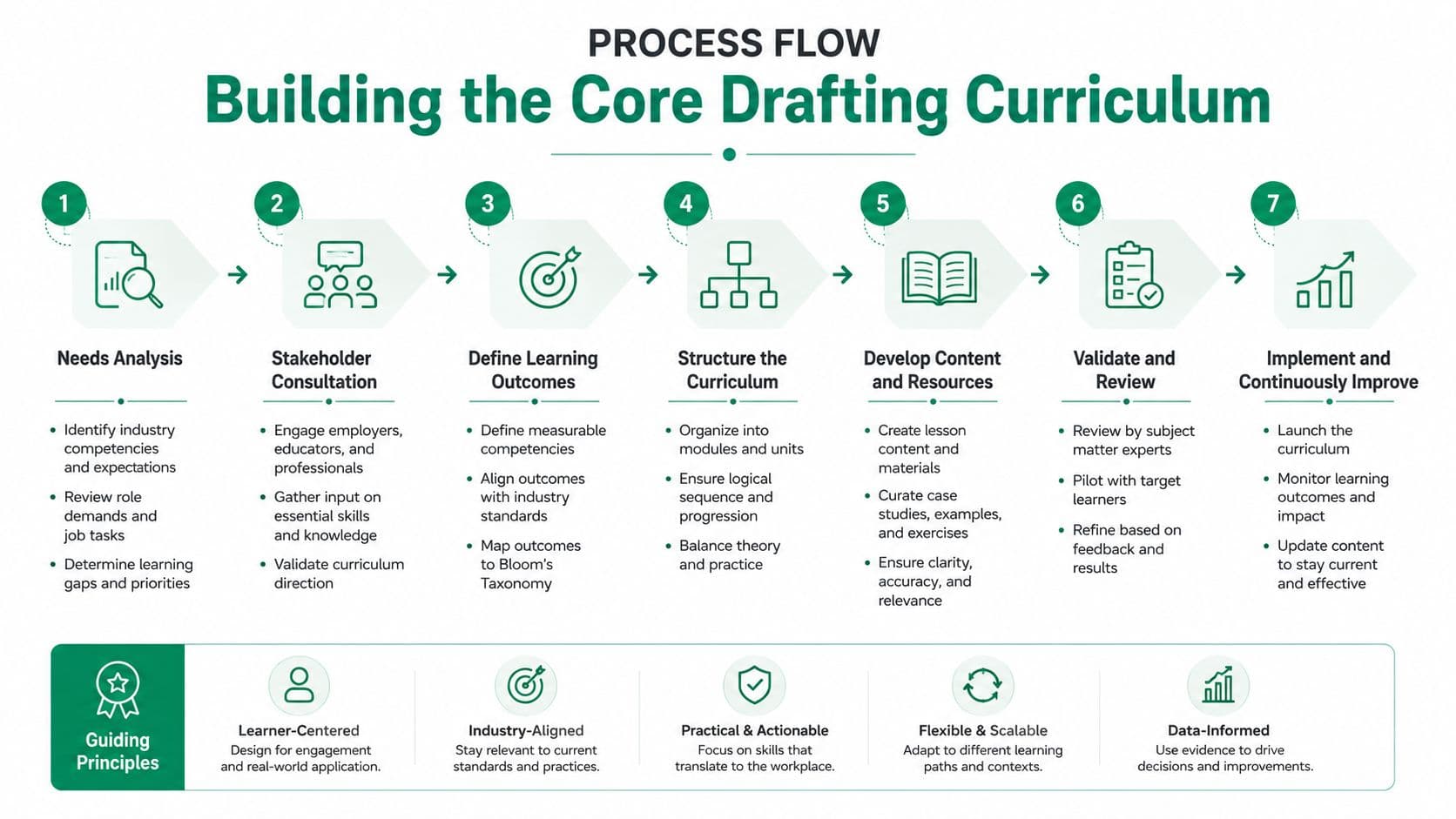
The curriculum should be organized around what a competent drafter can do, not what the trainee can recite. Each stage needs a practical output, a reviewer, and a decision rule for moving forward.
Define the problem before naming the instrument
The first deliverable is a fiscal-base memo. It should state whether the policy addresses revenue adequacy, land speculation, uneven municipal finance, tax substitution, or another defined problem. The trainee must identify the taxable or chargeable object and list the existing statutes that already regulate it.
Next comes policy framing. A trainee should produce a short green paper on incidence, showing how liability may fall across landholders, occupiers, developers, municipalities, and public bodies. The exercise should require explicit treatment of exemptions and transition arrangements, rather than allowing “fairness” to remain an unsupported conclusion.
Instrument selection follows. The drafter prepares a choice memo comparing an annual land-value charge with a land-lease overlay and any fixed-term land-use arrangement. The trainee must explain the legal consequences of each option, including the revenue trigger, transfer rules, valuation basis, and administrative owner.
Turn policy into clauses that can survive administration
Clause-by-clause drafting should yield an exposure draft containing definitions, valuation, assessment, notices, appeals, collection, relief, anti-avoidance provisions, and transitional rules. The trainee must cross-check each operative power against the institution that will exercise it. A power to publish a valuation roll is useless if the bill doesn't specify the responsible authority, review process, publication method, and legal effect.
Polishing is not cosmetic. It produces a redline against existing revenue statutes, exposes duplicate powers, resolves inconsistent terms, and tests whether schedules and regulations align with the principal Act. Training design principles from this guide to course instruction can help trainers organize these exercises around performance and feedback. A policy team can also use policy evaluation methods to make the trainee test distributional and administrative consequences before finalizing text.
The strongest exercise ends with a clause that an administrator can apply, not with a definition the trainer happens to like.
Land Leases Versus Land-Use Rights Versus Annual Land-Value Charges
Drafters must keep three instruments separate. A land lease grants use under a lease contract, renewable or non-renewable, for a fixed term and fixed price. A renewable lease offers certainty only until renewal, when the accumulated gap between the lease rate and the market can be closed through a major repricing. A non-renewable lease becomes progressively harder to refinance and sell as expiry approaches. Fixed prices don't remove risk. They postpone it.
A fixed land-use right is also time-limited, even where it carries planning permissions and a broad bundle of use and transfer rights. China's urban land regime illustrates the distinction. Residential land-use rights are typically 70 years, while commercial and industrial rights are typically 40 and 50 years respectively, and the World Bank describes urban land-use rights as renewable in its analysis of urban China. China's 1990 regime sets maximum terms of 70 years for residential, 50 years for industrial, 50 years for education, science, culture, public health, and physical education, 40 years for commercial, tourist, and recreational uses, and 50 years for other uses under the cited land-use law.
An annual land-value charge is different. It is assessed and repriced each year against unimproved land value, with separate treatment for buildings and other improvements. It requires valuation rules, hardship relief, appeals, collection procedures, and a clear annual trigger. It doesn't rely on a lease renewal to update the public return.
| Instrument | Tenure | Revenue trigger | Valuation basis | Common drafting trap |
|---|---|---|---|---|
| Land lease | Renewable or non-renewable fixed term | Contract rent or rent review | Agreed or renegotiated lease price | Treating deferred repricing as removal of risk |
| Fixed land-use right | Long but terminable term | Grant, lease payment, transfer, or prescribed fee | Rights attached to the specified use and term | Calling an expiring right indefinite ownership |
| Annual land-value charge | No renewal required and no expiry where properly designed | Annual assessment and charge | Unimproved site or land value | Including improvements or omitting valuation review |
The drafting test is strict. Don't call a fixed lease a land-use right unless it is repriced each year, requires no renewal, and doesn't expire. The Lincoln Institute distinguishes China's assignment of land rights, which has no term limit, from use-right lease terms of 40 years for commercial, 50 years for industrial, and 70 years for residential land in its discussion of publicly owned land. Ordinary property leases in China cannot exceed 20 years, and a lease longer than the underlying land-use-right term creates risk because the landlord may no longer hold title after expiry as explained in this China lease guidance-20230228.pdf). A wrong label then spreads into regulations, forms, valuation instructions, and public explanations.
For a further comparison of long fixed terms and land tenure design, trainees can consult this discussion of 99-year land leases, while keeping the legal categories distinct.
Designing Drafting Exercises and Assessment
Assessment must reveal whether a trainee can produce usable text under constraints. A four-tier stack works because each tier exposes a different weakness, from sentence-level imprecision to failure to defend an entire legislative scheme.
Start with controlled drafting pressure
Tier one, short drills, should take a policy instruction and turn it into a single section, amend a penalty clause, or repair a definition. The trainer can test whether the trainee distinguishes “may” from “must,” identifies the right decision-maker, and avoids making a power broader than the policy authorizes.
Tier two, peer review, makes drafting a visible professional practice. Trainees redline one another's clauses against a published style guide and a checklist of statutory conventions. They should explain every material change, especially where they alter scope, discretion, timing, or appeal rights.
Tier three, red-pen simulations, replicate the work of rescuing a difficult draft. A senior drafter deliberately introduces ambiguity, circularity, an undefined term, or an unworkable cross-reference. The trainee must repair the text within a fixed window and record the reasoning behind each correction. This shows whether they can diagnose structural defects rather than merely improve prose.
The assessment should include a method for including evaluations in a course, but quizzes should support drafting performance rather than substitute for it. A trainee who knows the definition of site value but can't draft an appeal provision hasn't completed the task.
Make the capstone resemble committee work
Tier four, the capstone, should require a short bill or amendment bundle on a land-value reform topic, defended orally before a mock parliamentary committee. The panel should include legal, valuation, revenue, and policy perspectives. It should ask hostile but realistic questions: What happens to a disputed assessment? Who pays during transition? Does the charge attach to ownership, occupation, or a defined interest? Which improvements are excluded?
Weight the rubric toward precision of definition, internal consistency, and implementability, not elegance. Schedule feedback within 72 hours, so trainees can correct recurring errors before they become habits. A separate exercise on calculating land value can test whether the drafting team understands the valuation input its clauses assume.
Stakeholder Engagement and Implementation Support After Training
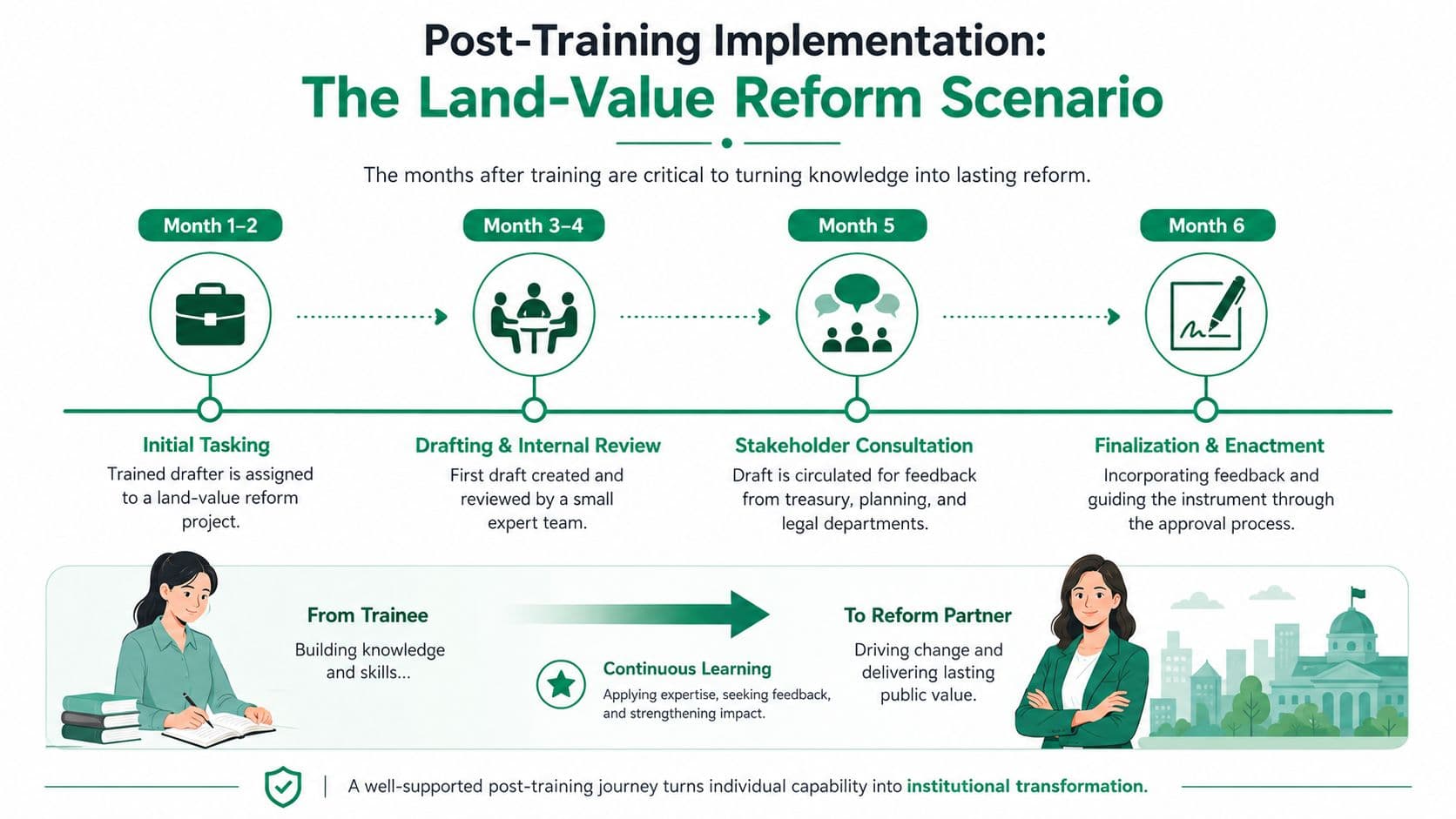
Training ends in a classroom, but drafting quality is decided during the months that follow. A newly trained drafter can become a reform partner if the ministry gives them a defined assignment, access to technical officials, and senior review. Without that support, they'll usually return to generic bill work and lose the specialized method.
Consider a ministry that issues instructions for an annual charge on unimproved urban land value. The drafter's first task isn't to write the charging provision. It's to turn the instructions into an issue register covering the valuation base, liable person, assessment date, reliefs, appeals, collection, data sharing, and transition.
Sequence the stakeholders deliberately
The first meeting should bring in valuers and registrars. The drafter prepares a technical briefing that tests whether the proposed definitions match cadastral records, valuation practice, and registration documents. Any disagreement about the taxable interest should be resolved before public consultation.
The next stage is pre-legislative consultation with landowners and municipal finance officers. The drafter should circulate an accessible exposure draft, an explanation of the assessment process, and a schedule of consultation questions. Landowners may identify hardship and transfer concerns, while municipal officers can reveal gaps in billing, enforcement, and local data.
Finance ministry clearance then tests revenue projections and transition design. The drafter contributes a clause map showing which assumptions depend on valuation regulations, which provisions require administrative guidance, and which reliefs affect the fiscal path. Late amendments should be logged against the valuation architecture. If a minister proposes a new exemption, the team must check the definition, assessment roll, equal-treatment rule, appeal process, and revenue estimate together.
Parliamentary committee scrutiny requires a different contribution. The drafter prepares an amendment matrix, responses to technical questions, and a clean consolidated text. They shouldn't accept a politically attractive amendment that creates an undefined class of land or lets a regulation change the tax base without a clear statutory limit.
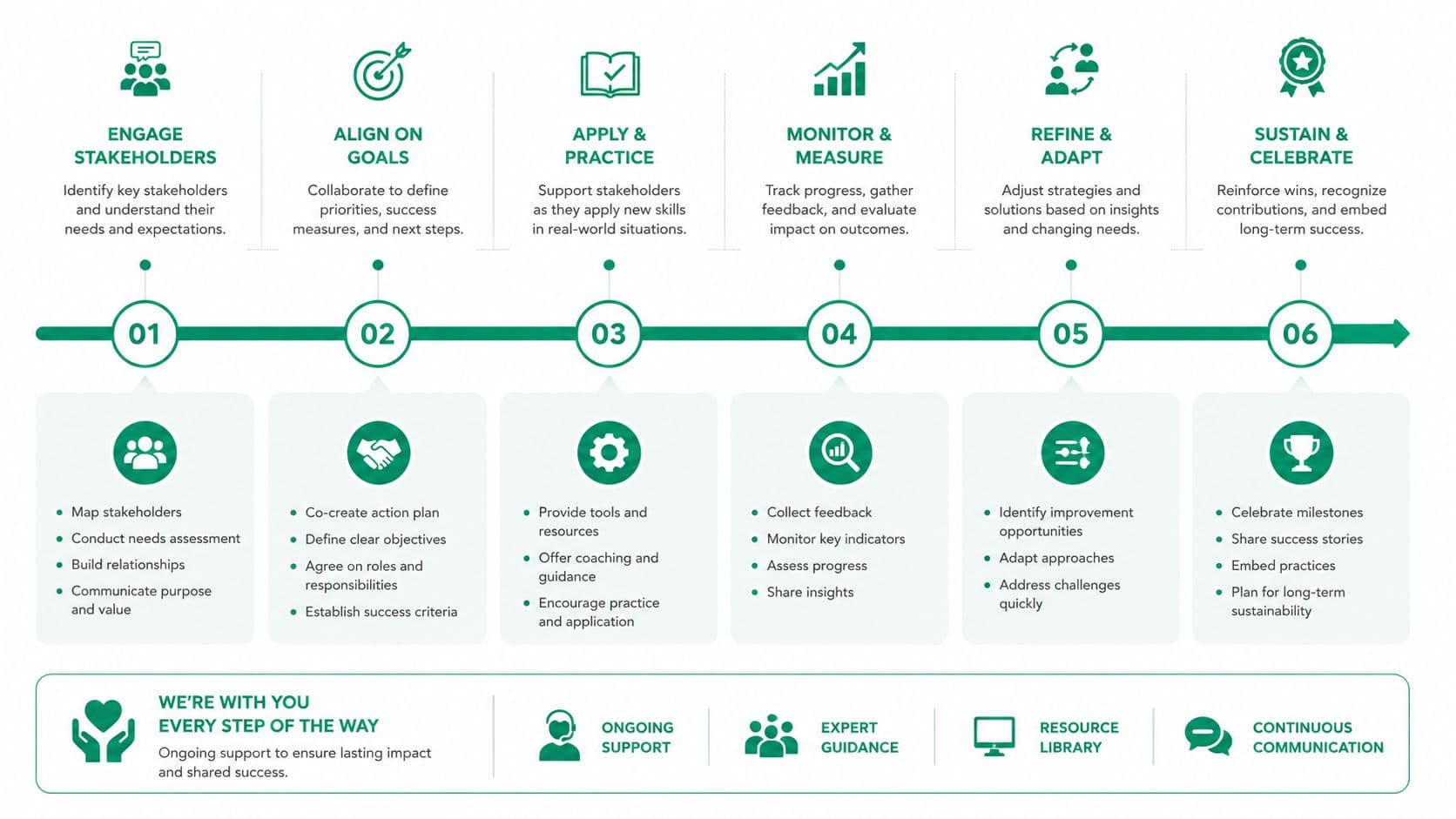
After enactment, the checklist should include:
- Commencement orders: Confirm that commencement dates match valuation, billing, and staffing readiness.
- Valuation roll publication: Ensure the roll, notice process, correction route, and appeal rights are operational.
- Transition relief: Verify that relief applies through clear eligibility rules and doesn't undermine the base.
- Administrative guidance: Align forms, manuals, regulations, and public explanations with the enacted definitions.
- Refresher clinic: Hold a clinic six months after royal assent to review implementation problems before the first revaluation cycle exposes them.
A practical framework for stakeholder engagement strategies helps the drafter manage consultation as a sequence of decisions rather than a ceremonial distribution of documents. The final measure of legislative drafting training is whether the drafter can keep the policy architecture intact while responding to legitimate technical and political change.
Unitism® helps governments and policy teams design land-value reforms, build valuation and assessment frameworks, and connect legislative drafting with administrative implementation. Visit Unitism® to explore training, policy design, valuation methods, and delivery support for land-based fiscal reform.