Explore our guide to tenant protection policies. Learn how land-use rights, rent regulations, and stable housing policies create thriving communities.
July 17, 2026
A Guide to Modern Tenant Protection
Explore our guide to tenant protection policies. Learn how land-use rights, rent regulations, and stable housing policies create thriving communities.

For billions of people, the fear of losing their home isn't a distant worry—it's a constant, nagging reality. We’re seeing traditional tenant protection measures, once a reliable shield, failing to keep up with skyrocketing costs and a volatile economy. This isn't just a problem; it's a full-blown crisis hitting families and individuals all over the world.
Table of Contents
- The Escalating Global Housing Insecurity Crisis
- The Policymaker's Tenant Protection Toolkit
- Learning from Current Tenant Protection Frameworks
- Why Land-Use Rights Are More Effective Than Taxes
- Unifying Tenant Security with Land Value Capture
- A Practical Roadmap for Policy Implementation
- Common Questions About Land-Use Rights
The Escalating Global Housing Insecurity Crisis
Having a secure home is the bedrock of a stable life. But for a huge and growing number of people, that bedrock is crumbling. Housing insecurity has moved from the margins to the mainstream, affecting renters in wealthy cities and developing nations alike. At its heart, the problem is simple: incomes just aren't keeping pace with the cost of housing, and existing laws are proving powerless to bridge that gap.
This isn't just a feeling; the data tells a sobering story of a global phenomenon. Recent numbers show a disturbing spike in the number of people who feel their housing situation is precarious, almost entirely because of financial pressures.
A Surge in Global Insecurity
A 2024 report from the Prindex initiative laid out the hard numbers. The percentage of adults worldwide feeling insecure about their home or land rights shot up from 19% in 2020 to 23% in 2024. That’s a staggering 1.1 billion people living with the constant anxiety of losing their home.
What’s driving this fear has shifted dramatically. It’s no longer just about legal rights; it’s about money. Unaffordable rents and mortgages are now the number one cause of housing anxiety in 38 countries, a huge jump from just 24 countries in 2020. This clearly shows how badly our current tenant protection policies are failing to handle today's economic realities. You can dig into the specifics in the 2024 Global Comparative Report on Security of Property Rights.
Even in places you'd expect stability, the strain is showing.
- High-Income Nations: In developed and upper-middle-income countries, 9% of people now say their biggest worry is missing a rent or mortgage payment.
- Urban Centers: The crisis is hitting cities the hardest. About 23% of the urban population feels insecure, compared to 18% in rural areas.
The data paints a clear picture: as housing becomes more expensive, more people are being displaced, and the legal safeguards we’ve relied on are simply not enough. You can learn more about the economic forces driving this trend in our guide on why housing is unaffordable. If we don't see serious policy changes soon, this trend could destabilize communities and economies on a global scale.
The Policymaker's Tenant Protection Toolkit
When it comes to tackling housing insecurity, talk is cheap. What policymakers really need is a practical toolkit of proven strategies for tenant protection. Let’s move beyond theory and look at the actual instruments governments can use, each with its own mechanics, goals, and inevitable trade-offs.
At its core, this toolkit includes policies like rent stabilization (what many people call rent control), emergency eviction moratoriums, and just-cause eviction ordinances. Other measures focus on balancing the scales of justice, such as right-to-counsel laws that ensure tenants have legal support when facing eviction.
New legislation is constantly reshaping this landscape. For instance, the Renters Reform Bill is a great example of how governments are rethinking landlord and tenant responsibilities. The team at SM Elite Management on landlord liability offers a sharp analysis of how these kinds of reforms are shifting the ground beneath the rental market.
Comparing Key Tenant Protection Policies
Choosing the right policy means understanding exactly what you’re getting into—the good and the bad. This table breaks down the most common tools to give you a clear-eyed view of how they work, what they aim to achieve, and where they might fall short.
| Policy Instrument | Core Mechanism | Primary Goal | Potential Trade-offs |
|---|---|---|---|
| Rent Stabilization | Limits the frequency and size of rent increases on existing tenancies. | To prevent displacement due to sharp rent hikes and provide tenant stability. | Can potentially reduce new housing supply or lead to underinvestment in maintenance if not designed carefully. |
| Eviction Moratorium | A temporary, often emergency, ban on most or all eviction proceedings. | To prevent mass displacement during a crisis, such as a pandemic or economic downturn. | May lead to significant back-rent accumulation for tenants and financial strain for landlords. |
| Just-Cause Eviction | Requires landlords to provide a specific, legally valid reason for terminating a tenancy. | To protect tenants from arbitrary or retaliatory evictions and enhance housing security. | Can be perceived as limiting landlord flexibility in managing their property. |
| Right-to-Counsel | Guarantees legal representation for low-income tenants facing eviction. | To level the playing field in housing court and reduce eviction rates. | Requires significant public funding and the establishment of a robust legal aid infrastructure. |
As you can see, there's no single magic bullet. Each approach requires a careful balancing act to support tenants without unintentionally harming the overall housing market.
This growing need for action is backed by some sobering data. The infographic below highlights just how much housing insecurity has climbed in recent years.
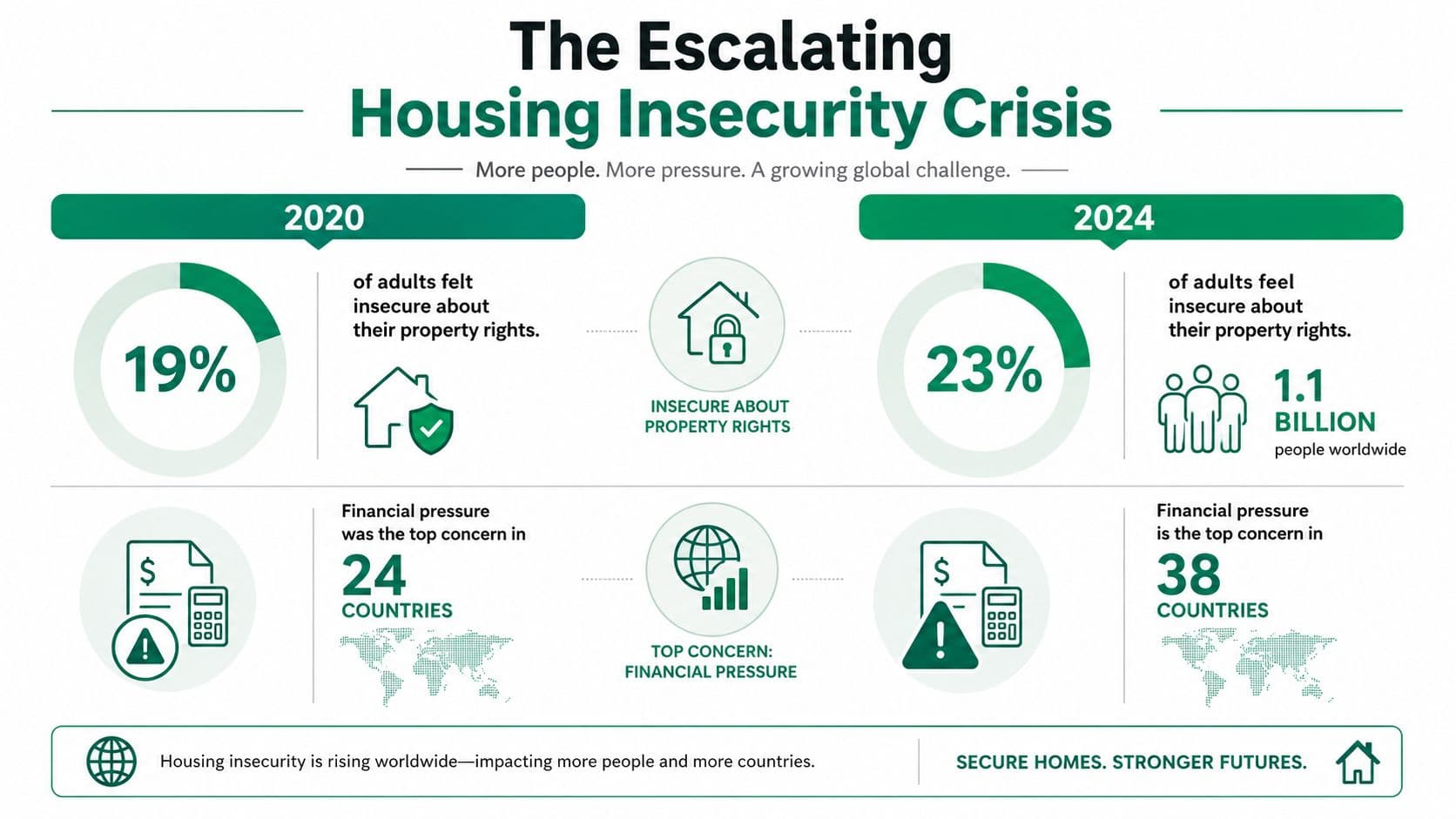
The trend is clear: between 2020 and 2024, more and more people felt the squeeze of financial pressure and housing instability.
Getting familiar with these instruments is the essential first step. To see how these specific policies can be integrated into a comprehensive national or municipal plan, dive into our complete guide here:
https://unitism.com/insights/housing-affordability-policy
From our experience, the most resilient tenant protection frameworks don't rely on a single policy. Instead, they layer several of these tools to create a more comprehensive safety net against displacement and instability.
Learning from Current Tenant Protection Frameworks
To figure out what makes for truly effective tenant protection, we have to look at what’s already being tried on the ground. When you sift through the real-world systems, you find a mixed bag of promising successes and cautionary tales. It's a stark reminder that the success of any policy hinges on its design and the legal landscape it's built on.
By studying these existing models, from nationwide programs to scattered local rules, we can see what works, what falls short, and how to build something stronger for the future.
The Patchwork Problem in the United States
In the United States, a renter's rights are often a lottery. With no federal standard for tenant protection, your security as a tenant can change dramatically just by crossing a state or city line. This creates a confusing and deeply unequal system.
This patchwork of laws leaves millions of people in a precarious position. For example, only eight states, including Georgia and Minnesota, have passed meaningful laws to strengthen a tenant's right to a habitable home and improve code enforcement. Even more striking, only five states guarantee a tenant's ‘right to counsel’—legal representation during eviction proceedings. This fragmentation means most renters face the threat of eviction without the legal support they need, a problem compounded by the lack of federal rules on things like tenant screening. You can read the full research on state and local tenant protections to grasp the full scale of the issue.
The fragmentation of these protections means that millions of Americans still lack access to basic tenant rights, such as protection against retaliation for reporting violations or the ability to assert their rights against threats to housing stability.
Balancing Rights and Responsibilities
A good system has to be a two-way street, clearly defining the rights and duties of both landlords and tenants. The best toolkits are built on well-established legal structures that do just that. For a clear, real-world example of how these relationships get defined by law, take a look at understanding Texas Property Code 92.
These examples show us that piecemeal solutions just don't cut it. While some places have made real progress—like the UK's successful deposit protection schemes—they often still struggle with other huge problems, like the ongoing fight to end no-fault evictions.
Looking at what's working and what isn't makes one thing clear: isolated policies are not enough. To create genuine housing stability, we need a more unified and comprehensive approach. These real-world challenges also open the door to thinking about entirely different models, like community land trusts, which can offer a path to deeper, more permanent affordability. You might be interested in our article on how homestead community land trusts work.
Why Land-Use Rights Are More Effective Than Taxes
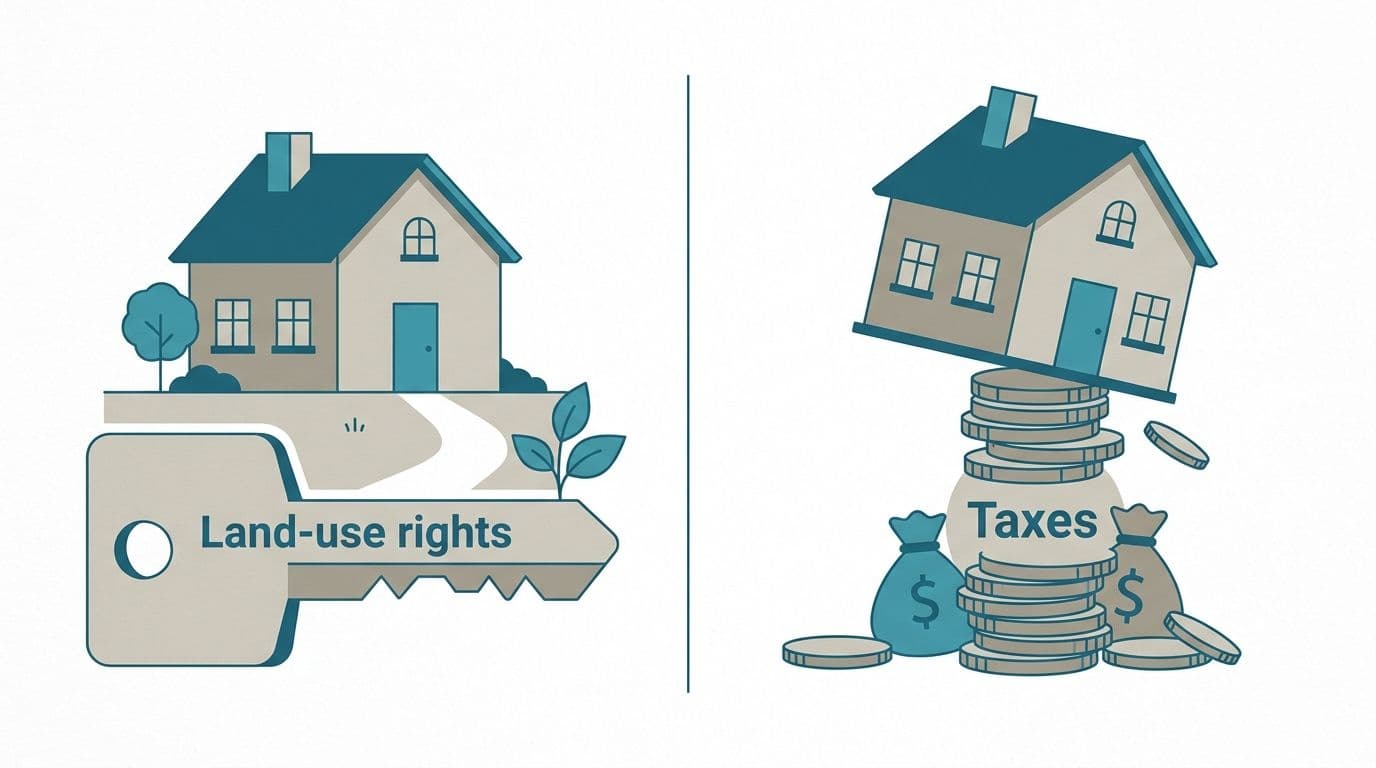
While fiscal policies like land value taxes can be part of a broader strategy to curb speculation, they address housing instability from the outside-in. For genuine, foundational tenant protection, we must go deeper by strengthening land-use rights. This strategy focuses directly on the tenant's relationship to their home, giving them a real, lasting stake. It transforms tenancy from a temporary rental contract into a secure and valuable right, moving beyond the limitations of purely tax-based solutions.
Understanding Land-Use Rights
So what are land-use rights, exactly? The simplest way to think about them is as a secure, often tradable right to occupy and use a property for a set period. Critically, this right is legally separate from the ownership of the land itself. It effectively uncouples the right to live in a home from the speculative value of the ground it sits on.
This is much more than just a long-term lease. A well-designed land-use right is built to be:
- Secure: It offers powerful protection against arbitrary eviction, providing a sense of stability much like homeownership.
- Durable: These rights can last for decades or even be passed down to the next generation, creating a foundation for family and community stability.
- Tradable: In many models, the right to use the property can be sold. This allows the tenant to capture the value they've created through good stewardship without needing the capital to buy the land.
By establishing this distinct class of property rights, we can give tenants profound security without the market-distorting side effects of blunt tools like rent caps. To dive deeper into the mechanics, you can read our full guide on what a land-use right is and how it works.
Aligning Incentives for Stability
The true elegance of this model lies in how it aligns the interests of everyone involved—occupants, landowners, and the broader community. When someone has a secure, long-term stake in their home, they naturally start thinking and acting like an owner. They’re more likely to invest their own time and money into the property and the neighborhood.
A system based on land-use rights fundamentally changes the rental market's dynamic. It elevates tenants from short-term customers into invested community members, which in turn fosters long-term care and social cohesion.
This creates a positive feedback loop. The occupant benefits from a well-maintained home, and the property owner benefits from a steady, reliable income stream from an appreciating asset. The landowner’s focus shifts from chasing short-term gains via rent hikes to building long-term value through stable, responsible occupancy.
Ultimately, this approach lays the groundwork for communities that truly thrive. Instead of the all-too-common adversarial relationship between tenants and landlords, it builds a framework where both can prosper. By giving people a secure stake in the place they call home, we build neighborhoods that are more stable, more connected, and far more resilient.
Unifying Tenant Security with Land Value Capture
Giving tenants strong, clear rights isn't just about protecting individuals; it’s the first step toward building a truly stable community. But what many people miss is how this stability sets the stage for an even bigger opportunity when you pair it with land value capture. These aren’t two separate ideas. They work together, like two sides of the same coin, to create a housing economy that's both fair and resilient.
Here's how it works. When tenants feel secure, they put down roots. They stay in their homes longer, look after their property, and become active members of their neighborhoods. This stability, combined with public investments like new parks, better transit, or improved schools, naturally makes the land in that area more valuable.
So, the big question becomes: who gets to profit from this value that the community and public spending created together?
Capturing Publicly Created Value
This is where land value capture (LVC) comes in. It’s a set of tools that allows a community to collect a portion of the increased land value that it helped generate.
Imagine a city builds a new light-rail line. Suddenly, the land around each new station is far more desirable, and its value shoots up. LVC simply ensures that a piece of that new wealth—which wouldn't exist without the public's investment in the train—is returned to the public purse to help pay for the project and fund other services.
It creates a powerful and logical feedback loop:
- Stable communities with secure tenants lead to steady, predictable growth in land values.
- Land value capture channels a share of that growth back to the community.
- This new revenue can then be used to improve public services or fund more affordable housing, making the community even stronger.
By connecting the dots between tenant security and land value capture, we create a system where public investment actually benefits the public. Rising land values stop being a jackpot for speculators and instead become a sustainable source of funding for community needs.
A Virtuous Cycle of Affordability
This integrated approach gets right to the heart of the housing crisis: out-of-control land speculation. When the chance to make a quick, massive profit just by holding onto land is significantly reduced, the entire dynamic of the market shifts. There’s no longer a strong incentive to let properties sit vacant or underdeveloped. Land starts being valued for what you can do with it, not just what you can flip it for.
This fundamentally redirects the market away from passive rent-seeking and toward productive use. Tenant protection is no longer just a shield against displacement; it becomes a key part of an economic model where the value we all create together is shared more broadly. By capturing that value, cities can fund new affordable housing, lower the tax burden on wages and buildings, and make sure that growth benefits everyone, not just a select few.
To see how the mechanics of this work in greater detail, check out our guide on land value capture. It’s a powerful combination that creates a virtuous cycle of economic fairness and lasting housing security.
A Practical Roadmap for Policy Implementation
Moving from policy ideas to real-world action can feel daunting, but it doesn't have to be. For governments looking to create a more stable and equitable housing market, establishing strong tenant protection and land-use rights is a completely achievable goal. What it takes is a clear, step-by-step plan.
This roadmap breaks down the process of designing and launching a system that genuinely works for everyone.
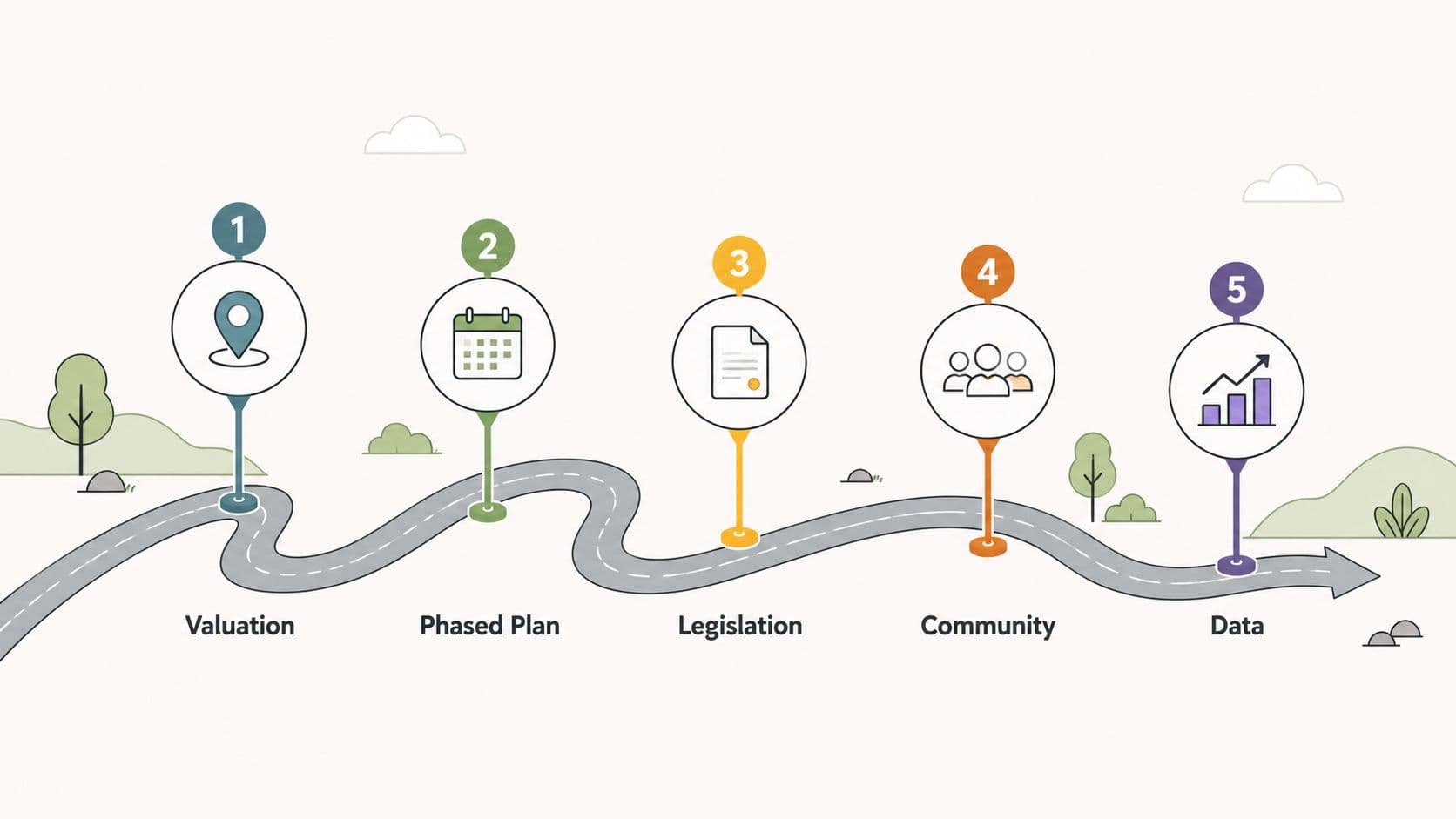
The entire journey starts with getting the fundamentals right. Any successful framework is built on a foundation of accurate, transparent data that all parties can trust.
Key Implementation Steps
A phased, evidence-based rollout is always the smartest approach. It minimizes disruption and helps build steady momentum for reform. By tackling the process in manageable stages, you can ensure each piece of the puzzle is working correctly before moving on to the next, which is crucial for managing both political and economic risk.
Here’s a practical sequence to follow:
-
Conduct Comprehensive Land Valuations: First things first, you need a crystal-clear and data-driven picture of land values across your entire jurisdiction. This means building a solid assessment framework to estimate site rental values, which will serve as the baseline for any new land-use rights or value capture policies.
-
Model and Design a Phased Transition: Big, sudden changes rarely work. Instead, design a gradual transition plan. Use detailed distributional and fiscal modeling to clearly illustrate who stands to benefit and who will pay under the new system. This transparency is your best tool for getting buy-in, as it demonstrates the long-term gains in both public revenue and overall fairness.
A well-structured transition plan is the key to successful reform. It allows stakeholders to adapt, builds confidence in the process, and ensures that the move toward greater tenant protection is both smooth and sustainable.
-
Draft Clear and Robust Legislation: Now it's time to turn your policy design into precise legal language. This involves more than just writing laws; you'll need to draft the necessary legislative changes, design the administrative processes to support them, and make sure the new rules integrate flawlessly with existing property records and legal frameworks.
-
Engage and Educate Stakeholders: Never underestimate the power of proactive communication. You need to develop educational programs and straightforward public materials to explain what’s changing and why. This outreach must be targeted to everyone involved—civil servants, landlords, tenants, and the public at large. Building trust through transparency is what ultimately ensures a smooth adoption.
Common Questions About Land-Use Rights
When communities and policymakers start talking about new ways to create housing stability, the idea of land-use rights often comes up. It’s a big shift from the rental systems we’re all used to, so it’s natural to have questions. Let's break down some of the most common ones to show how this works for everyone involved—landlords, tenants, and the market itself.
How Do Land-Use Rights Differ from a Long Lease?
It's easy to see why people group these together, as both offer more security than a standard one-year rental agreement. But at their core, they are fundamentally different. A land-use right gives the holder a much stronger, more secure position—almost like a form of equity.
Think of it this way: a long lease is still just a rental contract with a longer timeline. A land-use right, on the other hand, is a real asset. It’s designed to be far more durable and can often be:
- Tradable: Occupants can sell their right to live in the home, letting them benefit from the value they've helped create through upkeep and community involvement.
- Inheritable: These rights can be passed on to the next generation, creating a powerful foundation for family stability.
This completely reframes tenant protection. Instead of just being temporary renters, occupants become long-term stewards of the property.
This model makes a key distinction: it separates the private right to own and improve buildings from the socially created value of the land itself. It aligns private incentives with the public good.
A well-designed system makes sure everyone’s needs are met. When you combine this level of tenant security with land value capture (which can lower taxes on buildings), you create a powerful incentive for landlords to maintain their properties. The model rightly discourages passive, speculative holding, rewarding responsible ownership and ultimately creating a healthier housing market for everyone.
At Unitism®, we give governments the research, policy tools, and hands-on support to build housing markets that are both fairer and more stable. Learn how we can help you apply these principles.