3. The Free Market
Neither social justice nor a well-functioning free market system can long be enjoyed without the other.
— Kris Feder
Associate Professor of Economics, Bard College
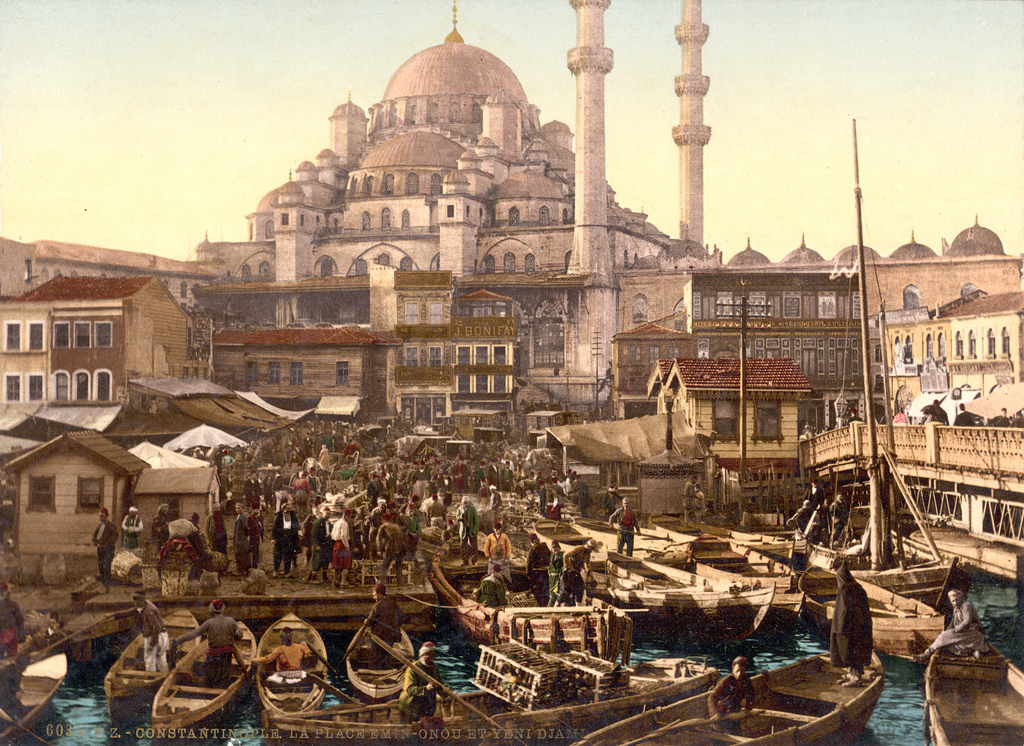
A truly free market is a healthy component of any balanced society. Markets are free when human beings have equal opportunities to influence the production and trade of desirable goods and services. When people compete to produce goods or services, some are able to attain market control and set market prices due to favorable natural, social, or political conditions: They attain a monopoly. The problem with monopolies, however, is that they enable those who have attained them to extract money from society without providing goods or services of corresponding value.8
When a single entity has complete control over a market, this is known as an absolute monopoly. But monopolies can also occur when the market is simply closed to new participants because overall supply can’t be increased; these are known as entry monopolies because outside entities are unable to participate in the market unless another entity that’s already participating in the market is willing to transfer its market privileges to the outside entity.
The market for top-level internet domains—those ending in “.com” or “.org,” for example—is an entry monopoly. Because actual domain names can’t be replicated (for example, there can’t be another progress.org) and because there are only a limited number of sensible letter combinations, the market for top-level internet domain names today is no longer a free market, but rather a monopolized market. As many people who want to register internet domains know, many good domain names are already owned by individuals and companies that don’t actually put them to productive use, but rather control the names solely in order to resell them at exorbitant prices.
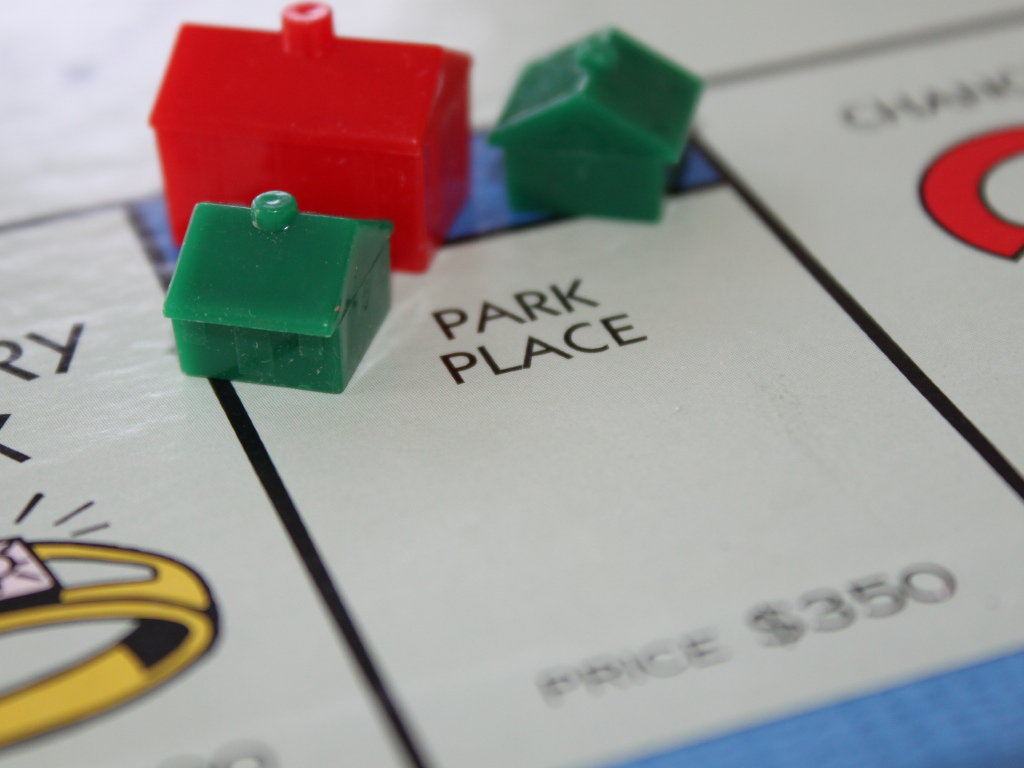
Land ownership is also an entry monopoly: Land is naturally scarce for each location since its supply can’t be increased. New land can’t be created, so if people wish to become landowners, they have to buy land from someone who already owns it. The perspective that the ownership of land is an entry monopoly may seem strange at first because few of us are taught to view the real-estate market in this light. But let’s examine the issue from another perspective: How much does it cost to produce land? Nothing, because land can’t be produced, yet people make money from land nonetheless. The real-estate market in land has to be a monopoly since, per our previous definition, monopolies allow participants to extract money from society without providing human-made goods or services of corresponding value.
Real-estate agents, small business owners, and property managers know only too well that location gives a particular piece of land, or property, a competitive advantage over another. A rundown house in an expensive neighborhood tends to be more valuable than an expensive house of similar size in a rundown neighborhood. Why? Because the desirable social qualities that exist in a location give land its value, and those qualities can’t be unilaterally created by the property owners themselves; the desirable qualities can only be gained from the wealth, convenience, and benefits that exist in the surrounding environment.
This locational advantage, afforded through the monopolistic nature of the market, allows property owners to profit from land. When people buy a piece of land, their ownership gives them the right to exclude the rest of society from the benefits afforded to them by their land, even though those benefits only arise from nature and from the presence of goods and services that have been provided by that same society in the first place. Buyers pay for exclusive access rights to land and pay only to the previous landowner instead of to all the people who are now excluded from the location privileges that this one particular piece of land provides; although these excluded people could live elsewhere, similar entry monopolies are in place elsewhere as well. We live in an economic system that allows a single buyer to own a part of the Earth without requiring the owner to reimburse those negatively affected by their exclusion.
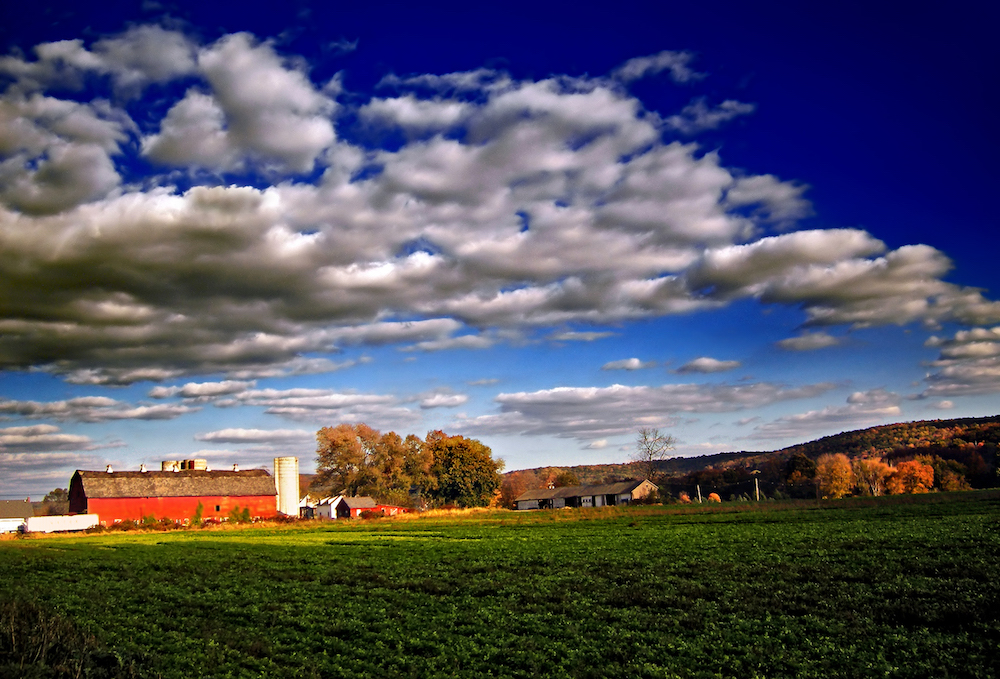
Let’s imagine that we own an empty plot of land. We could lease it out on the open market to someone else for $6,000 per year, or, alternatively, put it to use ourselves. Its annual market value of $6,000 is the value that other individuals are willing to pay in order to obtain access to the advantages that this particular land in this particular location provides: In other words, this figure gives us the land’s rent. Let’s hire a part-time farmer for $9,000 to operate a small farm on this piece of land, and let’s also purchase equipment for $3,000. Let’s assume that by the end of the season, the farm will have produced $20,000 worth of produce (table 3-1).
TABLE 3-1: FARM PROFIT
| Land (rent) | $ | (6,000) |
| Farmer (wages) | $ | (9,000) |
| Machinery (capital) | $ | (3,000) |
| Total expenses | $ | (18,000) |
| Farm produce | $ | 20,000 |
| Rent | $ | 6,000 |
| Revenues | $ | 26,000 |
| Gross Profit | $ | 8,000 |
We know that the rental value of the land we own—how much other people would pay for the privilege to use the land had they the opportunity to do so—is $6,000 a year. But because we own the land and thus are in a monopoly position, we can pay the cost of $6,000 to ourselves.9 As property owners we gain an extra $6,000 in benefits through our ownership of land. While this resource is withheld from the market, the market itself is not compensated for its exclusion, and so the market is artificially restricted. And even though we as landowners may pay a fair market value for our land at the time of purchase, we only pay this purchase price to another individual—the previous property owner—and not to all the market participants who have been excluded.
In theory, capitalism is an economic system that allows people to freely trade goods and services in a competitive free market. But since the outright ownership of land creates an entry monopoly, it restricts the operation of the free market. By falsely believing that our markets are free, we’ve created a misunderstanding of historical proportions. Capitalism has prided itself on the efficiency of the free market system for centuries, but because capitalism allows people to monopolize land and other gifts of nature, we need to realize that we may have never had true capitalism in the sense that the markets have never been truly free. However, because of this misunderstanding, many of us tend to look upon capitalism—or at least what passes for capitalism—with great disdain. And appropriately so: Our current implementation of capitalism is deeply responsible for the exploitation of nature and the decline of social well-being.
The mistaken belief that markets are free when their freedom is, in fact, inhibited by monopolistic behavior is one of the primary sources of economic suffering in the world today. But our current implementation of capitalism is not the only economic system that produces suffering. Let’s consider other economic systems. Communism, for example, is a system in which the means of production are owned and controlled by the state; it advocates the elimination of private-wealth production altogether. Socialism, meanwhile, is somewhere between capitalism and communism. Both capitalism and socialism allow individuals to be compensated for their goods and services, but they also allow individuals to monopolize land; communism, on the other hand, points to people’s ability to make money from wealth production as one of the root causes of economic dysfunction, and thus collectivizes the wealth-production process altogether. All three systems fail to remedy a whole range of public and social issues because they fail to understand the mechanisms by which private parties extract rent from society by monopolizing land and how this extraction harms society.10
ILLUSTRATION 3-2: CAPITALISM, SOCIALISM, AND COMMUNISM VERSUS A SUSTAINABLE ECONOMIC MODEL
Capitalism
| Individual | Society |
| Rent | Rent |
| Wages | Wages |
| Capital Returns | Capital Returns |
Socialism
| Individual | Society |
| Rent | Rent |
| Wages | Wages |
| Capital Returns | Capital Returns |
Communism
| Society |
| Rent |
| Wages |
| Capital Returns |
Sustainable Economic Model
| Society | Individual |
| Rent | |
| Wages | |
| Capital Returns |
Many property owners and financial institutions making money from mortgage-backed securities currently profit from land similarly to the way slave owners profit from the labor of slaves. Without the institution of slavery, slave owners would have to hire workers in a competitive labor market. Similarly, the duty-free ownership of land allows property owners—and financial institutions that finance property ownership—to obtain unearned benefits from land; were this not the case, property owners would have to compete for the value provided by land on a rental or leasing basis. Horace Greeley, journalist and fervent abolitionist at a time when slavery was still legal in many parts of America, observed that “whenever the ownership of the soil is so engrossed by a small part of the community that the far larger part are compelled to pay whatever the few may see fit to exact for the privilege of occupying and cultivating the earth, there is something very much akin to slavery.”
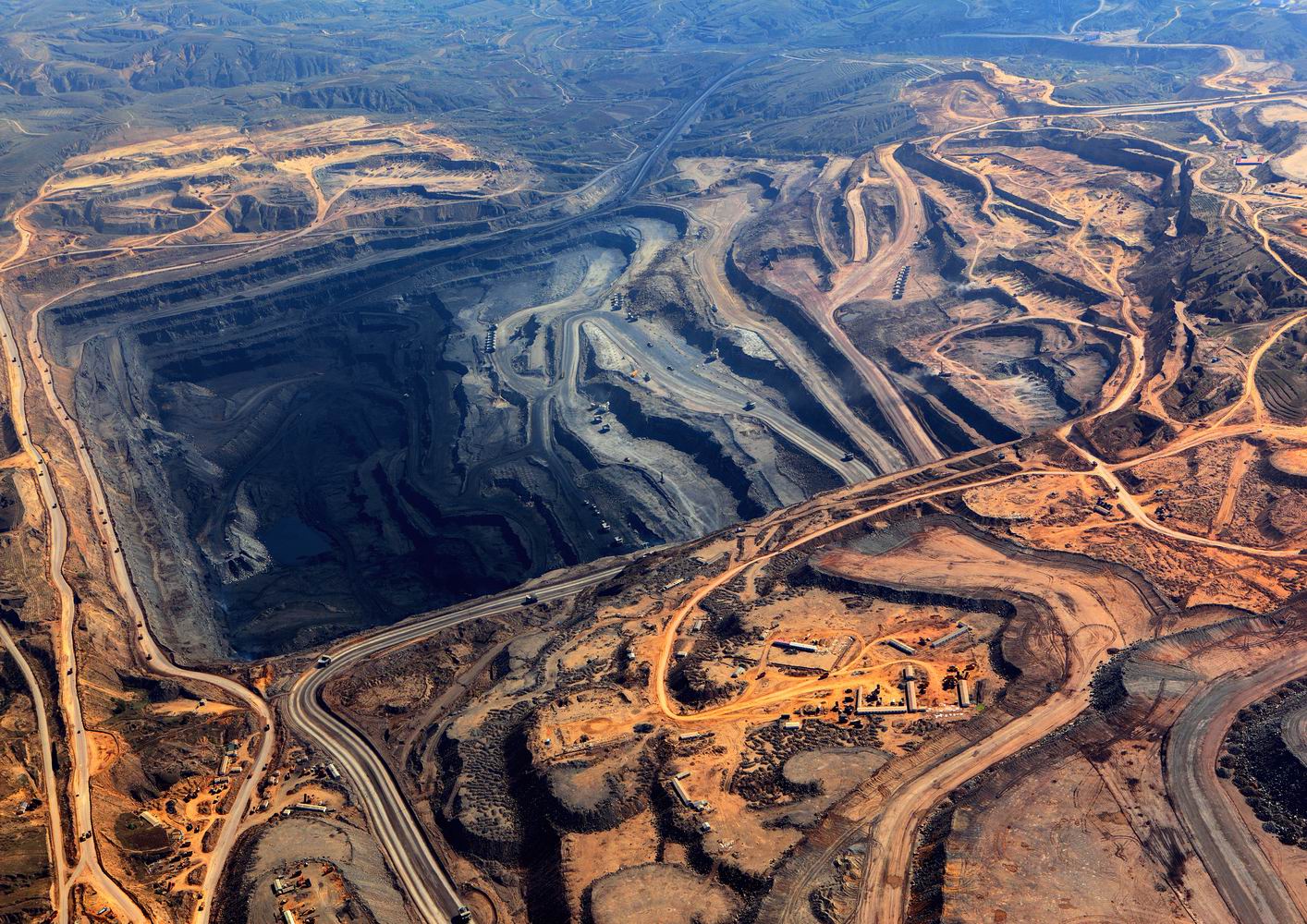
One of the main reasons we have thus far not had much public discussion about the ability of individuals to profit from land is that most economists treat nature as capital! They treat land and all other gifts of nature as capital, despite the fact that land is nonproducible and has a limited supply for each location, whereas capital is a result of human production. This failure to distinguish land from capital prevents economists from recognizing the monopoly that allows people to extract incomes from society.
Economists Mason Gaffney and Fred Harrison claim in their work The Corruption of Economics, first published in 1994, that industrialists toward the end of the nineteenth century may have intentionally created and promoted a new brand of economics to divert public attention from the monopolization of nature.11 Gaffney and Harrison’s work takes a fresh look at how the original science of economics was deliberately and increasingly sidelined in favor of so-called neoclassical economics, an economic theory widely in use today that, despite its sophistication, treats nature as capital—as a resource to be exploited.12 This, the authors claim, prevents most professional economists from accurately “diagnosing problems, forecasting important trends, and prescribing solutions.”
Our inability to share the gifts of nature causes much suffering in the world today. Nature is alive, yet we treat nature as a so-called resource we can own and profit from. For this reason, financial institutions and natural-resource companies are among the most profitable companies in the world. Oil money, for example, fills the coffers of both private corporations and corrupt state officials, while the average person has to struggle to pay for gas. While it’s appropriate to compensate companies for their efforts when they convert some of nature’s gifts into material goods, why should we allow them to profit from the gifts that nature freely provides to all living beings?
We mistakenly believe that a free market should allow people and corporations to profit from nature, yet we’ve failed to consider the immense cost to life that occurs whenever people are allowed to reap what they haven’t sown at the expense of others. While the privatization of capital can lead to production efficiencies that benefit the entire market, the same can’t be said for the privatization of nature: Whenever the income stream from nature is privatized, human beings take for themselves the gifts that would better be freely shared with everyone.